Friday, July 8, 2016

Beth B & the Sleepy D


Our new contributor, Marc Edward Heuck, takes a look back at Dominatrix’s “The Dominatrix Sleeps Tonight” — now streaming on Night Flight’s “Video Vault 7,” one of a collection of daring clips that spurred artistic ripples — which was the first music video for filmmaker Beth B., whose recent documentary on her artist mother Ida Applebroog has drawn rave reviews. The patchwork band Dominatrix would later see their cult song achieve unexpected longevity. Watch it now on our Night Flight Plus channel.


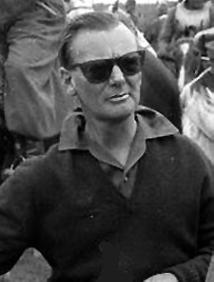
Photo courtesy of Robert Carrithers

Beth B. was a teenager in San Diego when her mother Ida had emerged from a hospital stay for depression in 1970 determined to go on her own and become an artist.


Rechristening herself Ida Applebroog, she moved to New York and became a lauded sculptress and painter. Beth soon followed her mother to NYC, enrolling in Manhattan’s School of Visual Arts, where she focused her efforts towards film.


By the early 80’s, Beth B., with her then-husband Scott B., built a following as part of the “No Wave” movement that launched directors Jim Jarmusch and Susan Seidelman. Their Super 8 films like G-Man and Black Box combined startling scenes of torture and fetish play with stolen TV footage, and were screened in punk rock clubs to rowdy audiences open to having their sensibilities challenged.


Stuart Argabright

Concurrently, one of the prime musicians of the No Wave scene was Stuart Argabright, who first received notice with a punk band called The Rudements, then achieved notoriety with his electronic outfit Ike Yard, one of the few American bands to sign with UK upstart label Factory Records, home of Joy Division.


During this period, Argabright had struck up an unusual friendship with a local domina. As recounted by music historian Dave Tompkins, their favorite activity was not bondage play, but listening to her extensive record collection, though he did express fascination with the intrigue that came with her profession.


After the initial dissolution of Ike Yard, Argabright created Dominatrix, with participation from singer Claudia Summers, John Lydon collaborator Ken Lockie, Tangerine Dream alumnus Peter Baumann, and rising remix DJ Ivan Ivan, who co-produced.


While they recorded a few tracks, their sole release was “The Dominatrix Sleeps Tonight,” a cheeky reverie to those hang-outs with his domina friend. As he once opined on Facebook, “[There are] a whole bunch of people who [made] this hit happen. Most of all the hard beating ladies that inspired me in the first place.”


The song was picked up by dance producer Arthur Baker’s Streetwise Records, and released as a 12-inch single with multiple remixes.


Beth B. was working solo when she directed “The Dominatrix Sleeps Tonight” video in 1984. The content is tame compared to what she was known for in her previous work, which may well be her subversive point.


The viewer is set up to anticipate a tawdry encounter between a blonde-wigged temptress and the buff garage worker she approaches, only to have a few other leather-clad ladies shove him in a closet, never to be seen again as they go on to dance and loaf about unencumbered.


Tonight, the ladies’ hot gear and sexy moves are not in the service of men’s pleasure, but of their own.


Dominique Davalos

Despite having no explicit content, MTV refused to play the video.


As Beth described it to Flavorwire writer Alison Nastasi, “[Males] were controlling the airspace [and] they are still today, [so their] executives saw women taking over the male domain of a garage, and that they kicked the guys, threw them out, and took over. I have no idea, maybe it was too sexual for [them], but at the last minute they pulled it, and it was not shown. But it became hugely popular, anyway. That year, Madonna said it was her favorite music video, and it was playing at all the clubs. I love it. It was really fun to make.”


After the video’s release, its participants split off to further diverse pursuits. Dominique Davalos, who played the title role, replaced Claudia Summers in Dominatrix for a series of live shows (the group toured as an opening act for Grace Jones) before Argabright disbanded the outfit in favor of a more hip-hop oriented group with graffiti artist Rammellzee called Death Comet Crew.


Beth B. directed Davalos alongside Viggo Mortensen and X lead singer Exene Cervenka in her 1987 satire of televangelism Salvation!, with footage from the Dominatrix video reused in the film. Beth eventually shifted from narrative films to making documentaries for HBO and Court TV.


“The Dominatrix Sleeps Tonight” video is now part of the Permanent Collection at MoMA, and has grown in influence. The song was featured in Grosse Point Blank with John Cusack and in Tamra Davis’ documentary Jean-Michel Basquiat: The Radiant Child.


The beat is sampled in the 1999 Mase/Puff Daddy song “Do It Again.”


Joseph Kahn’s 2009 video for Lady Gaga’s “LoveGame” features a sequence where the singer, in a platinum low-bangs wig and leather gear reminiscent of Davalos’ look in Dominatrix, dances in a garage, albeit with boys allowed to join her this time.


Knowing Gaga’s love of ‘80’s NYC underground culture, the coincidence is probably intentional, as Argabright has suggested.


Argabright relaunched Dominatrix in 2008 with new material, and the original single received a bonus-laden vinyl reissue for Record Store Day in 2015.


While occasionally collaborating with her mother on projects like the 1989 short film Belladonna, it wasn’t until 2009 that, after they discovered lost drawings of Ida’s from the ’70s, Beth was inspired to make a film about her.


Shot over fifteen years and with often contentious disagreements over what would be filmed and revealed, Beth’s film Call Her Applebroog opened this spring in NY to glowing reviews. Retrospectives of Beth’s films, including her early collaborations with Scott B., have screened in multiple cities, with preservation efforts taking place simultaneously.


Look for Call Her Applebroog when it opens in more American cities this fall, and right now, you can watch the video that first brought Beth B. to wide attention on Video Vault 7,” on our Night Flight Plus channel. You’ll also see rarely broadcast works from Jean-Baptiste Mondino, Toni Basil, Paul Simon, and Laurie Anderson in this episode.


(This essay was originally written for Night Flight Plus. It has been recreated in the style it was presented in at the site, and matched to its original date of publication. Tremendous thanks to Stuart Shapiro and Bryan Thomas for the platform.)

Friday, December 25, 2015

One Five and Alive

2015 kicked my ass. More precisely, to borrow from Tim Allen, 2015 pounded my balls flat with a wooden hammer. The requests for my services from organizations offering payment dropped to an all-time low, while the requests for my money from organizations demanding payment rose to an all-time high. I sold possessions, renounced restaurants, and most severely, almost completely abandoned first-run filmgoing. Were it not for the gentlemanly sway I enjoyed with select venues based on decades-long friendship and respect, and the help of other connected individuals during awards season, I would not have been able to see any movies at all. I was seriously concerned that I could not even write a properly informed Top 13 this year. But the fates took mercy on me, and I have seen enough of what the year had to offer to allow my tradition to continue.

Nonetheless, the changes that took place this year have meant some changes to this list. The "Ten Films Nobody Saw But Me" sublist has been benched for now, since, well, those types of films were the biggest casualties of The New Cruelty. And the few I did see, I decided to give a full upgrade to the main list - really, they're the ones that need my boost more than some of the better-known titles that you're probably hearing about from everyone else. Also, I don't have any sort of entertaining wacko entry as I offered in years past. Contenders like DANCIN' IT'S ON! and TURBO KID will just have to wait for a revival show or a friend willing to commit to owning them *and* having me over to watch them.

I am doling out a Jury Prize this year, though it's really more of a "Jury Nullification" Prize. Long ago, I was allowed an early look at Asia Argento's INCOMPRESA (MISUNDERSTOOD), and found it to be a moving story that told many hard truths about childhood and finding oneself striving for love and acceptance when it should be asserted as a birthright. I was eagerly anticipating its American release so that I could rally people to see it. But for months, it seemed it would not get any stateside exposure. Finally, IFC Films acquired the film, only to give it the most miniscule of contractual obligation releases - one week in NYC coupled with VOD availability, with only Argento herself and a small coterie of friends and fans like myself to stump for it. The lady and her movie deserved a better opportunity to find an audience, and you as the audience deserved a better opportunity to find it. So I'm reminding you one last time that it exists, and that you should seek it, watch it, and embrace it. These are some of the sites that have it available right now.

And so, from the year that tried to bring me to heel, here are the hours where I still found elevation: The Top 13 of 2015:

13. STRAIGHT OUTTA COMPTON

12. TANGERINE

11. GIRLHOOD

10. THE HATEFUL EIGHT

9. MUSTANG

8. MISSISSIPPI GRIND

7. ROOM

6. CAROL

5. MAD MAX: FURY ROAD

4. SON OF SAUL

3. CREED

2. INSIDE OUT

1. PHOENIX


I apologize for the comparably solemn and subdued tone of this year's posting. I suppose this year, the only gift I can give you is the truth. May we all have a seriously Happier New Year.


Thursday, December 17, 2015

Christina Hornisher: Alone with that Obscene Image of Yourself

Image courtesy of thefeministwire.com
While it seems every year, watchful figures in the entertainment industry work to draw attention to the disparity between steady and well-paying opportunities for female creatives vs. their male equivalents, 2015 has been a year in which the commentary reached a volume impossible to ignore. Beginning with blogger Marya E. Gates' ambitious "A Year With Women" project, continuing with Destri Martino's creation of The Director List website and database, reaching unprecedented exposure with the "Trailblazing Women" programming series hosted by Illeana Douglas on Turner Classic Movies (the first of a promised multi-year collaboration with Women in Film Los Angeles), and all the while peppered with hard-hitting stories by Manohla Dargis, Rebecca KeeganJessica P..Ogilvie and Maureen Dowd, battlefield dispatches from proud defiant directors like Lexi Alexander and Ava DuVernay, and constant energetic debate from "Film Twitter", if you proclaim yourself a movie lover yet have not had a dialogue, polite or vehement, with anyone about some aspect of this issue, you're doing it wrong.

Besides its primary purpose of advocacy and changing the dominant paradigm, all of this coverage has had the welcome effect of drawing attention to women directors of the past, who had even harder circumstances to navigate in order to get their work made and released, and too often found themselves with only one feature film in their resume. During the TCM broadcasts this past October, viewers were treated to the striking solitary outings of Barbara Loden, Leslie Harris, and Kathleen Collins, and while Harris was able to enjoy this second wind of exposure, and perhaps use it towards new opportunities, new fans of the long-passed Loden and Collins could only wistfully consider what other films could have emerged from them had they not also succumbed to cancer in their late '40's.

Unfortunately, there has been a name absent from practically every discussion of women in film this year; certainly not intentional on anyone's behalf - if anything, to be expected with resignation, since not only did she receive little to no recognition for her work during her life, but her sole feature film has been effectively unavailable for close to three decades. That is why, in these waning days of this ersatz Year of the Female Director, I would like to draw your attention to Christina Hornisher, and her film, HOLLYWOOD 90028.

"People lust for fame. 
Like athletes in a game, 
we break our collarbones and come up swinging
Some of us are downed 
Some of us are crowned
and some are lost and never found
But most have seen it all
They live their lives in sad cafes and music halls
They always have a story"

Telling the story of Christina Hornisher at this time is a difficult task akin to a reverend enlisted to preside over a funeral mass for someone they've never met: we are both left with an extremely thin public record by which to garner their milestones. Thus, for now I can only present a sort of stone soup of her life. Hornisher was born on October 1, 1942 in Watertown, New York, daughter of a military officer. She attended UCLA's film school, where she made three student films in 1966; her classmates included The Doors members Jim Morrison and Ray Manzarek, filmmaker-turned-technological pioneer Stanton Kaye, LEMORA director Richard Blackburn, THE ROSE screenwriter Bill Kerby, CISCO PIKE writer/director Bill W.L. Norton, cinematographer/documentarian Joan Churchill, CAA agent and Arsenal consulting firm founder John Ptak, and AMERICAN GRAFFITI co-screeenwriter Gloria Katz. Her sole feature, HOLLYWOOD 90028, was initially released in 1974, and later reissued to drive-ins in 1978 retitled as THE HOLLYWOOD HILLSIDE STRANGLER. During her college years, she married her UCLA classmate and 90028 cameraman Jean-Pierre Geuens, with whom she had a son, Sebastian. She later married theatre and television writer/director Robert Lee Collins in 1989; his credits included writing the "POLICE STORY" episode "The Gamble," which spawned the series "POLICE WOMAN" with Angie Dickinson (giving him series creator credit), and TV movies based on real-life events, such as THE LIFE AND ASSASSINATION OF THE KINGFISH with Ed Asner and GIDEON'S TRUMPET with Henry Fonda. While Hornisher did collaborate with husband Collins as associate producer on his 1987 Showtime biopic J. EDGAR HOOVER, she ultimately would not direct another project again. According to this Los Angeles Times obituary below, she died at age 60 on April 29, 2003.

The Times misspelled her son's last name.

Hornisher's 1966 student films are excellent examples of the spirit of experimentation and new ways of storytelling that were permeating the art form, and the techniques she employed are often now commonplace in all media. Her first short, 4x8=16, took advantage of the manufacturing quirks of 8mm and 16mm to create one of the earliest multi-image presentations, creating four frames of action in a single screen, then subsequently layering full-size footage of a cavorting film crew over the four frames, creating a wall of visuals that overwhelm the viewer much like the song that accompanies the images, "Heatwave" by Martha Reeves and the Vandellas, uses a Spector-like "Wall of Sound" production style to overwhelm the listener. While this layout, often referred to as the "BRADY BUNCH" effect, is generally said to have been perfected by recently deceased Canadian filmmaker Christopher Chapman, Hornisher deserves credit for playing with the formula before him. 4x8=16 was enthusiastically championed by L.A. Times critic Kevin Thomas, who described it as "equally rich in textural values and color," and "a whole hymn to the simple pleasures of life." It was also praised by film scholar and LOS ANGELES PLAYS ITSELF creator Thom Anderson, who described it in a letter to his colleague Jonas Mekas, and compared it favorably to shorts by professional avant-garde artists he had been surveying for Mekas' Filmmakers' Cooperative.

Bunny Cohen in AND ON THE SIXTH DAY
image courtesy of Los Angeles Filmforum
Her second UCLA film, AND ON THE SIXTH DAY, makes damning assessments of the humanity which was created on that date in Genesis, through three vignettes blending visuals that on their own would seem uneventful, but become striking with the voiceover attached to them. In the first vignette, running one minute, a jumpy camera P.O.V. moves down and looks about a city street as a woman's voice shrieks for help: while citizens occasionally look into the camera, nobody interacts. In the second vignette, running two minutes, the camera slowly pans around a living room full of religious memorabilia - crosses, candles - stopping on a forlorn woman on a sofa (Bunny Cohen), who is being patronizingly addressed by an unseen priest, cautioning her not to get an abortion which he acknowledges her husband has told her may be necessary to protect her life. As the priest continues to press her, saying "Only God, through the Catholic Church, can be your salvation. And the Church will not allow you to do this," the camera zooms into her pained face. In the final vignette, running three minutes, ordinary random snippets of black people going about work and play are played against the voice of a white man ranting horrible racist calumnies about them. Soon, the voice reverbs into multiple voices, repeating, looping, as the subjects ultimately begin to acknowledge the camera, with the last image a male child looking directly at us with a severe but ambiguous expression as the racist ends his sentence with that most horrifying of epithets.

Her third class project, THE SUN IS LONG, is her most narratively conventional, but still uses a few innovations, and offers a glimpse of the shot style she would later employ in her feature. Opening with stock footage of tanks firing followed by deserted land, a lone soldier (Wayne Sutherlin, who previously provided the male voices in SIXTH DAY), walking in a wide open field to a stark harpischord score, comes across a fallen comrade, and lays his coat over him. Hearing shots, he takes a position, attaches his bayonet to his rifle, and takes aim, only to see the figure in front of him is not an enemy soldier, but something much vaguer in a robe. Putting his gun aside, the soldier rises, and rants to the stranger (Jesus of Nazareth? the Angel of Death?), and in effect, to the audience, about the horror taking place around him. "That could have been a friend of mine...Doesn't it make a difference to you?...Somebody has to care...Can't you stop that? Can't you?", again using echo and staggering the repeated lines as in her previous film to jarring effect. The film climaxes with freeze frames of the anguished soldier and the hooded stranger, cutting between them increasingly faster as war noises get louder and the harpsichord grows more discordant, then plays staccato single notes, like the tolling of a bell. These three films show that Hornisher already had a keen handle on how to use contrasting elements to convey story in unconventional ways.

Hornisher's first feature screenplay, HOME FREE!, submitted as her MFA thesis in 1970, reads as a logical extension of the charged political themes explored in her shorts. The premise concerns the mission of Jeffrey Campbell, a black CIA agent in his 30's, who is groomed to defect to Russia in order to gather data on the KGB, a deep cover operation known only to two other superiors at the agency. The first third of the story depicts the process of Campbell "leaving" Langley and taking an office job where he can convincingly be treated so badly that Russian agents will believe his desire to renounce America. Sure enough, while he never suffers overt racism, he is subject to cavalier treatment and overwork by his boss, often having to pick up the slack for a lazy white colleague, and gets nasty stares when a white female co-worker cozies to him; the latter situation also causing inner conflict between his desire for connection versus his need to be ready to disconnect in seconds when the chance to defect arrives. On his arrival in Russia, he is assigned to an older female handler, Lydia Kotova, with whom there is mutual attraction despite their contrasting agendas of his need to sell his story and her need to probe his sincerity. Their exchanges often feel as if they could be taking place today: when they compare notes about their mutual experience with discrimination in America, Campbell articulates the tension between black power and white feminism - "We're too busy trying to get ourselves equal. It's really of no importance what a a bunch of women want." Just as Campbell seems poised to complete his mission, he learns his CIA handlers have been killed, and realizes he must flee lest he never be able to return to America. The climax features an intriguing sequence that as scripted suggests elements from the previous THE IPCRESS FILE torture scene and the not-yet-written THE PARALLAX VIEW "exam", again demonstrating Hornisher's innovative ideas for presenting visual information. The script is fully annotated with camera and shot directions, indicating she was primed to shoot it, and while there are requisite exotic exteriors and foot chases, most of the film takes place in ordinary interiors, so it likely could have been done for less money than the average spy drama. However, it was determined early that it was still too large a project to undertake herself, and so her debut would ultimately take place in an entirely different milleu.

On November 22, 2005, at the New Beverly Cinema, the ongoing Grindhouse Film Festival presented a double feature of THE HOLLYWOOD HILLSIDE STRANGLER and DON'T GO IN THE HOUSE. At the time, almost nothing was known about STRANGLER - the IMDb page that revealed it as HOLLYWOOD 90028 was review-less, there was no readily available VHS or DVD to refer to, and only a select few people in attendance, including DEADBEAT AT DAWN director Jim Van Bebber, had ever seen or heard of it before. Naturally, the crowd, including myself, were excited at the prospect of rediscovering a mystery film. Three of the four reviews that now populate its IMDb listing were written in the wake of that screening, including my own somewhat harsh assessment of the time, but to summarize, the mostly male crowd, who were intrigued by the pre-credits murder sequence but were then subjected to a more thoughtful and artistic drama about spiritual disconnection with a strong feminist bent, grew increasingly impatient and loudly made it known, until its shocking finale, after which many began to reassess what they saw and muster grudging respect. As for me, even without the benefit of recently rewatching it in preparation for this article (thanks to a friend with a reference-quality source), my appreciation of its strengths only increased over the last decade, and the continued void of information on its making and its creator made me more determined to learn the truth.

"Some women have a body men will want to see 
so they put it on display
Some people play a fine guitar 
I could listen to them play all day
Some ladies really move across a stage
and gee, they sure can dance
I guess I could learn how, if I gave it half a chance
But I always feel so funny when my body tries to soar
And I always seem to worry about missing the next chord
I guess there isn't anything to put out on display
except the tunes, and whatever else I say
And anyway, that isn't really what I meant to say...
I meant to tell a story I live from day to day"

Serving as a spiritual bridge between Michael Powell's PEEPING TOM and Steven Soderbergh's sex lies and videotape, HOLLYWOOD 90028 focuses on Mark (Christopher Augustine), a would-be photographer/cameraman who has only been able to make a living by shooting peep show film loops, and Michelle (Jeanette Dilger), a sweet-natured model he meets during one of the shoots. Mark's history is marred by a childhood spent with domineering older sisters and the death of his younger brother, his culpability in that tragedy left open-ended, while Michelle, a small-town girl already bereft of illusions about the promise of showbiz, works in adult modeling to earn her own income while subsisting as a girlfriend of convenience to an affluent and often-absent musician. (In an unrelated but serendipitous turn, Dilger herself later wed musician Pete Sears of Jefferson Starship) The screenplay, written by Hornisher under the pseudonym Craig Hansen, may take a dim view of pornography, but does not completely blame it for the downward spiral of its protagonists: references to the classic homes of Bunker Hill being razed for unaffordable new luxury housing, and the illusion of hundreds of industry jobs being available but only after proving someone else already gave you one, send the message that the dirty pictures racket is only a specific instance of a larger climate of devaluation the modern city commits against fragile beings on a regular basis. As mentioned in the previous paragraph, the movie opens with a murder, and every ad campaign created to sell the film promised mayhem, so the revelation that Mark ultimately snaps and becomes a killer is bereft of surprise; it is a testament to the story and the acting, however, that for a little while, we entertain the idea that maybe Mark has a chance to escape, despite a tradition that encompasses SUNSET BLVD., CARLITO'S WAY, and MAY, that reminds us we should have known this character was doomed from frame one.

HOLLYWOOD 90028, a movie that Hornisher and Geuens conceived for the purpose of getting mainstream distribution, had the unique distinction of getting two chances in theatres, but also the misfortune of being handled by parties with less-than-hearty support. American Films Ltd., a Beverly Hills-based distributor whose other film releases included ersatz-Yeti-horror SHRIEK OF THE MUTILATED and the counterculture drama NO PLACE TO HIDE featuring a young Sylvester Stallone, first acquired the film and started playing it in theatres in March 1974. However, preliminary research shows it was never submitted to any trade magazines (Variety, Boxoffice) for review, nor was it covered by any critics in the few cities it played in. In fact, it did not play in Los Angeles until August 26, 1976, when it ran for four days at the Cameo Theatre on Broadway Ave. downtown, when it was still a thriving street of battered but operating cinemas. In 1978, a smaller firm called Parker National based in Boston, picked up the rights. Parker National was a sub-imprint of Judson Parker's better known Hallmark Releasing company, responsible for exploitation successes like MARK OF THE DEVIL (and its infamous barf bag and "Rated 'V' for Violence campaign) and LAST HOUSE ON THE LEFT. Hallmark, along with yet another imprint, Newport, frequently picked up older films and retitled them for packaging on the grindhouse and drive-in circuit: Jerzy Skolimowski's DEEP END with Jane Asher was sublicensed from Paramount and reissued as STEAM ROOM GIRLS, Sam Fuller's SHARK with Burt Reynolds was retitled MAN-EATER to cash in on JAWS and shark mania, and plenty of Italian-made giallos often got multiple titles as they were shoved into dusk-to-dawn marathons. Parker first retitled the movie THE HOLLYWOOD HILLSIDE STRANGLER, and even took out a front-cover ad in Boxoffice in May 1978 to promote it, then made one more attempt under the title TWISTED THROATS (which was on the print screened at New Beverly) before giving up. Aside from a UK VHS release from Go Video under yet another title, INSANITY, it has never received any home video or television exposure. 

Film editor Bob Murawski obtained a battered print of TWISTED THROATS from Detroit-based subdistributor Mason Releasing Corp., whom he had worked for in the mid-80s before moving to LA. Murawski in turn showed the film to his Grindhouse Releasing partner Sage Stallone, and David Szulkin, who set up the screening with Caidin and New Beverly programmer Brian Quinn to expose it to a fresh audience. Bob, Sage, and David long sought to do a full-bodied release on physical media, talking to as many surviving participants as possible, but sadly, unaware to them all, its director had quietly passed away two years before that screening, and the otherwise determined friends were unable to make that revival happen before the untimely death of Sage in 2012.

For all purposes, Hornisher's film has been relegated to a status much like the product integral to its plot - to quote from another film about sex images, Paul Schrader's HARDCORE: "Nobody makes it. Nobody shows it. Nobody sees it. It's like it doesn't even exist."

The unproduced HOME FREE! and the finished HOLLYWOOD 90028, while taking place in two different worlds, share a fair amount of common ground. Both stories involve a protagonist who from childhood has never had a feeling of belonging anywhere (and each features a flashback to help illustrate that isolation), and as an adult being thrust into an environment where they are seen as a useful idiot at best. HOME's Campbell, raised in racism and hazed for his pacifist nature, has only been able to prove his worth as some sort of liason to the establishment, usually by spying on other black people, and even as he's sent on his big mission, his doomed handlers already anticipate he won't survive. 90028's Mark, spending his formative years being bullied by older women, only achieves equality with them in porn because by the producers' calculus, he is every bit as expendable and replaceable as the actresses he films. Both males are also denied a chance at companionship due to class and economic differences, contributing to their marginalization. And each of them, while pleading for understanding, are ultimately culpable for violent deaths, though Campbell still emerges as a more sympathetic protagonist than Mark, and meets with a more positive, if not completely happy, finish to his odyssey.

The confidence and invention that Hornisher brought to her college shorts drive her direction of HOLLYWOOD 90028, aided by a small but tight crew of artists. The shot compositions created by cameraman Jean-Pierre Geuens with cinematographer John H. Pratt tell stories without need for dialogue: the porn studio boss situated above Mark and the model he films, observing them through binoculars, showing his sense of superiority over them both, and his contrast of wanting the closeness of nudity but at a safe distance; Mark's face being framed by peep show viewing slots and reel-to-reel tape speaker grilles, putting him in the same box as he views naked women in his movie camera - the abyss gazing back at him; a walk among giant painted murals that heighten the disconnect between the aspiration of art and the reality of the street. The standout sequence of the film is a monologue by Michelle detailing the emotional toll of her time in the flesh trade, told through intercutting of otherwise romantic looking shots of her with Mark against flash clips of small town streets, L.A. skyscrapers, banks, adult business marquees, and nude bodies, skillfully assembled by "24" and "LAW AND ORDER: SVU" editor Leoncio Ortiz-Gil. A terrific early score by world-acclaimed composer Basil Poledouris (CONAN THE BARBARIAN, ROBOCOP) adds to the emotional build. The talent on display in 90028 is bold, and as such, everyone on board deserved to look forward to greater opportunities onward. Indeed, as already indicated, Poledouris and Ortiz-Gil went on to long entertainment careers; Geuens, though leaving the creative end of movies, became a respected film professor and critical theorist; and while not continuing acting careers, Christopher Augustine became a sought-after media technician, and Jeanette Dilger became a published author, songwriter, and environmental activist; all of these people and their credits easily discovered through elementary internet searching.

Why then is Christina Hornisher, the woman who brought them all together to realize her vision, a virtual enigma?

"Some make it when they're young, 
before the world has done its dirty job
And later on, someone will say - 
'You've had your day. You must make way'
But they'll never know the pain 
in living with a name you never owned, 
or the many years forgetting 
what you know too well
That the ones who gave the crown 
have been let down"

I picked the title of this essay from the remarkable Jeanette Dilger monologue in 90028, as it seems to be the strongest takeaway from the collected works of Hornisher available to view. In the dramatic presentations she made on film (and one intended thus), there are always people who are shown what little regard the outside possesses for them. The unaided runner, the objects of irrational hatred, the woman seen as potential murderer instead of potential casualty in AND ON THE SIXTH DAY; the soldier confronting the world's indifference to death, and maybe his own role in it, in THE SUN IS LONG; the black professional who is eternally someone else's snoop or exotic infatuation in HOME FREE!; the model as furniture and the photographer as machine in HOLLYWOOD 90028. In her short but potent creative period, Christina Hornisher made her characters, and ourselves, see what we sensed all along but really did not want to have confirmed. And to zoom out from her story into the multiple stories of creative women in Hollywood, we are constantly having our most upsetting sensations confirmed: in an industry even more than ever dominated by, as comedian Dana Gould once wrote, "Men in their 60's telling men in their 50's to hire men in their 40's to get men in their 30's to entertain men in their 20's," the image that far too many of these men carry of women in general, and women artists in particular, may not be obscene, but is often unrealistic, or worse, non-existent. Hornisher's statement in effect becomes prophecy, and soothsayers are rarely heeded in their own time.

Christina Hornisher, married to a respected working director whose three sons from a previous marriage all went into some aspect of film production as well, was certainly still able to immerse herself in an movie-centric environment and provide her wisdom to a receptive if smaller audience. Perhaps, on rare occasion, she still engaged in some aspect of the art form that she and so many other talented members of that 1966 UCLA class aspired to in their youth. Everyone whom I have had contact with about her, on and off the record, have spoken in grounded but glowing terms about her presence in their lives. Most likely, she was perfectly content in pursuits beyond show business. However, like the aforementioned Barbara Loden or Kathleen Collins, it is difficult to view this turn of events as being not so much a choice than a resignation. There is no reason why she could not have enjoyed all the comforts of family and other pursuits, and still been a valued artistic contributor, especially since almost all male directors and the luckier female ones are able to have both.

And in the years since that fateful New Beverly screening, attention is finally being paid to HOLLYWOOD 90028. Fresh appraisals from Alamo Drafthouse Yonkers programmer Chris Poggiali and fellow film historian Samuel B. Prime have been at the forefront. Thus I am here, adding to the advocacy, hoping this article helps put momentum into retrieving her film from the limbo it has sat in too long, or spurs UCLA and other organizations to showcase her work in the same manner by which they have honored other singular artists. Yet even on this small scale, it is sad that she could not be present to see fortune begin turning in her favor.

"Stars, they come and go
They come fast or slow
They go like the last light of the sun, 
all in a blaze, 
and all you see is glory
But those who've seen it all
live out their lives in sad cafes and music halls
We always have a story
So if you don't lose patience
with my fumbling around
I'll come up singing for you
even when I'm down"
-- Janis Ian


Photo from Find-a-Grave taken by James R. Mason of West Hollywood
Deep appreciation and thanks to the Collins family, Jean-Pierre and Sebastian Geuens, Christopher Augustine, Bob Murawski, David Szulkin, and Samuel B. Prime, for their ongoing assistance and support.

Monday, October 5, 2015

Bringing Home the Ashes

The German-language post-war drama PHOENIX has, in its United States' run, become one of the bonafide sleeper successes of the year. As of this writing, during its eleventh week of domestic release, it has grossed over $3 million despite, at its largest break, only playing in 197 theatres nationwide. Its current standing on the Rotten Tomatoes website is "Certified Fresh" with a 99% critical approval rating from 84 counted reviews, and an audience approval rating of 82%. While it was not submitted as Germany's entry for this year's Academy Awards (as was Petzold's previous film BARBARA), it will likely be receiving placement on many year-end Best lists, including mine.

Most reviews of PHOENIX take the trouble to note that the film's source material comes from the novel RETURN FROM THE ASHES, by French pulp writer Hubert Monteilhet. Some have gone further to note the book was previously adapted into an English-language film of the same name in 1965. A film which I cited as one of my most favorite older film discoveries in 2011, as I submitted to Brian Saur's excellent Rupert Pupkin Speaks blog. And those stories that mention those facts offer cursory note that PHOENIX makes significant changes to the original plot. But almost none of the reviews have gone into direct detail into the various and interesting differences between these three incarnations of the story. Reading reviews of the earlier film may provide a few answers. Trying to find a detailed review of the original novel is currently an near-impossible task.

Thus, because I am guessing there is at least one other person who is like me and wants to know about these things, I'm stepping in to answer as many of them as I can.

"...memory makes arbitrary choices."

Hubert Monteilhet
Author Hubert Monteilhet (pronounced "mone-tay-yay"), as of this writing, still has no significant English-language biographical profile. But upon skimming his French Wikipedia with my pharmacie-level comprehension, I can tell you that the still-active and prolific author made his reputation in lurid crime fiction, beginning with THE PRAYING MANTISES in 1960. His work was often compared to his breakout countrymen Boileau-Narcejac, whose stories provided the source material for DIABOLIQUE, VERTIGO, and BODY PARTS. RETURN FROM THE ASHES was his second book, first published in French in 1961, with English translation published in 1963. Though dismissed as "an unbelievable novel" by The New York Times, it was popular enough that Henri-Georges Clouzot, director of DIABOLIQUE, originally optioned the film rights, before relinquishing them to producer Walter Mirisch and British director J. Lee Thompson, who adapted it to film in 1965, with CASABLANCA co-writer Julius J. Epstein writing the screenplay. Monteilhet would ultimately chide Epstein's numerous changes to his story in his later novel A PERFECT CRIME OR TWO, where a fictionalized version of himself served as its protagonist. Another Monteilhet novel, MURDER AT LEISURE, was adapted by equally prolific French filmmaker and crime story enthusiast Claude Chabrol into his 1972 dark comedy DR. POPAUL with Jean-Paul Belmondo and Mia Farrow, released in America in 1981 under the title HIGH HEELS. And his debut novel THE PRAYING MANTISES would be adapted into a Channel 4 production (aired on PBS' "MYSTERY") by UK TV writer Philip Mackie and THE MEDUSA TOUCH director Jack Gold, starring Jonathan Pryce. In the '80's, Monteilheit began to focus more on historical fiction and fantasy stories for his books, though he has still written the kinds of mysteries that made him famous. He has also steered into food criticism for a major French publication, sometimes even putting "gourmet" themes into his later crime stories. It's fair to say any French citizen who is able to simultaneously indulge in art and food, then write at length about it, and get paid for it all, has hit the trifecta.

Monteilhet's original novel of ASHES unfolds as a series of diary entries by its protagonist, Elizabeth Wolf, a Jewish doctor specializing in X-ray therapy, over the span of four months in 1945, when she returns to Paris after almost two years as a prisoner in a concentration camp. After initially meeting with fellow doctor and former lover Dr. Pierre Bigan, she is relieved to discover that her gentile husband Stan and her daughter from a previous marriage Fabienne are alive, but initially resists contacting them, wanting time to repair her appearance from the ordeal of the camps, both physically and mentally. During this period, Stan approaches her, but does not recognize her as his wife; in turn, she creates an alternate identity for herself as "Julia Robinson," a former actress, to the point of conversing with Stan in English rather than French to sell the ruse. As she contemplates when and how to tell him the truth, he makes her a shocking proposition: publicly impersonate his believed-dead wife, in order to assist him and Fabienne to claim a large inheritance due her from all the other Wolf relatives who did not survive the Holocaust. To her own bigger shock, she accepts; much like the wife in Kate Bush's "Babooshka", she cannot resist the curiosity of trying to woo her husband a second time, and the morbid desire to know what he and Fabi really thought about her during her absence. As she goes through the steps to impersonate herself, she is confronted with the long-ignored hostilities of her daughter, the possibility that Stan may have been responsible for her arrest and internment by the Nazis, and the question of what will happen after this plan is over...

"...I'm not going to ruin myself to perfect a disguise that's stifling me."

J. Lee Thompson
While producer Walter Mirisch and director J. Lee Thompson certainly saw the same cracking potential of adapting ASHES to film as Henri-Georges Clouzot did, the project could almost be compared to Elizabeth's devil's bargain in regards to why it was done. As Mirisch recounted in his memoir I THOUGHT WE WERE MAKING MOVIES, NOT HISTORY, United Artists, the producer's longtime studio home, had for years taken advantage of a U.K.-based postwar industrial tax incentive -- the "Eady Plan" -- which allowed producers to write off the production budget of a film shot in England if 80% of the crew was English, funding subsidized by a de facto tax on movie tickets. The idea was to keep British below-the-line film technicians employed, and ersatz British films in U.K. theatres, similar to the Canadian tax shelter phenomenon of "Canuxploitation" in the '70's and '80's that launched the careers of David Cronenberg and Ivan Reitman, and seeded the evolution of John Dunning & Andre Link's genre company Cinepix into the franchise-heavy conglomerate Lionsgate. It was an influence on Kubrick's decision to shoot LOLITA in England, and stay put thereafter. And with the novel's essentially confined terrain of regionally vague exteriors and period interiors, and Thompson's desire to work in his home country after a grueling American sojourn, it struck UA as an opportunity to take advantage of the circumstances.

Despite these cavalier origins, Thompson's adaptation from Epstein's screenplay is an underrated gem. Swedish actress Ingrid Thulin, who was cast at the last minute after an abrupt departure by original star Gina Lollobrigida, handles the tough task of selling her character (renamed Mischa Wolf) as a woman who knows she's in love with a bad man, but can only find the fire to care about life through her involvement with him. Samantha Eggar, in one of her earliest roles as Fabi (altered to Mischa's stepdaughter), also has a tricky act to sell, beefing up what was a (perhaps deliberately) underwritten character in the book with a mixture of brattiness and buried hurt, unable to muster interest for her parent's war ordeal because in better days, she could not muster interest in her. And notably, there is a rare showcase for Herbert Lom to portray a dignified hero instead of one his many flamboyant villains, playing Elisabeth's former lover and one trustworthy confidante (renamed Dr. Bovard), another character elevated from a more tertiary role in the book. If there is a fault to be found with this film, it is that once Maximillian Schell appears on screen as Stan, he pretty much steals the focus of the movie away from its primary lead (but third-billed star) Thulin. As I observed in my short valediction for Saur's blog, Schell's performance as the heelish yet honest opportunist she can't stop loving contains all the seeds of charming caddery that made Hans Landa so memorable in INGLOURIOUS BASTERDS (where Christoph Waltz similarly steals that movie away from top-billed Brad Pitt), and since it was through Quentin Tarantino's influence that I first saw the film in 2011, I had been firm in my belief that he and Waltz modeled Landa's character from whole snatches of Schell's performance, until I received confirmation from Tarantino himself that he'd not seen the film until after BASTERDS had been completed.

However, what UA's publicity department wanted to sell most about RETURN FROM THE ASHES was not great performances, or the challenging setting of a Holocaust survivor walking into another potential death trap, but instead, the promise of a big shocking surprise. UA had previously attached a disclaimer at the end of Billy Wilder's 1957 film of WITNESS FOR THE PROSECUTION admonishing viewers not to spoil the film's surprises to their friends, and in the wake of Alfred Hitchcock's success of coaxing theatres to forbid late arrivals to PSYCHO, plenty of other films sought to build upon that gimmick, notably Hitchcock's rival William Castle and his "Fright Break" before the conclusion of HOMICIDAL in 1961. So UA VP James Velde sent this directive to the cinemas: "We are fully aware that we cannot impose a rigid exhibition policy on motion-picture theatres, but because of the extraordinary suspense qualities of this fascinating and dramatic film, we are urging that exhibitors subscribe to the following policy: 'No one may enter the theater after Fabi enters her bath.'" While one can understand the logic of trying to sell a cool, dry mystery with a hot, wet girl, the strategy did not pay off: ASHES returned only modest numbers before essentially languishing in obscurity until this decade, when it received its first-ever home video release via a Burn-On-Demand DVD-R from MGM, followed by streaming availability at Amazon and other VOD venues.

"...I caress the idea of a final return which would round everything out."

Incredibly, PHOENIX is not the first time Monteilehet's book has been revisited. A remake was first done for French television in 1982, titled LE RETOUR D'ELISABETH WOLFF, directed by Josée Dayan and adapted by Dayan with ARTEMESIA screenwriter Christine Miller and SUNDAYS AND CYBELE star Malka Ribowska, with Ribowska as Elisabeth, MEETING VENUS and A PROPHET star Niels Arestrup as Stan, and Clémentine Amouroux as Fabi. Again, there is almost nothing immediately available on this production that states anything aside from the fact that it exists, so its faithfulness to the book is unknown. More interestingly, in 2011, a stage play rendition of RETURN FROM THE ASHES written by playwright Brad Geagley received its World Premiere in Beverly Hills. Reviews of the play, while careful to keep its secrets, suggest that it hewed closer to the original novel than any previous adaptation, with the large exception of making secondary character Dr. Bigan, previously just Elisabeth's former lover, into a full ex-husband and father of Fabienne. So, to my surprise as well as most other fans of PHOENIX, M. Monteilheit's book has had a striking amount of quiet longevity in the period between its release and PHOENIX's production.

Christian Petzold
It was initially the late German/Arabic film writer and U.C. Berkeley professor Harun Farocki who, by referencing ASHES in a longform essay on Hitchcock's VERTIGO for the magazine Filmkritik in the mid-'80's, spurred the interest of writer/director Christian Petzold, a close friend, to read the novel; at the time, while both enjoyed the book, neither could determine how to apply the film's story to a German setting, and set it aside. In 2007, after reading Ludger Schwarte's book LEAVING THE CAMP, the Alexander Kluge short story "A LOVE EXPERIMENT", and viewing previously-unavailable documentary footage of Auschwitz shot by Hitchcock, the writers felt they finally found a narrative idea to transplant the material. They decided to use the book as a launch point to explore the almost complete disappearance of German art during and after the Nazis, and the desire of all the wars' survivors, victims and collaborators alike, to reconstitute themselves, be it in elements of the past, or in a new configuration.

The screenplay for PHOENIX by Petzold and Farocki makes a significant number of changes and omissions to Monteilhet's book. Besides transposing the story from Paris to Berlin, the protagonists are now named Nelly and Johnny (with Nelly taking the alter ego of "Esther" when impersonating herself), and instead of being a doctor and a chess player, they are both former stage entertainers. The initial reconstructive surgery is given much more stark depiction than before: where in the previous incarnations her character returns merely looking haunted (the book does reference "the consequences of a brutal gun-butt" on her face), and is given only minor touch-ups such as a nose job, our first look at Nelly is her head swaddled in bandages, the result of a bullet wound, requiring extensive facial reconstruction, the finished results not shown until much later. Most notably, the character of Fabienne and her subplot of romantic rivalry with her mother has been completely excised. Elizabeth's still-smitten medical colleague Dr. Bigan has an effective surrogate in Nelly's close friend, war survivor turned relief worker Lene Winter; while not expressly delineated as a lesbian, Lene's behavior towards Nelly often suggests an unexpressed and unrequited longing, and in turn, as Elizabeth frequently ignores Bigan's warnings about Stan's treachery, Nelly is prone to rebuff Lene's cautions about Johnny. There is definitely less interest in the deception and gamesmanship involved in the lovers' exchanges that permeated previous versions of ASHES, replaced instead by a constant depiction of denials - Johnny denying that Esther is really his wife, Nelly denying that Johnny could betray her, other citizens craving normalcy in order to deny a horrible chapter of humanity has just taken place. Besides the cited nod to Hitchcock, the film makes recurrent and clever use of Kurt Weill's song "Speak Low" to hint at emotional turns and address the survivors' sense of loss. I suspect the rechristening of the male lead's name to Johnny is homage to another infamous Weill antihero, the heartless pipesmoker "Surabaya Johnny" created for his 1929 musical HAPPY END.

By my calculus, Petzold's PHOENIX is a better film than Thompson's RETURN FROM THE ASHES, and by default, better than the original novel. The post-war trauma that is introduced in ASHES, while thoughtful, is ultimately just extra set dressing for an entertaining but not exceptional spin on DIABOLIQUE and the "who's going to die last" question to which all such stories boil down, whereas PHOENIX reaches elevation by flipping the question instead to become "how do you go on living." In the manner of Coppola with Mario Puzo or P.T. Anderson with Upton Sinclair, Petzold keenly takes escapist pulp and expands upon it to depict characters, and thus a nation, that for decades, lost the very notion of pulp, pop culture, and escape. In an interview with Canadian Jewish News, the director said that when modern German creatives ask, "‘Where are the comedies? Why don’t we have musicals or genres like film noir?’ It’s because we destroyed [them].” PHOENIX, as title and as film, has been interpreted by different viewers to mean that Germany, or Israel, or art, or love, or one woman, arises from the dust left behind by unthinkable destruction, demonstrating how such an time-and-place specific tale as conceived by its filmmakers can reach beyond to a universal audience.

In short, I heartily recommend reading the book and seeing both films, but I am very confident that of these three things, you'll have the most animated conversations about PHOENIX.

And now, it's time to reveal all the secrets of the works in question. Consider this the metaphorical "Fabi in the bathtub" moment. I'd really rather you partake of all these works as I did with fresh eyes, but if you want the answers, you'll find them all here.

"...like the bitter pleasure of draining the cup before you smash it to bits."

Thursday, September 10, 2015

Protect Me from What I Want

If you do the cursory Google searching, you will find plenty of information about Dennis Hopper's troubled and mystifying 1990 film BACKTRACK. There will be the requisite negative and baffled reviews. You'll find a thorough comparison and breakdown of differences between the initially-released 98-minute cut retitled CATCHFIRE, for which Hopper demanded an Alan Smithee credit, and the 1992 compromised-but-approved Director's Cut sanctioned by Showtime and released on VHS, including a crucial revelation of a character's heel turn that is completely missing from the shorter cut. You'll find scintillating details of the shoot, involving a writer's strike, Hopper's white-knuckle sobriety, and spur-of-the-moment attempts to include his favorite artists and actor friends. You'll even find revealing testimony from credited screenwriter Ann Louise Bardach and uncredited punch-up writer Alex Cox. In short, you can find the How, the Who, the What, the When, and the Where. What you will be likely left without is the Why? And since Hopper is gone, and co-star Jodie Foster is probably about as anxious to revisit that experience as she is to share a stage with Seth MacFarlane, that's where my speculative prose comes in.

I was keenly following the trajectory of BACKTRACK during my college years, as a fan of Hopper and of then-upstart studio Vestron Pictures, but had never gotten around to actually watching it; I didn't have Showtime when they aired the Director's Cut, and always just had something else more pressing whenever the VHS was handy. When I saw it was released on DVD in 16x9 widescreen, with Hopper's preferred title and director credit on the cover, naturally I eagerly bought it, though again, it sat on my to-watch pile for a long time. Upon finally watching it, I was increasingly taken aback by the very abrupt cutting, where many scenes seemed to be trimmed to the most necessary seconds, very reminiscent of the Fox-sanctioned Kenneth Lonergan-contested theatrical cut of MARGARET. I kept thinking, Egad, imagine how much more horribly incoherent the CATCHFIRE edit must have been. By the time my DVD player stopped at 98 minutes, despite the 102 promised on the cover, Sebastian Cabot as Mr. Pip may as well have been right at the controls of my remote saying, "Look at the cover again - whatever gave you the idea this was a Director's Cut? This is the CATCHFIRE edit!" Bloody Artisan mastered a pre-Smithee print to DVD, and Lionsgate has never done a damned thing to correct it!

Regardless of bad editing and missing storyline, I still have a decent hunch about what Hopper had in mind. As he says himself during the film, "There's something going on here that I really don't understand, but I like it."

At the time production was initiated, Hopper was enjoying a career revitalization. He had received the best notices in years for his performances in HOOSIERS and BLUE VELVET, and positive reviews for directing Sean Penn and Robert Duvall in COLORS, his first major studio picture since THE LAST MOVIE in 1971. But as writer Ann Bardach reveals in her podcast interview, he was still not quite feeling calm about it all. And with a life which up to that point had so much drama, including being pronounced clinincally dead during the making of Philippe Mora's MAD DOG MORGAN, he probably had good reason to worry about lapsing into those dark behaviors. Moreover, while COLORS was a well-liked movie (except by members of the LAPD), and Hopper brought his counterculture experience to good use in exploring gang mentalities and race relations, the film seemed to be more of a probationary test, of Hopper proving he could be a disciplined studio director, than a truly personal project. Thus, one can imagine that Hopper, having proven that he could behave and not be troublesome to Hollywood, now longed to once again indulge in less-structured creativity as he had been allowed to in the early '70's.

Thus, where producers saw a MIDNIGHT RUN-style road movie in the original screenplay by Rachel Kronstadt Mann and Stephen & Lanny Cotler, and Barach, then a crime reporter for many newspapers, saw more of a gritty Patty Hearst-style story of kidnapping and bonding, Hopper likely looked at the plot of a hitman so fascinated with his target, an avant-garde artist, that he instead chooses to abandon the hit and take her on the lam with him, as fertile ground to create an extended metaphor about being valued for one thing yet desiring to try something else. Now that he'd delivered a hit to Orion with COLORS, and Vestron had made a splash with DIRTY DANCING, he was in a good position to make the kind of artistic demands unavailable to him for a long time. And from the unconventional casting of Vincent Price as a mob boss, to unscripted cameos by Bob Dylan and Toni Basil (and, in the apocryphal 180 minute cut first submitted to Vestron, Neil Young), to prominent featuring of art by Jenny Holzer, Charles Arnoldi, and Laddie Dill, he got them fulfilled. On paper, he was making a crime thriller. But if THE LAST MOVIE was his exploration of deconstructing cinema myth on Universal's dime, BACKTRACK was his exploration of leaving safe filmmaking behind on Vestron's nickel. Even the very title BACKTRACK suggests a return to old ways, since within the film itself, while everyone is tracing the movements of major characters, nobody actually goes back to a point of origin.

Foster's character Anne (modeled somewhat on contributing artist Jenny Holzer herself) begins the movie as a successful but ambivalent creator of electric messageboard art with confrontational messages that would appear to be a passive-aggressive call for attention ("Murder is Unavoidable", "Abuse of Power Comes As No Surprise"). When she witnesses a mob murder, and determines police protection to be inadequate, she flees town and changes her identity, and when she is unable to take suitable living money with her, takes on different jobs that cater to her gifts, first writing advertising copy (which is how Hopper first discovers her subterfuge), and later serving as caretaker for another's collection, before she is finally found and abducted by Hopper's hitman Milo. This trajectory suggests the plight of a headstrong actress who becomes a threat to powerful interests (mob = money men, police = studio?), and in order to survive, must slum her talents in advertising (like many an actor reduced to selling cereal bars or a poet's words co-opted for said sale), and when that's no longer viable, being entrusted with someone else's art (teaching classes, archiving, unglamorous isolating stuff) with the extra pang of living in a former movie theatre. A situation that is ripe to be taken advantage of by someone who will offer life in exchange for service.

Similarly, when the mob wants Anne neutralized, they call in Hopper's Milo, and give him whatever he wants in order to do his job - a lush accommodation with Bosch paintings, Charlie Parker albums, three computers, a budget to buy art pieces and pay parking tickets (a director, entrusted to make a "hit" movie - being given all he wants by a studio). When the crooks grow impatient, they send a young inexperienced lunk to shadow Milo to his increasing annoyance (the line producer sent by the money men to supervise the production), leading to his death (ejection from the set, wrath of the producers). During his deep research into Anne's life (what makes an actress tick?), Milo dabbles on the saxophone, only to find he cannot play well at all to his frustration. Milo is the old restless artist who has been paid well for years to do one monotonous thing and do it the same way each time, but yearns to do something new, something that matters more to him. And Anne is the muse he believes can facilitate that.

Which finally provides us with a little more rationale for what has been the constant thorn to every reviewer of the film, Anne's seemingly overnight Stockholm Switch from reluctant hostage to willing conspirator. It's a glaring plot hole in the CATCHFIRE edit, and still plays a little weird in the Director's Cut, where more footage shows that their relationship is not quite as hostile as initially presented. When viewed through the prism of the seemingly endless cycle of director/actress infatuations, it plays a little more plausible - the man who initially seems intent to break the woman's will through knowledge of all her vulnerabilities, but gradually reveals his own instead, leading to a mutual push-pull and eventual trust. I'm not justifying its presence in this script, it still just feels like wish-fulfillment on Hopper's behalf, especially as recounted by Foster, and in light of seeing him engage in similar onscreen May/December tropes with Amy Locane and Marley Shelton and Asia Argento. But remember, we're putting this movie on the couch, not on the pedestal.

Avoca, the seemingly ubiquitous corporate front of Vincent Price's criminal organization, carries a loaded meaning or two as well. Stemming from the Latin term "vocare", "to call", it can be construed in its presented form - "a voca", "a voice", how people are allowed to express themselves - or as the root of the word "avocation" - a hobby, activity, your life's calling. And in the course of the film, they want Milo to stick to his original calling, and take away Anne's voice for change. Not to mention that it's an oblivious male driver for the corporation who screws up Anne's otherwise ingenious plan to mail a package out from another city, and once again lead Milo to her.

Besides all the allusions to the filmmaking process embedded in BACKTRACK, there is a definite sense of allusion to the aforementioned THE LAST MOVIE. When Milo arrives in Taos, New Mexico to finally collect Anne, he comes across a group of Native American Pueblos in ceremony, with a large burning mascot holding people's attention. While more than one reviewer has compared this imagery to THE WICKER MAN, and I myself was reminded of the "Winter Witch" burning from Fellini's AMARCORD, it seems almost no other reviewers recognized a similar sequence from THE LAST MOVIE, when local Peruvians are cavorting with their own wooden-made cameras and other burning ephemera, as local priest Tomas Milian expresses his concerns to Hopper about the cultural confusion his film crew has brought to the region. (Unfortunately, I can't find any stills properly approximating the symmetry, so bear with me)


There's certainly other elements that lend themselves to my central idea as the story goes on, but I think I've given you enough here so that you can apply them on your own, if and when you get around to watching the film yourself. Which raises the question, should you? I would caution that only significant Hopper or Foster completists should attempt to do so, and even then, would be better served tracking down an original VHS of the Director's Cut and zooming it in to your widescreen TV, so it's asking a lot. But if you are indeed that complete and that determined, I think you'll find it, well, an intriguing objet d'art. And, if in time we do finally get a proper DVD release of THE LAST MOVIE, it would make a particularly interesting double feature with it, as you would get to witness Hopper's two most unconventional outings that had conventional origin.