Monday, August 1, 2016

Tonight, Every Teenage Girl is Listening


Take Off to Rock and Cult,” now available for streaming on Night Flight Plus, offers generous details of the diverse feature films the program showcased for years. Among them was Ladies and Gentlemen the Fabulous Stains, a movie that started with a script from an Academy Award-winning screenwriter, was chosen for production by a legendary music mogul turned director, and although it was ultimately dumped by its studio, it went on to become a cult favorite after it was regularly aired on “Night Flight,” beginning in 1985.


Nancy Dowd made waves in Hollywood with her screenplay for the raucous 1977 hockey comedy Slap Shot.  She was interested in the burgeoning punk rock music created by the Ramones and Sex Pistols.


On a trip to England, she was introduced to respected U.K. punk chronicler and The Clash manager Caroline Coon, and together they toured with emerging bands, with Dowd intent on writing a screenplay about the movement.


Nancy Dowd with Lauren Bacall after receiving her Academy Award for Coming Home

By the time her screenplay All Washed Up was finished, Dowd had won an Academy Award for Best Original Screenplay for the 1978 Vietnam drama Coming Home.


With this combination of hits, her music drama was bought by Paramount. The story followed the rough fortunes of three girls forming a band called The Stains to escape their lousy circumstances.


Over the Edge director Jonathan Kaplan had wanted to direct, but the project was ultimately set up with rock promoter and founder of the Dunhill and Ode record labels Lou Adler.


Adler, who previously produced The Rocky Horror Picture Show, had made his directing debut for Paramount with Ode-signed comedians Cheech and Chong in Up in Smoke, a $2 million production that earned a then-huge $44 million in its initial release.


The film provided early leading roles for Diane Lane, Laura Dern, Marin Kanter, and Ray Winstone, and supporting roles for members of the Sex Pistols, The Clash, The Tubes, and other musicians. Coon signed on as creative consultant. The project was shot in Vancouver in 1981, and Dowd was present for the shoot.


Dowd, who graciously answered email questions for Night Flight, recalled the time as a miserable, shaming business. The first day of shooting, the elderly camera operator groped her on the set, but Dowd insists it wasn’t, as had been reported, the harassment that got to her: it was when Adler made her punk heroine wield a tambourine.


She endured until the week before completion of principal photography, when she returned home. She was not allowed to see the completed picture, and used her pseudonym, Rob Morton, for credit on the finished film.


After what were deemed disastrous test-screenings, Lane, Dern, and Kanter were summoned a year after shooting was completed to film a new “upbeat” ending written by Adler.


By this time, Dern was significantly taller than she previously appeared in the film. All Washed Up was rechristened Ladies and Gentlemen the Fabulous Stains.


Still doubting the film’s prospects, Paramount gave it a token release in Denver, Colorado, in 1982, and shunted it off to cable shortly after.


During the initial years of “Night Flight,” its broadcast home USA Network had been run as a joint venture between Time Inc. (before its merger with Warner Communications), Universal, and Paramount. The network was mostly programmed with films and TV shows owned by its parent studios that were deemed unsuitable for normal syndication, mostly for lack of star power or mass appeal.


As such, in 1985, “Night Flight” had been requested by USA to start adding feature films to their lineup that were available from the aforementioned studios.


Paramount provided a significant number of films to “Night Flight,” including Haskell Wexler’s Medium Cool, Brian Gibson’s Breaking Glass and Ladies and Gentlemen the Fabulous Stains.


Stains would soon become the most-played and remembered of all the features programmed into the “Night Flight” block.


Stains never received an official VHS release in any country, due to its soundtrack. Like many films of the ‘70s and ‘80s, featured pop songs were initially licensed only for theatrical and television exposure, so to release a film on home video, a new deal had to be made, and often times the price to clear music would skyrocket.


Nonetheless, Stains slowly built its reputation through bootleg trading and zine culture. And it gained an important champion who used her unusual platform to boost its profile.


Sarah Jacobson was barely out of her teens when she moved to San Francisco to pursue filmmaking, studying at San Francisco Art Institute under avant-garde provocateur George Kuchar. Her self-distributed 1997 feature debut, Mary Jane’s Not a Virgin Anymore, drew rave reviews from Roger Ebert, John Waters, and Sonic Youth founder Kim Gordon. Jacobson became a loud voice in media for female filmmakers.


Jacobson frequently used her respect to elevate Stains, writing a definitive history on the film for the Beastie Boys’ Grand Royal magazine in 1997, followed by a 2000 documentary short for producer John Pierson’s IFC program "Split Screen."


Both projects featured interviews with many of the principals involved. Dowd, who agreed to speak to Jacobson after previously declining interviews on the film, had no idea of the mini-Searching for Sugar Man-like status that had grown around it, in fact, no idea of its fate at all.


Tragically, while her segment promised Stains would become available to own, Jacobson would not live to see it happen, dying at age 32 from endometrial cancer in 2004.


In 2008, Stains finally made its official home video premiere through Rhino Entertainment, who agreed to pay the music clearance fees. They also announced that the film’s soundtrack, advertised in the closing credits but never issued, would be released as well.


However, weeks before the street date, for reasons not made public, the soundtrack was cancelled and almost all pressed copies destroyed. Due to a communications error, mp3s of the album did go up for sale on Amazon for a week before getting pulled. The DVD is now out of print.


Even today, Paramount clearly has a less-than-enthusiastic attitude about Stains. While the film is available from them for streaming at Amazon, iTunes, and YouTube, this is an actual studio-approved synopsis of the movie found at those pages:


“The media and disaffected teens mistake the acerbic rants of an obnoxious teenage punk rocker as a rallying cry for the women of America, launching her and her talentless group to national stardom.”


The film has received comparably more respect from generations of musicians. In the past, it was championed by Courtney Love and Kathleen Hanna of Bikini Kill. In the present, all-girl power pop band Ex Hex released a video in 2015 for their song “Don’t Wanna Lose,” directed by Lara Jean Gallagher, full of visual and costume references to the film.


In 2014, Will Pettite, an archivist and editor at Paramount, passed away. A memorial was held at the studio, and Stains, his favorite film, was screened. Dowd wrote this statement which was read at the wake:


“I wrote the movie that will be screened. It was a personal catastrophe. [It] lingered on my soul as an abject failure. A wound. A shame. Yes, a stain. For years. Decades. I never spoke its name…I cringed at even the glancing memory of its production…And then in the mid-nineties a telephone call from the Writers Guild alerted me that an improbable underground cult had grown around this shackled orphan, this blot on my personal landscape. Since then, all the fans I have met, each and every one, have given me huge joy and a conviction that there is the possibility that our worst moments, our darkest days, may be/might be transfigured, given time, luck and the good intentions of perfect strangers. Or not…Certainly anyone who works in a studio knows that life is unfair and often brutal. But movies can bring us all closer together. They reach out, and we live on.”


Ladies and Gentlemen the Fabulous Stains may have never reached the popular heights of rock films like Purple Rain, but over the decades it has found and touched the audience that Nancy Dowd was most concerned about reaching: artistically ambitious youth, especially young women, unwilling to accept a status quo that marginalizes them, and eager to grab an instrument and make a noise to be heard.


And that is a message always worth putting out.


The author gratefully acknowledges the indispensable assistance of Nancy Dowd.


Go here to learn more about the Sarah Jacobson Film Grant.


1985 fan art created by the author


(This essay was originally written for Night Flight Plus. It has been recreated in the style it was presented in at the site, and matched to its original date of publication. Tremendous thanks to Stuart Shapiro and Bryan Thomas for the platform.)

Wednesday, July 20, 2016

"Vyv! Eat the telly!"


A surrealistic, irreverent, and often violent exploration of four college students sharing a seedy house, “The Young Ones,” the first BBC series to debut on MTV, became a cult sensation that has kept its popularity for decades, gave audiences their first look at British comedians later to become worldwide stars, and predicted some of the shows that MTV made famous.


Much as stand-up comedy in America saw a sea change in style and attitude during the ’70s counterculture boom, England in the ‘80s was also in the midst of a shake-up in who would be creating comedy and how it would be done.


Oddly enough, both groups were getting noticed at clubs called The Comedy Store, though England’s had no connection to the famous Mitzi Shore-operated landmark aside from inspiration.


This new breed of British comedians were determined to stand out in direct, punkish contrast to both old traditionalist comedians, white males making cheap and often derogatory jokes about women and minorities, and newer comedians that had more progressive ideas, but were still from affluent backgrounds and thus having a certain detachment from the working class. These were educated but not posh individuals who wanted to shake up the audience, either through confrontational jokes or unconventional behavior.


Among the performers who earned a following from The Comedy Store were Rik Mayall and Adrian Edmondson, who performed unpredictable improv-style sketches under the name 20th Century Coyote, Nigel Planer and Peter Richardson, who did genre lampoons often featuring escalating comic violence as The Outer Limits, and the club’s house M.C., Alexei Sayle, who mixed physical gags with directly left-leaning political material.


Peter Richardson, Jennifer Saunders, Nigel Planer, Arnold Brown, Alexei Sayle, Rik Mayall, Dawn French, Ade Edmondson


These five performers, along with some other promising talents, ultimately decamped and created their own club in Soho, The Comic Strip. Their reputations grew even larger to the point where two TV networks eagerly sought them out to put them on the air.


Channel 4, not yet broadcasting, signed them to a series of six half-hour programs under the umbrella title “The Comic Strip Presents.” As this show was being assembled, the BBC, with producer Paul Jackson, also offered them a series, which would be ostensibly a conventional sitcom, peppered with all the comedians’ strengths, which became “The Young Ones.”


“The Comic Strip Presents” debuted on the night of Channel 4’s first broadcast, November 2, 1982, with “The Young Ones” launching on BBC2 a week later on November 9.


The concept of the show came from Rik Mayall, Lise Mayer — who was dating Mayall during production — and Ben Elton, a college friend later to embark on his own stand-up career. They figured that for a sitcom setting, the actors needed to be in the same room for long stretches of time to play off each other, and while they initially considered making the characters unemployed, thought that notion would be too political.


Instead, Mayall decided to flip the script, and make them college students, saying, “I wanted them to be privileged, and for people to hate them.”


Much of the show’s characters emerged out of existing material the actors had previously worked out on stage. Mayall had created a vain, pompous, and easily angered poet character in his act which evolved into Rick, the posturing political agitator with an incongruous love of Cliff Richard.


Similarly, Planer had been playing a dim, earnest hippie character in his act which became the base for Neil, the glum and easily dominated pacifist. Edmonson had frequently used over-the-top violence in his sketches with Mayall, which was channeled into punk rocker Vyvyan, whose solution to most issues with people and things was to batter them with heavy blunt objects. Sayle effectively served as a human non-sequitur, showing up in an episode, doing something odd, and then leaving the scene.


Mike, the smooth semi-straight man and official “Cool Person” of the house, was the only character that didn’t have an antecedent from the Comic Strip days. It was also the only character not portrayed by a Comic Strip alumnus. While intended for Planer’s partner Peter Richardson, Richardson clashed fiercely with BBC producer Paul Jackson and exited the series before filming, to be replaced by actor Christopher Ryan.


The Young Ones on location in Bristol, UK, August 1982, left to right: Chris Ryan (“Mike”), Rik Mayall (“Rick”), Nigel Planer (“Neil”) and Ade Edmondson (“Vyvyan”)


Together, this character group allowed Mayall and the writers to tweak the template of the traditional family sitcom. “If you look at ‘The Young Ones’, it was a nuclear family. Mike was the dad, Neil was the mum, Vyv was the little boy and Rick was the little girl, complete with pigtails.”


In order to obtain the extra budget they anticipated to include special effects, location shoots, and the other wild items that added to the show’s individuality, the creators decided each episode would feature a musical performance from a band, because this automatically changed the network’s classification of the program from “comedy” to “variety,” and thus allocated them more funds. The bands tended to be left alone to perform their songs, though occasionally they were integrated for humorous effect, as in the episode “Sick”, when Madness prematurely stopped singing “Our House” and fought amongst themselves.


The series quickly became a destination for other comedians, some friends of the show creators, others established elsewhere. Perhaps the most retroactively star-stuffed episode of the series was “Bambi”, which featured appearances by Mel Smith, Griff-Rhys Jones, Robbie Coltrane, Tony Robinson, Stephen Fry, Hugh Laurie, and Emma Thompson.


Since many of these performers had come from more affluent circumstances than the show regulars, the casting was fraught with some class tension, as Alexei Sayle recounted for The Guardian in 2013:


“I turned up for the recording to find several generations of Cambridge Footlights were in the show. ‘I thought these people were the enemy!’ I railed at the writers. ‘The whole point of what we were doing was surely to challenge the smug hegemony of the Oxford, Cambridge, [privileged]-schoolboy comedy network, as well as destroying the old-school working men’s club racists!’ ‘No, that was just you,’ the writers replied. ‘We never subscribed to your demented class-war ravings. We think all these people are lovely…Mel Smith’s going to take us for a ride in his gold Rolls-Royce, and Griff Rhys Jones has been screaming abuse at minions to make us laugh.'”


 The series ended for good after its second season in 1984.


Creator Mayall had observed, “If there were only twelve [episodes of] ‘Fawlty Towers’, why would I presume to do more?”


The cast had already moved on to other projects when MTV picked up the U.S. rights to the show and began airing it Sunday nights in June 1985.


Plenty of other British TV comedies had received exposure in America around that time, but most were relegated to selected PBS stations, and, aside from “Monty Python’s Flying Circus,” appealed to an older demographic.


Shows like “Are You Being Served,” and “The Good Life,” with their middle-aged casts and cutesy innuendos and general distance from everyday realities had little appeal to the rock ’n’ roll crowd.


“The Good Life” was directly slagged by Vyvyan in the “Sick” episode as he ranted, “I hate it! It’s so bloody nice! [Those characters are] nothing but a couple of reactionary stereotypes confirming the myth that everyone in Britain is a lovable middle-class eccentric!”


“The Young Ones” quickly became a U.S. hit. John Sykes, then-VP of programming for MTV, told Billboard magazine in November 1985, “Even though there are only fourteen episodes, we find viewers getting more and more excited about the show,” and also suggested the network would commission new episodes.


While that idea did not pan out, MTV later acquired U.S. rights to “The Comic Strip Presents” from Channel 4, and ran those episodes after “The Young Ones” for fans eager to see more of the cast’s work.


Planer’s put-upon hippie Neil became the favorite of U.K. and U.S. viewers alike. A tie-in book, Neil’s Book of the Dead, presenting his musings and poetry, was published in England in 1984.


A companion record followed, Neil’s Heavy Concept Album, featuring prog rock covers and sketches produced by Eurythmics’ Dave Stewart. Its first single, a cover of Traffic’s “Hole in My Shoe,” went to #2 on the UK Singles chart in July 1984.


In late 1985, based on the success of the MTV run, Book of the Dead received a U.S. release, and though the album did not, Planer appeared on MTV as Neil to do a Guest V.J. segment where “Hole in My Shoe” was aired; the video received repeat airings for a short time after.


Though a few years later “The Young Ones” would be gone from MTV, its impact upon the channel was large. Seeing that the music video crowd also craved comedy, MTV would add reruns of shows influential to “The Young Ones”: “Monty Python’s Flying Circus” and “The Monkees.”


Moreover, many of the original shows that MTV launched, as they began their move away from music video programming, can trace their roots to recurrent themes of “The Young Ones.” A house full of diverse individuals with caustic personalities that don’t get along? Here’s “The Real World”! Dim youth watching the telly and making rude observations? Hello “Beavis & Butthead”! Reckless guys subjecting each other to escalating pranks and grievous bodily harm? Welcome to “Jackass”! Self-centered narcissist with bad poetry demanding attention from people who don’t like them? Come to “My Super Sweet Sixteen.”


While allusions to other MTV hit shows may be stretching a point, it’s clear that “The Young Ones” tapped into many primal interests and instincts of a generation, and MTV noticed what those were and exploited them ingeniously.


It’s also notable that afterward, the next British sitcom to take America by storm would be “Absolutely Fabulous,” created by and starring Jennifer Saunders, who was also a member of The Comic Strip collective, a two-time guest star on “The Young Ones,” and since married to star Ade Edmondson. Saunders’ protagonist, Edina Monsoon, got her name by reworking his last name.


Though her husband had only minor impact on the series — singing its theme song, Bob Dylan’s “This Wheel’s On Fire,” and appearing in two episodes — much like his earlier show, “AbFab” also dispensed with the politesse of the stereotypical British comedy and ventured to outrageous, vulgar possibilities that appealed to younger viewers.  It too bypassed the traditional PBS route and debuted in the states on MTV’s sister channel Comedy Central.


“AbFab” also featured “Young Ones” alumnus Christopher Ryan in a recurring role as Edina’s first husband, Marshall.


All of the stars of “The Young Ones” continued to create more TV series and other works that fans should definitely seek out. And chances are still very good if you are at a party and happen to reply to someone by saying, “Don’t be all heavy and uncool man,” or snapping, “Well LA-DI-DAH, Neil!” there’s an excellent chance you’ll have a bonding opportunity with a fellow ‘80’s malcontent.


It’s clear that “The Young Ones” mayhem will be enjoyed by young ones for years to come.


(This essay was originally written for Night Flight Plus. It has been recreated in the style it was presented in at the site, and matched to its original date of publication. Tremendous thanks to Stuart Shapiro and Bryan Thomas for the platform.)


Friday, July 8, 2016

Beth B & the Sleepy D


Our new contributor, Marc Edward Heuck, takes a look back at Dominatrix’s “The Dominatrix Sleeps Tonight” — now streaming on Night Flight’s “Video Vault 7,” one of a collection of daring clips that spurred artistic ripples — which was the first music video for filmmaker Beth B., whose recent documentary on her artist mother Ida Applebroog has drawn rave reviews. The patchwork band Dominatrix would later see their cult song achieve unexpected longevity. Watch it now on our Night Flight Plus channel.


Photo courtesy of Robert Carrithers

Beth B. was a teenager in San Diego when her mother Ida had emerged from a hospital stay for depression in 1970 determined to go on her own and become an artist.


Rechristening herself Ida Applebroog, she moved to New York and became a lauded sculptress and painter. Beth soon followed her mother to NYC, enrolling in Manhattan’s School of Visual Arts, where she focused her efforts towards film.


By the early 80’s, Beth B., with her then-husband Scott B., built a following as part of the “No Wave” movement that launched directors Jim Jarmusch and Susan Seidelman. Their Super 8 films like G-Man and Black Box combined startling scenes of torture and fetish play with stolen TV footage, and were screened in punk rock clubs to rowdy audiences open to having their sensibilities challenged.


Stuart Argabright

Concurrently, one of the prime musicians of the No Wave scene was Stuart Argabright, who first received notice with a punk band called The Rudements, then achieved notoriety with his electronic outfit Ike Yard, one of the few American bands to sign with UK upstart label Factory Records, home of Joy Division.


During this period, Argabright had struck up an unusual friendship with a local domina. As recounted by music historian Dave Tompkins, their favorite activity was not bondage play, but listening to her extensive record collection, though he did express fascination with the intrigue that came with her profession.


After the initial dissolution of Ike Yard, Argabright created Dominatrix, with participation from singer Claudia Summers, John Lydon collaborator Ken Lockie, Tangerine Dream alumnus Peter Baumann, and rising remix DJ Ivan Ivan, who co-produced.


While they recorded a few tracks, their sole release was “The Dominatrix Sleeps Tonight,” a cheeky reverie to those hang-outs with his domina friend. As he once opined on Facebook, “[There are] a whole bunch of people who [made] this hit happen. Most of all the hard beating ladies that inspired me in the first place.”


The song was picked up by dance producer Arthur Baker’s Streetwise Records, and released as a 12-inch single with multiple remixes.


Beth B. was working solo when she directed “The Dominatrix Sleeps Tonight” video in 1984. The content is tame compared to what she was known for in her previous work, which may well be her subversive point.


The viewer is set up to anticipate a tawdry encounter between a blonde-wigged temptress and the buff garage worker she approaches, only to have a few other leather-clad ladies shove him in a closet, never to be seen again as they go on to dance and loaf about unencumbered.


Tonight, the ladies’ hot gear and sexy moves are not in the service of men’s pleasure, but of their own.


Dominique Davalos

Despite having no explicit content, MTV refused to play the video.


As Beth described it to Flavorwire writer Alison Nastasi, “[Males] were controlling the airspace [and] they are still today, [so their] executives saw women taking over the male domain of a garage, and that they kicked the guys, threw them out, and took over. I have no idea, maybe it was too sexual for [them], but at the last minute they pulled it, and it was not shown. But it became hugely popular, anyway. That year, Madonna said it was her favorite music video, and it was playing at all the clubs. I love it. It was really fun to make.”


After the video’s release, its participants split off to further diverse pursuits. Dominique Davalos, who played the title role, replaced Claudia Summers in Dominatrix for a series of live shows (the group toured as an opening act for Grace Jones) before Argabright disbanded the outfit in favor of a more hip-hop oriented group with graffiti artist Rammellzee called Death Comet Crew.


Beth B. directed Davalos alongside Viggo Mortensen and X lead singer Exene Cervenka in her 1987 satire of televangelism Salvation!, with footage from the Dominatrix video reused in the film. Beth eventually shifted from narrative films to making documentaries for HBO and Court TV.


“The Dominatrix Sleeps Tonight” video is now part of the Permanent Collection at MoMA, and has grown in influence. The song was featured in Grosse Point Blank with John Cusack and in Tamra Davis’ documentary Jean-Michel Basquiat: The Radiant Child.


The beat is sampled in the 1999 Mase/Puff Daddy song “Do It Again.”


Joseph Kahn’s 2009 video for Lady Gaga’s “LoveGame” features a sequence where the singer, in a platinum low-bangs wig and leather gear reminiscent of Davalos’ look in Dominatrix, dances in a garage, albeit with boys allowed to join her this time.


Knowing Gaga’s love of ‘80’s NYC underground culture, the coincidence is probably intentional, as Argabright has suggested.


Argabright relaunched Dominatrix in 2008 with new material, and the original single received a bonus-laden vinyl reissue for Record Store Day in 2015.


While occasionally collaborating with her mother on projects like the 1989 short film Belladonna, it wasn’t until 2009 that, after they discovered lost drawings of Ida’s from the ’70s, Beth was inspired to make a film about her.


Shot over fifteen years and with often contentious disagreements over what would be filmed and revealed, Beth’s film Call Her Applebroog opened this spring in NY to glowing reviews. Retrospectives of Beth’s films, including her early collaborations with Scott B., have screened in multiple cities, with preservation efforts taking place simultaneously.


Look for Call Her Applebroog when it opens in more American cities this fall, and right now, you can watch the video that first brought Beth B. to wide attention on Video Vault 7,” on our Night Flight Plus channel. You’ll also see rarely broadcast works from Jean-Baptiste Mondino, Toni Basil, Paul Simon, and Laurie Anderson in this episode.


(This essay was originally written for Night Flight Plus. It has been recreated in the style it was presented in at the site, and matched to its original date of publication. Tremendous thanks to Stuart Shapiro and Bryan Thomas for the platform.)

Friday, December 25, 2015

One Five and Alive

2015 kicked my ass. More precisely, to borrow from Tim Allen, 2015 pounded my balls flat with a wooden hammer. The requests for my services from organizations offering payment dropped to an all-time low, while the requests for my money from organizations demanding payment rose to an all-time high. I sold possessions, renounced restaurants, and most severely, almost completely abandoned first-run filmgoing. Were it not for the gentlemanly sway I enjoyed with select venues based on decades-long friendship and respect, and the help of other connected individuals during awards season, I would not have been able to see any movies at all. I was seriously concerned that I could not even write a properly informed Top 13 this year. But the fates took mercy on me, and I have seen enough of what the year had to offer to allow my tradition to continue.

Nonetheless, the changes that took place this year have meant some changes to this list. The "Ten Films Nobody Saw But Me" sublist has been benched for now, since, well, those types of films were the biggest casualties of The New Cruelty. And the few I did see, I decided to give a full upgrade to the main list - really, they're the ones that need my boost more than some of the better-known titles that you're probably hearing about from everyone else. Also, I don't have any sort of entertaining wacko entry as I offered in years past. Contenders like DANCIN' IT'S ON! and TURBO KID will just have to wait for a revival show or a friend willing to commit to owning them *and* having me over to watch them.

I am doling out a Jury Prize this year, though it's really more of a "Jury Nullification" Prize. Long ago, I was allowed an early look at Asia Argento's INCOMPRESA (MISUNDERSTOOD), and found it to be a moving story that told many hard truths about childhood and finding oneself striving for love and acceptance when it should be asserted as a birthright. I was eagerly anticipating its American release so that I could rally people to see it. But for months, it seemed it would not get any stateside exposure. Finally, IFC Films acquired the film, only to give it the most miniscule of contractual obligation releases - one week in NYC coupled with VOD availability, with only Argento herself and a small coterie of friends and fans like myself to stump for it. The lady and her movie deserved a better opportunity to find an audience, and you as the audience deserved a better opportunity to find it. So I'm reminding you one last time that it exists, and that you should seek it, watch it, and embrace it. These are some of the sites that have it available right now.

And so, from the year that tried to bring me to heel, here are the hours where I still found elevation: The Top 13 of 2015:

13. STRAIGHT OUTTA COMPTON

12. TANGERINE

11. GIRLHOOD

10. THE HATEFUL EIGHT

9. MUSTANG

8. MISSISSIPPI GRIND

7. ROOM

6. CAROL

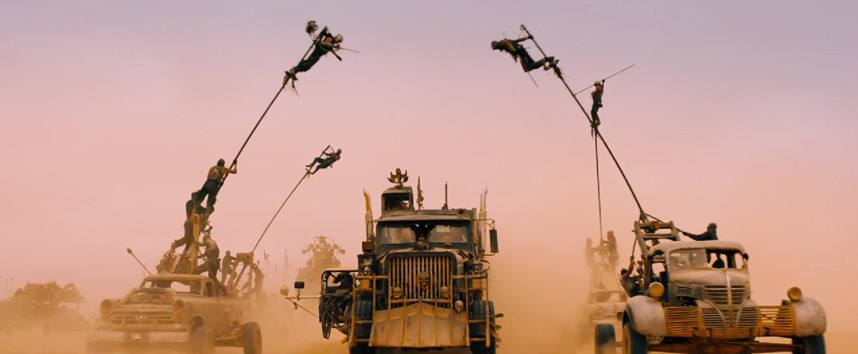
5. MAD MAX: FURY ROAD

4. SON OF SAUL

3. CREED

2. INSIDE OUT

1. PHOENIX


I apologize for the comparably solemn and subdued tone of this year's posting. I suppose this year, the only gift I can give you is the truth. May we all have a seriously Happier New Year.