Thursday, August 8, 2013

"You're not just a crazy child, are you?"


I don't know what specific instance was the changing point that transformed my relationship with Karen Black from a familiar acquaintance to a genuine friend. I suspect that by the time, during a repeat visit to my former workplace, she fixed my poorly-knotted tie and suggested that I not wear dark green, we were already there.

As you read through all the expressions of sadness and resignation that have come in the rather shocking announcement of her death, one day after her husband posted a blunt but still uplifting account of her cancer battle, there are roughly two dominant strains of fandom and memory for the great actress - the strain that recalls her period of stand-out performances in challenging '70's movies (CISCO PIKE, RHINOCEROS, YOU'RE A BIG BOY NOW, and a few others you've already heard name-checked) and the strain that recalls her long association with horror films (TRILOGY OF TERROR, BURNT OFFERINGS, HOUSE OF 1000 CORPSES) - both of which used her unusual presence to maximum advantage. Both strains, however, also helped to forment a meme that stayed with her until the end, a meme that as early as 1976 she acknowledged in a Photoplay interview with the pull quote, "I truly am a bit crazy." 

From all my memories of Karen, abstract and direct, I could tell this was an identity that she wasn't always happy with, but deeply understood. There would be mercurial moments, such as reacting negatively to David Letterman's ostensibly good-natured ribbing over her then-recent appearance in the Italian-made JAWS ripoff KILLER FISH. Sometimes she could use it to upend convention: aside from the family connection of collaborating with former husband L.M. Carson and her son Hunter, director Tobe Hooper surely made a sly joke to the audience of his 1986 remake of INVADERS FROM MARS by casting Karen as the only adult not under the control of the alien invaders. But in the best moments, her "crazy" allowed all the people on the margins who normally did not get to command a movie watcher's attention to have a surrogate, someone who got them and cared about them, and insisted on presenting such characters with truth and empathy. Celestial happenstance even helped along the way: while her stage name of "Black" merely came from her first marriage, it almost prophesies her long association with dark characters, and considering that her birth name was Karen Blanche Ziegler, one not afraid of etymological puns would say that she literally transformed herself from white to black. It's easy to reason why so many disenfranchised souls...goths, gays, film geeks like me...all the "crazy children"...are feeling an extra sense of loss today.

And besides, if Kembra Pfahler had named her band "The Voluptuous Horror of Piper Laurie," would it have had quite the same appeal? I really don't think so.


I was friends with Karen for a decade. I helped set up her merchandise table at a horror convention. We talked on the phone about music. During a Q&A at UCLA after a screening of COME BACK TO THE FIVE AND DIME, JIMMY DEAN, I posed one of my usual arcane queries, and from the stage, Karen replied, "Marc Heuck, ONLY YOU would ask a question like that!" I was once late for work because I lost track of time helping her get a VCR up and running in her house, a comical episode which my supervisor failed to see any humor in as he bawled me out. 

She made me soup.

Most memorably, I convinced her to sit with me for a DVD commentary track on her very underrated 1973 thriller THE PYX. For years she was reportedly not pleased with the film, and it took a fair amount of creative talk and cajoling on my end to get her to agree to participate, then it seemed to take months to find a date when she was free to do it. But it was a great day when it finally took place. I picked her up to drive her to the studio, and offered her a bottle of Moxie soda I'd picked up for the occasion, in tribute to her own titular equivalent; she declined, not being a sugar consumer, but appreciated the gesture. It took longer than normal to get started, since the one engineer on duty seemed to be occupying some other chemically enhanced headspace, but once we got rolling...well, you can hear that for yourself on the DVD; aside from an embarrassing amount of "um's" and "ah's" that totally negate all the hard work I spent in that single Toastmasters meeting, it's a great chat that, among other things, brought her around to a new positive attitude on the film. This turnaround meant a great deal to me. It seems so often I meet a performer who, for whatever reason, has sour feelings for something they did that I personally find very good, and I set about trying to help them see it through my eyes and reappraise it. And I felt a very personal connection to THE PYX, because its heroine Elizabeth Lucy, a conflicted soul longing for reconnection with trappings of her lost home while in a downward spiral of sex work and heroin addiction, reminded me all too much of an absent friend of my own. I dare say, when I brought this up in my courtship for her participation, this emotional aspect is what made her decide to take another look at it. For obvious reasons I didn't discuss this in our commentary since we were focused on Karen and production stories, but I don't mind sharing that sentiment here

When we wrapped, we went to dinner to celebrate, and we opted for Mediterranean, a most posh, multi-course feast...which, when I discovered to my then-horror I had to pay the entire tab on it, made me wish juuusst a little that maybe I had chosen her second suggestion of Shakey's Pizza. But then I shrugged my shoulders and laughed and thought, well, how many opportunities does a fellow get to buy dinner for an Academy Award nominee? In retrospect, when I look back on her constantly accepting tiny film projects to keep working, and the recent crowdfunding effort to offset the enormous costs of keeping her cancer at bay and her family at bedside, I would have gladly bought her multiple Mediterranean dinners at the same price. It's not like I've done any better at economizing.

Despite all of those memories, for some reason, I couldn't bring myself to make contact with her or her family after yesterday's announcement, when there was still a chance to get a message to her. Maybe I thought there was still too much going on for them to be receiving messages, or that I wasn't a close enough friend to be chiming in on this family time. Naturally, I regret that. Our mutual friend Ronee Blakley, who has logged more years of friendship with Karen, thankfully did get in touch with her one last time, and received this reply:

"Thank you darling! Message comes at a good moment!"

The statement contains as many layers as her best characters.


Where normally, one would post in closing some classic glamour shot, I've chosen to offer this image her family made public when keeping contributors to her fundraiser abreast of her treatment. Look at her smile, her gaze, her pose, even her choice of clothes (She really did know people's colors): it's as elegant as any library still of her available. I was debating whether or not to crop the intravenous from this photograph, initially thinking it would intrude on the vibe, but as I listened again to our PYX commentary, she talked about her research into addiction, of how the woman she studied and interviewed talked of learning to love the needle. Now look at that smile again. If she hasn't learned to love that needle in that moment, she's damn well *acting* like she does. 

Which means Karen Black returned to the white on her own terms as best as possible.

Friday, March 29, 2013

Bolts From Above Hurt the Movie Down Below


Here is a glimpse inside all the random thoughts that ran through my brain during the midnight screening of Tyler Perry's TEMPTATION: CONFESSIONS OF A MARRIAGE COUNSELOR I just came home from:

Century City has apparently done away with their 3 hours free parking. Alright, I guess all the malls are now. Rates approximately 1/hr for shoppers and diners, AMC patrons up to 5 hours/$4. So let me get this straight: if I validate, then regardless of how long I was at the theatre, I'm paying $4? It would be cheaper if I didn't validate? Well, this may be the last time you see me darken your multiplex again. I sure as hell can't afford any other attraction in this mall. Why don't you just hang the sign INCOMES UNDER $50,000 KEEP ON DRIVING;

Any movie title that starts with CONFESSIONS but does not involve Robin Askwith inadvertently getting it on with posh birds in swinging London is automatically suspect. Thrill me, Mr. Perry, or at least give me someone without trousers when the vicar shows up;


Lionsgate has their white "Heaven" logo for their regular movies and their red "Hell" logo for their horror movies. Hasn't Perry made them enough money to get his own color-coded logo? Maybe mauve, like one of Madea's housedresses;

Oh, so this movie is going to be told in flashback? Aha, then instead of Gene Siskel's old question, "Is this movie more interesting than having dinner with the principal cast?" I'm going to be asking, "Is this movie going to teach me anything I didn't already learn from Charlene's 'I've Never Been to Me'";


Hey, it's the nurse from BUBBA HO-TEP playing Judith's bible-thumping mom. I guess if I had inadvertently given a happy ending to the King of Rock'n'Roll, that would have been a Come to Jesus moment for me too;

Vanessa Williams is the new Faye Dunaway;


Wait a minute, Vanessa...Faye...brainstorm: remake NETWORK with all-black cast! Oh no, that already happened in real life on BET. Speaking of, how ya livin', Debra Leevil?;

Renee Taylor here looks like Harlan Ellison in drag;

Husband promises Judith he's not going to take her to the $1.99 buffet. Does this mean he'll at least spring for a $2.99 shrimp at Long John Silver's?

Whoops, hubby forgot Judith's birthday, so he's going to lip-sync "Try a Little Tenderness" shirtless to cheer her up. Sorry, Brice, Duckie did it better;


Meanwhile, apparently, Harley has been learning his seduction technique from Positive K;


Okay, Tyler, I know you're sending the characters to New Orleans, and African-Americans invented the genre, but Woody Allen owns using Dixieland music in a romantic montage. I'm waiting for at least an appearance by Tony Roberts now;


No, the Jewish one;


Yes, him, the one who looks like Spike from COWBOY BEBOP;


Mama suggests Brice needs a whipping, claims it's from the King James edition. No, actually, sounds more like it's from the RICK James edition;

There are unseen people being discussed by the secondary players. Roger Ebert's rule of "economy of characters" has thus already told me the big reveal;

Uh-oh, it's the middle of the night, Judith's been bad, and now her mama is shreiking that the Devil is inside her. Please, please, let her start talking about her dirty pillows! Better yet, give Judith dormant psychic powers and let her levitate some kitchen knives!

Which reminds me - when I was growing up, we had BLACULA, BLACKENSTEIN, ABBY was basically BLACK EXORCIST, hell we even got BLACK SHAMPOO...why did we never get BLACK CARRIE? I would have paid an older kid to buy my ticket and sneak me into that movie!

All Judith wants to do is take a shower right now, and her mama and husband won't let her. I don't dare ask what would have happened if all she wanted was a Pepsi;


Harley also apparently has been taking points on how to set a party mood from Mr. Boogaloow in THE APPLE. Since Judith opening a counseling practice with Harley, does this mean Brice has to listen to Grace Kennedy sing first before getting her out of the contract?


Oh, no he didn't strike Judith's mama! Now I have proof the most famous Tyler from Georgia took some cues from the second-most famous Tylor in Georgia, because here it is dramatized in CinemaScope, folks - dick will make you slap somebody!


Whoa, an extra fillip upon the expected big reveal! "What's wrong?" the girl asks Brice. He should be replying, "What's wrong is I've never seen a Tyler Perry movie before; if I had, I would have known this was coming."


Conclusion: this is now tied with DEAD MAN DOWN as being a movie most likely made by someone from another planet, using the English language and dramatic structure in the same maladept fashion that ABBA wrote their first songs in English. I don't know if the African-American community was looking for their own version of THE ROOM, but they've got it now. Actually, one crucial difference: this was actually entertaining, I will go see this movie again. And thus if you're feeling the urge for bad behavior, go indulge. However, if you're pinching pennies and can't afford a first-run movie ticket, or you just don't believe in the whole outsider or camp principle of movie watching, but you do want to see an attractive woman learning about the pitfalls of Temptation from a rich suitor, with occasional interludes from The Big Book, here's a condensed version you can dance to:


Ye gods, Corina looks like a younger, hotter Madea. I'm not comfortable with that. Let's try this again:

Personally, I'd still rather see a full on Alexyss K. Tylor directed production in the future. Maybe she can get BLACK CARRIE made just in time to compete against that damned remake. That would be an onscreen depiction of some serious Vagina Power.  C'mon Hollywood: hit the bottom, work that middle, make this happen!

Wednesday, March 27, 2013

Inconceivable Baster

Though it's hard to believe for all of us arrested adolescents who have eagerly followed that legendary Sundance "Class of '92", just as all of us have gotten older, today, so is the de facto Big Man on Campus of that collective. Today is the 50th birthday of the world's favorite directorial lightning rod of all things uplifting and unseemly about modern film culture, a man both championed and castigated (sometimes by the same critic) but impossible to cast aside, Quentin Tarantino. I've been an eager follower of his work for so long, I can remember when Film Threat magazine wasn't at war with him, and in the thirteen years I've been immersed in the Los Angeles film lovers community, I've had the privilege of having more than one lengthy conversation with the man, and also more than one alcoholic beverage. As such, yes, I am not only in the tank for the man, but have been tanked as well.

There is a really fascinating through line in all of his movies that as yet, almost no critics have openly explored. It's been a theme on which I have long contemplated writing an entire book; I already have the title. I don't want to divulge either element, because in all likelihood if I do, some other guy who isn't shackled by a $14/hour retail job in a $1000/month city will just usurp it and run with it, and kill the market for my version when it finally gets done in Godard knows how many years.

However, as a small gift on his birthday, I'm presenting a sidebar sliver from what will be my INGLOURIOUS BASTERDS chapter. I don't expect the big man to read this, or even agree with any of it, since that would be imposing a singular reading on a work that contains multitudes. But for those of you like me, who see such interesting threads in the tapestry you begin to worry if Paul Bettany is going to materialize in the room, I think you will enjoy this. I published an earlier version during the glory days of MySpace, so I apologize if there's 23 or so of you who already saw this piece.


A frustrating aftereffect from watching INGLOURIOUS BASTERDS is that, since with any Tarantino production, the viewer develops a substantial interest to see films subreferenced within it, sadly, many of them also prove to be among the hardest ones of the near dozens of homages within. And two in particular for me are the most fascinating, because of what they unconsciously lend to reading the film.

The first, Andrew L. Stone's HI DIDDLE DIDDLE is a light madcap musical comedy of romance, chicanery, and schemes within schemes, that features one of the few successful sound performances by silent great Pola Negri. Besides's Pola's mention in the "celebrity" game in the basement pub, the film is directly, if briefly referenced, through a phonograph playing the standout number from the film, "The Man with the Big Sombrero," originally performed by June Havoc, rerecorded in French by Samantha Shelton. A promo clip, directed by music video veteran Meiert Avis, even digitally inserts Shelton into the exact scene from the film, where she mimics Havoc's choreography to a T, as you will see in the clips below. I was always dismayed that this neat little item was not included as a bonus element on the soundtrack album or on the home video releases of BASTERDS.

 
But what makes things interesting about how this film has its place in the stew of influences is that HI DIDDLE DIDDLE is one of the few American films that had even a whiff of being not 100% enthusiastic about U.S. involvement in World War II. Let's say the typical American sentiment of participation can be approximated in Eddie Izzard's observation of English war movies of the period, where the otherwise-looked-down-upon proletariat were suddenly made to appear noble because they were going off to fight and die..."We as East Enders, we as people from the East End of London, the working class of London, we must go with our strange accents, go to the war, I must do it." (I always wondered if unconsciously this played a part in Tarantino's plotting of the Basterds' modus operandi, considering that the punchline of this bit is the soldier promising his children, "I'll bring you back a Nazi, with real hair!") By contrast then, as detailed by critic and historian David Gasten, HI DIDDLE DIDDLE gently but firmly suggests that "the war" has so overtaken every aspect of American life that nobody can concentrate on anything else, that the screwball events and complications that occur in the story would never take place if everyone weren't obsessed with doing their ostensible patriotic duty. And as all these events interfere directly with a young hero with only 48 hours of shore leave to marry, and more importantly consummate said marriage, it's also rather daring in depicting the otherwise taboo subject of wartime cockblocking. 

Tarantino has cited his love for HI DIDDLE DIDDLE on multiple occaions, though its politics seem to be less important to him as its relentless pile-on of HELLZAPOPPIN'-style gags, so perhaps any sort of statement on patriotism is not intended on his part. But over the span of BASTERDS, as our normal emotional responses to wartime tropes are questioned and subverted - the steely, ignoble nobility of the German major who chooses death at the hand of the Bear Jew; being in a theatre watching and cheering the massacre of Nazis who are in a theatre watching and cheering the massacre of Americans; - it is entirely plausible that amidst what looks like a rah-rah-America movie about kickin' Nazi ass, that very notion would be tweaked by referencing one small occasion when Hollywood did not swallow the "Good War" pill. 

The second film in my sights, ALLONSANFAN is a bitter epic satire by Paolo & Vittorio Taviani, arthouse darlings from the late '70's lauded for films like PADRE PADRONE and NIGHT OF THE SHOOTING STARS, and still making waves today with their just-released neo-realist tale of prison lifers staging Shakespeare, CAESAR MUST DIE. Taking place post-Napoleon in Italy, a former Jacobin revolutionary named Fulvio (Marcello Mastroianni) jailed for his rebellion, has been freed and just wants to go back to his former life of comfort. However, he is dragged back into the fruitless struggle against the powers that be by his former comrades, no matter how many times he secretly betrays them and tries to escape to "normalcy." There are complications along the way due to immediate family, sexual escapades, illegitimate children, and other surprises. And his venality is especially brought into contrast by a naively doggedly young buck named "Allonsanfan" his name a comical malaprop of "Allons enfants," the first words of the French Marseillaise, indicating his status as a true believer in the revolution, versus Mastroianni's status as an opportunist at best. Made in the early '70's, it got a belated U.S. release in the early '80's, but has been long unavailable in any licensed form domestically (though I've seen it bootlegged to YouTube and torrents are likely out there). Thus I suspect Tarantino never saw this film - likely he just had the soundtrack as a Morricone fan and thought the score was cool. Nonetheless, there is definitely ground for homage deeper than just music.

Spoilers here, but you're not likely to see this movie anytime soon, so ya might as well keep reading...

The striking music that is featured in the ending and credits of BASTERDS, and as such has become synonymous to the movie in the same way Fukasaku's theme to BATTLES WITHOUT HONOR OR HUMANITY will be thought of as "the KILL BILL theme," is especially crucial to the ending of ALLONSANFAN. After all the Jacobins but Allonsanfan have been massacred by the very peasants they claimed to be fighting for, Allonsanfan finds Fulvio, and lies to him, saying the mission has succeeded, and the people have joined the soldiers. Fulvio in turn hallucinates, in a vivid touch of surrealism which uncannily also suggests some of the imagery later used by John Landis in his video for Michael Jackson's "Thriller" (though of course nobody in that project saw this film either), the living mixing with the dead whom we have seen perish throughout the course of the film, in a last dance of defiance; the composition is called "Rabbia e Tarantella," or "Rage and Dance." While Fulvio dismisses Allonsanfan's claim as ludicrous, he gives in to the fantasy, and dons his betrayed comrade's red color jacket, which causes himself to be killed shortly after by the forces he sold out to. Symbolizing the old maxim of Hell's greatest torment is for traitors, since he has spent the entire movie being torn between the camps of rebellion and bourgeoisie, he dies being a member of neither.

Fast-forward this to about 6:20:

Once you have processed this imagery and information, it's easy to find parallel when in BASTERDS, Col. Landa, who has betrayed the Germans for his own comfort, is himself double-crossed by Raine and marked for good with the swastika. Though there is no "dance of the dead" in this scene, if indeed Tarantino saw ALLONSANFAN, then perhaps by hearing this "raging tarantella" over this sequence, we are to imagine the dead souls of the Jews he killed, the Americans claimed in combat, and the Germans he has turned his back on, all stomping in anticipation of the ultimate traitor getting his comeuppance. Knowing his appreciation for Russ Meyer, as this scene played, I was truly expecting to hear the words of Z-Man Barzell stabbing Martin Bormann in the climax of BEYOND THE VALLEY OF THE DOLLS..."You beg for mercy, while the cries of six million innocents still ring in your ears? They are waiting for you!"

Again, all of this is mere speculation and opinionation. Even if it any of what I suggested were true, Tarantino would likely never admit to any of this, as he has widely held that to reveal what "his truth" is would ruin the creative interpretations that the viewer creates for themselves, which is ultimately his real interest; whatever you got from the movie, you should be allowed to keep that reading if it helped you enjoy it. But subterranean concepts like these demonstrate his skill at not only reassembling diverse influences into a new exciting work, in the same manner that the best hip-hop artists took existing samples to create new musical statements, but also creating interest in the viewer to investigate and experience those very works of influence. And in a climate where most people's idea of classics originate from the '80's, something that makes anyone want to check out anything in Black and White or in a foreign language is a most welcome item.


So while I don't know whether this 50th will find him in the midst of a celluloid orgy, or perhaps abstaining from the cinema to enjoy close friends and heavy cultural discourse, but I hope Mr. Tarantino will derive happiness today not just from a well-lived life, but also from the millions of kindred souls who through his example have discovered many of their new favorite movies have been waiting for them a long time. On behalf of those millions, thank you, Quentin, for introducing us to each other.


Monday, March 11, 2013

Area Man No Longer Amused by "The Big Lebowski"

NEWS · Local · Issue 37·23 · June 7, 2007


COLUMBIA, MO-After almost a decade of easy-going enjoyment, area head shop proprietor Cookie Perlman has renounced his former relationship with the motion picture The Big Lebowski, in an announcement made over the weekend.

“I know it sounds like a sudden 180 degree turn, but really, this has been building for a few years now,” said the merchant to cashier Donavan Baldasare, demonstrating the seriousness of his decision by displaying the broken shards of what had been his copies of the DVD and CD soundtrack of the film. “I’m sorry it had to come to this bitter an end, but I was left with no choice.”


Perlman recalled how his first encounter with The Big Lebowski in 1997 had not been a promising one. He had been initially quite annoyed at the cartoonish, over-the-top characters and situations, particularly the bullying behavior of second lead character Walter Sobchak. By the time the a scene depicting an elderly television writer confined to an iron lung came on screen, Perlman yelled out in frustration, “Isn’t there anybody normal in this movie?” Nevertheless, he did find the ending, in which The Dude has lost the money, the car, the rug, and his best friend, rather interesting, and determined to give it another try.

“After a while, I was able to forgive my initial misgivings and enjoy the story,” said Perlman. As friends and acquaintances discovered Lebowski, he found a sense of camaraderie in their shared pleasure. And when an employee of the video store next door to his tipped him off that they planned to junk their last VHS tape and not restock it, Perlman enthusiastically told his customers to continually rent the tape to demonstrate to the store that it was worth keeping in stock. “In my small way, I helped save it from being forgotten,” he said, removing a reprint of the one-sheet from his rack of posters available for purchase.

However, as The Big Lebowski increased in popularity, Perlman noticed a shift in the behaviors of its fans that worried him. “When I was with my friends, and the conversation left itself open to drop in a quote from the movie, that was fun,” he told Baldasare. “But soon after we might go to parties, and if I quoted it to a friend, inevitably some creepy guy near us we didn’t know would take that as an invite to join our conversation and start rattling off every line he knew. Yeah, we get it, you memorized all the dialogue. That doesn’t make you interesting, okay?”

Another point of annoyance was when a former co-worker and fan of the film got married to a fellow fan, held the ceremony at a bowling alley, and the couple later adopted a marmot. “Which, of course, they named Bunny,” he fumed.

Assistant store manager Iphigenia Wuso recalls a particularly galling incident at the head shop 18 months ago when two members of Thor’s Hatchet, a local skinhead band, came into the store. “They spotted the poster for sale, and just started saying ‘Shomer fuckin’ shabbos,’ over and over again. These are guys who want to kill the Jews and here they are dropping Hebrew that they heard in this movie, with no sense of irony. Well, Cookie wouldn’t serve them and told them to leave, and they tried to be funny and say, ‘We cut off your Johnson,’ as they walked out. Okay, maybe if they had said that line about Nazism being an ethos, that could have been funny, since they were real Nazis. Or ‘Don’t fuck with the Jesus,’ because they’re supposed to be Christians. Hell, ‘Shut the fuck up, Donny,’ the most repeated line in the movie! But ‘We cut off your Johnson?’ That doesn’t have any context! And we both just shook our heads.”

Perlman explained that his decision to break all ties with the film came after a recent screening he attended with Wuso. “There was nobody who looked like me there. These were Maxim-reading, Dave Matthews Band-listening, date-raping, gay-bashing, drunk-driving, high-fivin’ frat boy scum. And they were all drunk and stoned…okay, look, I don’t have a problem with that, I mean, I sell bota bags and water pipes for a living…but they were loud and rude and uncool, leaving their beer bottles all over the place, puking in the lobby, treating the employees like crap. The same type of guys who come into my store and yell ‘Got any hash pipes?’ and I have to kick them out or else the narco squad will shut me down. I go to that theatre all the time, and they never show up for any other movies; they’re not even regular customers. Guess they’re too busy the other 364 days of the year dropping roofies in girls’ drinks.”

And that, he said, is when he had to reevaluate the movie. “I know it sounds like I’m some college radio douche who dumps a band he likes because they’re popular,” he explained to Baldasare, handing him T-shirts bearing famous catch phrases from the film, now destined for the dumpster. “But honestly, the movie was never that good. I mean, if thugs pee on your carpet, shouldn’t you call the cops? If you had a guy like Walter in your life who kept contradicting you and pushing you around, you’d tell him to shove it and find a new friend, right? And those guys who made it, the Cones, Cowens, whatever, look at the crap they’ve made lately. Intolerable Cruelty? The Ladykillers? I can’t find anything redeeming in it anymore. I realized I was giving this movie a pass because it didn’t suck. Far as I’m concerned, they’re dead to me; I’ve never heard of ‘em. You show me a picture, I’m gonna say, ‘Who are these guys?’”

When Baldasare reminded Perlman of the exchange between The Dude and the cab driver about the musical validity of the Eagles, Perlman replied, “Okay, so maybe there’s still some kinda funny stuff in there. Maybe it’s irrational to blame a movie, but I’m sorry, my memories have been ruined. It’s like using the c-word with your girlfriend, or if your dad came home in a drunken fury and beat you to an inch of your life during a good episode of ‘NIGHT COURT.’ It’s the point of no return, friend.”

Concluded Perlman, as he began to unpack a fresh supply of Family Guy novelties, “I wasted ten years of my life on a meathead magnet. The Dude can go to Hell.”


Previously featured in The Scallion - reprinted without permission*


*(OK, so if you're reading this ultra fine print, it's time to come clean. Years ago, as an exercise, I wrote a humor piece in the style popularized by the website named for the allium sepa plant. But rather than try submitting the piece, since I knew they didn't take submissions anyway, I decided to have some fun by every now and then "reprinting" it in emails and message boards and claiming that I had first seen it at a website that was similarly named to the one being emulated, but which had mysteriously "vanished" from the web. The ruse worked; a lot of people were convinced that it came from elsewhere and it sparked further discussion. I figured now, since the subject matter is marking an anniversary, this was a good time to take it wide and take my proper credit for writing it. Of course, the big question that has now arisen in your mind: is this story remotely autobiographical? Well, I've never worked in a head shop. I did have a crush on a co-worker named Iphigenia once though. Let's just say I think many other films by the directors in question are much funnier than the one being satirized and leave it there.)


Sunday, December 30, 2012

"Oh how I wish tomorrow would never come..."

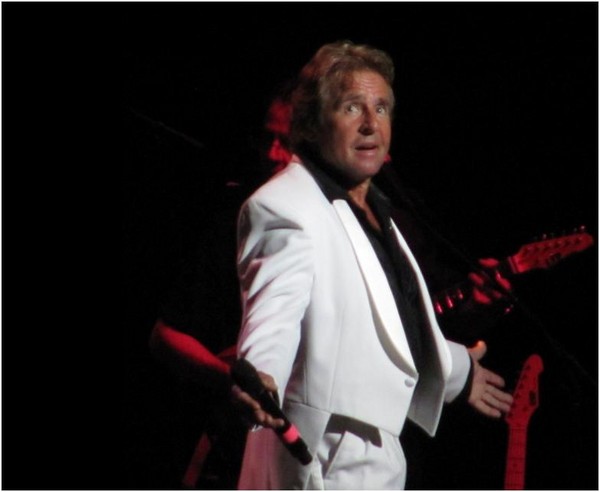
I spent the majority of this past February 29th thinking about the untimely passing of Davy Jones at the age of 66, and today, on what should have been his 67th birthday (as well as the 70th birthday of his still-vigorous bandmate Michael Nesmith), I started thinking about it again. Like many of you, this took me by terrible sad surprise, because of the abruptly fast nature of the event: he had appeared just two weeks before at a Hollywood autograph collector's show in reportedly excellent spirits, and as late as that previous Tuesday night, right on my Facebook feed was a blurb promoting an upcoming solo performance in Southern California. On a psychological level, I don't think I'm the only person to have thought in the back of their mind that, just maybe, we'd have the Monkees for many more years to come. Like many a stand-up comic's jokes about Keith Richards or Motley Crue, it was almost as if nothing could kill the Monkees: consider that from their inception to that date, we had lost Morrison, Joplin, Hendrix, Redding, Presley, Curtis, Nilsson, Cobain, Garcia, Strummer, Brown, Barrett, Cash, Chilton, Jackson, Houston, two Beatles, two Beach Boys, and three Skynyrds...yet all four of our beloved 8-button-shirt beaus were safe and healthy. The bubble finally broke that day, when, to put it in mordant video terms below, Davy drew the short straw:


I once opined that I found the Monkees to be more interesting than the Beatles.


Before you get your Union Jack knickers in a twist, I did not say "better," I said "more interesting." Sure, the Fab Four in their remarkably short tenure of 8 years together left behind an amazing legacy of music and personality, but at the core they had a sensible, straightforward story: four fellows started a band, got popular beyond their wildest dreams, used their worldwide appeal as an opportunity for some experimentation, and then agreed to part ways when a group dynamic was no longer suitable for them. By comparison, the Monkees trajectory is a little more colorful: young producers decide to capitalize/spoof on Beatlemania by creating a fake band for a TV series, hire two legit musicians and two actors to essay the roles, but instead of just going through the motions dictated by their creative directors, the foursome decide to really hunker down and learn both how to coalesce and create music as a real band and how to hone their stage presence and delivery as comic actors, consequently creating a body of work that has stayed just as relevant and entertaining as the Beatles' for 40+ years. No one could have expected, or would even have had reason to expect, any of this when Screen Gems greenlighted this TV series in 1966; all the upper brass wanted was some decent ratings and some merch sales. Instead, a multi-pronged dynasty emerged, not just involving the band members, but the body of tremendous songwriters who provided them material (Tommy Boyce & Bobby Hart, Neil Diamond, John Stewart, Harry Nilsson), the pool of writers and directors who contributed to the show (notably Paul Mazursky and James Frawley), and quite significantly, the producers behind the show Bob Rafelson and Bert Schneider, whom together and apart made wide changes in popular American film. As film historian Christian Divine bluntly put it, "Without The Monkees, we might not have had EASY RIDER, FIVE EASY PIECES, THE LAST PICTURE SHOW or much of the 1970's New Cinema. Seriously."

And in 1966, when very few of the ways of seeing or hearing in our modern day could even be contemplated, nobody in that hypothetical smoke-filled boardroom would have anticipated the wide swath of loss, love, and gratitude that would emerge when all these years later, one of those boys left us. From a surprising spectrum of celebrities past and present, to a fan turned manager and exhaustive historian for the band, and a slew of bloggers that I personally either admire in awe or have downed multiple shots with, anyone who saw a television or listened to a radio had something to say. Even People magazine, normally focused on youthful celebrities and reality show scandals, and thus would have been expected to note his passing in a sidebar or in a round-up, devoted a full cover and center section to Jones, an honor normally only bestowed in cases of massive stardom or questionable circumstance. I can declare with full confidence you cannot find anyone beyond, say the trolls at a certain isolationist Baptist church, who didn't have a kind word to say. And weeks later, when most celebrity deaths quickly leave our minds and we go back to the business of the day, my friend and fellow critic Alonso Duralde summed up my feelings succinctly: "I'm finding myself more bummed about Davy Jones' death than I would have foreseen."

I wouldn't feel the need to shout it like number 7A, but there is a giant legacy this 5'3" showman left behind. It was readily apparent when the initial pilot for "THE MONKEES," which had tested poorly, scored enormously favorably when Davy's screen test was included. It was humorously apparent when, in the occasional rare episode where a girl was chasing Peter instead of him, it was put forward that "It can't be you every week, Davy." And as Michael Nesmith observed in a memorial interview for Rolling Stone, it was as if the show was built around him. I do feel that Papa Nez is selling his gifts a little short, but he is correct that in an already unlikely band environment where in one concert, you could be treated to Peter twanging folk on a banjo, Mike doing his prototypical country-rock, and Micky indulging his rhythm & blues wailing, Davy was the consummate pro that could tie all these disparate styles together, and looked right at home doing it. He was as interested in belting out Stephen Foster as he was in learning about "the key of soul" from THE WIZ composer Charlie Smalls, and if someone wanted to put grungy arena rock guitars behind him for cheap irony, he sold it cleanly and happily. I always wished he would try performing "Sheila Take a Bow" by his fellow Mancunian Morrissey, or my biggest dream cover, him and Micky trading verses and shout-outs on Outkast's "Hey Ya", since the song has the Neil Diamond-esque meter and Pentecostal flair of a classic Monkees song, the music video by director Bryan Barber has the cheeky humor of a typical Monkees episode, and, well, come on, you know how groovy it would have been to hear Davy tell the ladies, "Lend me some sugar, I am your neighbor." Alas, those two cuts will only be heard on the jukebox of my mind now, probably right after the Whitney Houston/Serge Gainsbourg remake of "I Love You...Me Neither."

But see, that's just singing. Add in his ability to deliver a punch line, keep a straight face, do Broadway shows nightly, the occasional horse race...if he wanted to do something that would entertain the crowd or his own artistic appetite, he got it done. I may put "Renaissance Man" on my business cards, but he lived that title.


So while I can't mark this birthday as an ongoing concern, I will most certainly pass the bottle for Mister Jones. When everybody loves you, oh son, you're just about as funky as you can be.

Tuesday, December 25, 2012

When It's Time to Zero the One Two

2012 was, from January onward, just a really damn good movie year. Seriously. Within weeks of the beginning, when it should be just Oscar bait going wide and genre junk getting dumped, you got a crafty little Soderbergh action movie, a solid and tense tales of man versus wolf in the wild, and a challenging low-fi rebuke to superhero mythologies, and all of those before Valentine's Day! And the goodness kept on going. Sure not every weekend could bring a gift, some Fridays yielded nothing but Fresno. (I've got a violent squint like Our Man Flint permanently fixated on you, McG!) But when I catalogued everything I saw this year, I had way more 3.5 and 4 star movies than 2, and I had a damn good amount of 4.5 and 5 star movies as well. It would appear that the studios finally kept the lameitude in check...or just delayed it to 2013 for 3-D post-conversion.

And if you'll indulge me a moment to catalogue myself, I think my personal lameitude was significantly reduced as well. I accomplished a lot of good things. Not just here at the blog, which, granted, has become more of an infrequent salon, but in that great big real world as well. I met Dario Argento. I was interviewed for a film preservation documentary. I cut a homemade trailer for one of my favorite cult films that the director liked more than what a major studio put together originally. I did an intensive Q&A with Todd Solondz that offered real insights. Hell, I even created an internet meme! So yeah, maybe I don't post here enough, but if you're paying attention, you'll see my handiwork in other places, and that's gotta count fer sumthin'.

But let's focus on the reason why you're stealing away from your family on Christmas Day and reading this blog: My assessment on the year in movies.

First off, in the grand tradition of Naval Firsties putting $1 in a kitty to be awarded to the graduate with the absolute lowest GPA, my special Jury Prize, or for this occasion, the "There There Honey" prize, goes to THE OOGIELOVES IN THE BIG BALLOON ADVENTURE. There must be something about the pretense of creating movies "exclusively for children" that makes the creative team throw rationality out the window like a box of melted Otter Pops - which, coincidentally, is the approximate visual aesthetic of this film! When your toddler screams "Dada!" during this show, you may not know whether to reach for a pacifier or a Salvador Dali volume. The fact that the advertising focused solely on it being from a "marketing wizard" that sold you other prefab merchandise-driven kiddie fare should make one want to enjoy said astroturf artists eating their cold mush. But dammit, when I'm presented with disturbing innuendo between an intelligent vacuum cleaner and a sassy talking window, I'm giving in to the insanity. They may not have earned enough box revenue to even pay off the giant Sunset Blvd. billboard featured here, but they'll happily get my money again if the ever-threatened midnight hipster revival shows rev up.

Speaking of revving, the keys are in the ignition, let's prime the engine...

10 worthwhile films nobody saw but me: 
Alps
Compliance
Dark Horse
Goon
The Hole
Kill List
Middle of Nowhere
Natural Selection
Nobody Else But You
Polisse
And lets put this thing in gear and take one last drive past The Top 13 of 2012:

13. CLOUD ATLAS

 12. MAGIC MIKE
 
11. THE RAID

10. DAMSELS IN DISTRESS

9. LOOPER
 
8. DJANGO UNCHAINED
 
7. ZERO DARK THIRTY
 
 6. MOONRISE KINGDOM
 
 5. THE PERKS OF BEING A WALLFLOWER
 
4. THE MASTER
 
3. AMOUR
 
2. BEASTS OF THE SOUTHERN WILD
 
1. HOLY MOTORS

Thanks to all my original readers, the new ones who've been steered here by names you trust (and industry giants I still can't believe I get to call peers), and anyone who found this place from googling for cheesecake photos of '70's drive-in actresses. I'm grateful you take the time to visit. I warn you this is going to be more of a pop-up restaurant than a full-time diner in 2013, but I'll serve you my specific style of movie dishing as best and as often as I can, so please check in if you don't hear from me.

Monday, November 5, 2012

"What are all these fates, driven on pell-mell?"

The following entry was going to be my contribution to Jeremy Richey's outstanding Paul Thomas Anderson Blogathon at the Moon in the Gutter site...two years ago. Unfortunately, personal obligations, ridiculous computer problems, and a last-minute change of my essay's focus all conspired to make me miss my window to join in. However, in light of the excitement and extraordinary reviews generated by his first film in five years, two retrospectives of his previous films in Los Angeles within the last seven weeks, his ranking as the #1 working director in movies today by both The Guardian and my best friend Chris Price, and the simple fact that I'm hard pressed to resist an opportunity to discuss one of my favorite directors, I'm pulling this out of mothballs. Because if directors are our rock stars now, a concept originating from the '60's French publication Cahiers du Cinema and their staff of critics (soon-to-themselves-turn-directors) notions of auteur theory, then as sure as shootin' Anderson has a permanent position on my cinematic jukebox. An appropriate metaphor especially, since both the cult '60's era music videos machine pioneered by the French, and the special interstitials designed for his DVD release of PUNCH-DRUNK LOVE, both share the name "Scopitones." He has not yet received his own "Cinemetal" t-shirt that the other rawk directors like Scorsese, Herzog, and Jodorowsky have, but that's easily rectifiable:


Ersatz Cinemetal logo created by Kate Willaert, used with permission.

However, in the parade of names, mentors, and influences that fans and scholars tend to cite when discussing Anderson's work, there is one that has never been mentioned, not even by Anderson himself in the few interviews he has granted. As such, one would argue that said person doesn't hold sway in the manner that, say, Robert Altman provided a template for juggling multiple storylines, or that Chayefsky provided a template for punchy dialogue for his films. But as I revisited MAGNOLIA recently, to analyze a crucial plot thread for the essay I was going to write but abandoned, I began to seriously see evidence of a definite, if unconscious, other force of inspiration. And ironically, as in my previous paragraph, it's courtesy of the French.

Claude Lelouch is not a name mentioned much at all in cinematic circles nowadays, let alone offered as comparison to anyone with the hot-button interest that Anderson commands. The few people that even recognize the name would likely write him off as a quaint relic of another era - that guy who made that '60's romance movie with the theme song that could now be used for black ops torture sessions. Indeed, a fair number of his films have not been a priority for me to seek out, both due to the expense involved and what I have perceived as their likely lightweight status. However, Lelouch can lay credit to three very strong, bonafide classic films that may not possess the household familiarity of work by Altman or Scorsese or even Downey Sr. (A Prince), but I insist can be considered, if not directly, then certainly by cultural osmosis, influential to the style of storytelling that Anderson is justly lauded for.


The first of these films is 1974's TOUTE UNE VIE, released in shortened form in the States by Avco Embassy as AND NOW MY LOVE, which, next to his worldwide smash A MAN AND A WOMAN, is easily his most popular film among American moviegoers. It won Best Foreign Film from the Los Angeles Film Critics Association,  and was nominated for an Academy Award for Best Original Screenplay in 1975, against SHAMPOO and AMARCORD, all of them ultimately losing out to DOG DAY AFTERNOON. In much the same way as other not-yet-over-fetishized cult films, mentioning your fandom can admit to you an intriguing and friendly secret club; admirers of AND NOW MY LOVE include prolific screenwriter Scott Alexander, the late critic Gene Siskel, and comedian Fred Armisen, who hosted a rare screening of the film at Los Angeles' CineFamily in 2009.

AND NOW MY LOVE ostensibly promises "a love story that is absolutely timeless" (at least according to one of Embassy's ad campaigns), but that is a bit of a misnomer, in that this movie is obsessed with the passage of time, and said love story consumes mere minutes at the very end of the movie. It opens with B&W, music-scored but otherwise silent footage depicting the turn of the century, with characters who will quickly be gone from the story, and even as it opens up to color and synchronized dialogue, it will be quite a while before we meet the actual protagonists, or fully understand their relationship to the characters we saw at the start. Also, rather than a proper credit listing at the beginning, we will see the names of all the people involved in the production, but in a completely random order that does not designate their role or job description, thus star Marthe Keller is essentially on as equal a footing as the key grip in this sequence. What we are treated to is the history and times, not just of these characters' ancestors, but of the world as well, and how those elements will shape our man and woman, and color them until the fateful moment when they will actually meet.

The original French title, TOUTE UNE VIE, means "a whole lifetime", and as such rather than get details in backstory as we would in a standard romantic film, we're going to watch the legacy and lives of these lovers and derive our drama there. And by the credits' refusal to specify what name did what job, it's essentially saying that much like all the "what's beyond" details that made these people who they are, every person on the crew made this movie what it is, with no one having a higher standing than another. It's a risky maneouvre, to make us sit and wait for what we know is essentially a fait accompli, but it works, as it makes that final payoff all the more exciting. And Lelouch, who put many autobiographical elements into this story, prepared it diligently. The production script was rumored to be over 400 pages, and actors were not allowed to see it in full, receiving only their character's dialogue sides, and often even getting those lines fed while shooting. Again, in light of the film's initial positive reviews, awards recognition, and devoted fandom, Lelouch's gamble paid well. "[The film] is a study on how art of any kind shapes us into who we are, how we use it to create out own reality, and how it helps us understand our place in time," writes recent convert Daniel DiCenso in his review at mubi.com.


That last sentence can also be appropriately applied to Lelouch's even bigger and ballsier 1981 epic LES UNS ET LES AUTRES. Originally shown as a 250 minute 5-episode TV miniseries, it played in most countries in a 184 minute theatrical version, and was briefly released in the U.S. in a slightly shorter 173 minute form under the title BOLERO. Much like it's predecessor AND NOW MY LOVE, it tells a sprawling tale involving the horrors of 20th century warfare and the healing power of art, but instead of building to a meeting of two lovers, it is instead to a convergence of artists from all over the world, progeny of other artists of another time, some successful, some failed, some withstanding more struggles (Its original French title essentially means "these ones and these others"). It also presents its opening credits in an unconventional manner - aside from an opening production credit, title card, and possessory credit for Lelouch, the only text we see is a quote from Willa Cather's O PIONEERS:

"There are only two or three human stories, and they go on repeating themselves as fiercely as if they had never happened before."

That is followed by an opening sequence which ultimately previews what will be the grand finale of the film, an exquisitely choreographed ballet scored to Ravel's immortal composition, while a narrator (Lelouch himself) makes a sort of mission statement, bisected by a roll call of the large multinational cast:

"The people you are about to meet in this film [are here], because their stories are either extraordinary, or very ordinary...All the characters are, or were, real people. This film is dedicated to them." 

The ostensible start of the story is then announced, a dance audition in 1936 Russia, conducted in a long tracking shot almost entirely without expository dialogue, as a performer loses the role she wanted, but gains an admirer whom she will soon marry. When this transitions to an elaborate French music hall show, we are nine minutes into the movie, but the narrator returns to announce the music and choreography credits, and leaves for good to allow another important event to unfold, again without dialogue. It will not be until a good 18 minutes into the movie when we are finally given plot-driving dialogue, oddly enough in English, by James Caan. And from here on, the story goes forward in its ambitious way, often driven more by visual sequences and music rather than with characters speaking expositions, with some actors gaining age over time while others ultimately play multiple roles as parents and their children, until we arrive to the grand climax teased at the beginning.

It is at this point I would like to think that for most fans, some of the parallels are becoming self-evident, but I suppose I should flat out state what the hell the connections are between these movies and PTA's work. For starters, both of the preceding films present stories of children marked for life by the expectations and limitations of their parents, a longtime commonality in the works of Anderson as well, not just in the obvious parallel structure of his equally unconventional epic MAGNOLIA, where his characters are all wounded by bad parenting, but also in the peculiar fatherly bond uniting Philip Baker Hall and John C. Reilly in HARD EIGHT, the ersatz family dynamic of Burt Reynolds and his stable of actors in BOOGIE NIGHTS, the eternally-hazed Adam Sandler breaking free of his dominating sisters and resisting a band of vengeful brothers in PUNCH-DRUNK LOVE, the eroding shred of conscience that ties Daniel Day Lewis to his son and partner in THERE WILL BE BLOOD, and the somewhat dog-and-trainer relationship of Joaquin Phoenix and Philip Seymour Hoffman in THE MASTER. A quote comes into play in the three Lelouch films to be covered here - "Buffalo Bill's son couldn't shoot as well as he did" - and its concise understanding of history and family weight is such that it could have just as easily come out of the mouth of an Anderson character.

On a stylistic level, BOLERO's almost wordless first 20 minutes has a kinship with the almost wordless first 20 minutes of THERE WILL BE BLOOD, where we see the turn of fortune that will mold the manners of Daniel Plainview and H.W. Both of the offbeat openings of the Lelouch films strike a prototype for the wonderful prologue to MAGNOLIA, where he spends almost an entire first reel with a dry narrator (magician Ricky Jay) explaining seemingly unrelated strange events from history, the first even in B&W, to prepare us to understand that "these things happen." Much as Lelouch will figure out how to assemble the surviving characters of BOLERO to either directly participate in, or pay passive witness to, the great dance at its climax, while presenting musical interludes in an unconventional manner, Anderson will bring some of his diverse MAGNOLIA characters together, and unite them all through unnatural musical and meteorological means. And Willa Cather's invocation about the circular nature of history in the former has a perfect mirror in the narrator's closing invocation in the latter:

"There are stories of coincidence and chance, of intersections and strange things told, and which is which and who only knows? And we generally say, 'Well, if that was in a movie, I wouldn’t believe it.' Someone’s so-and-so met someone else’s so-and-so and so on. And it is in the humble opinion of this narrator that strange things happen all the time. And so it goes, and so it goes. And the book says, 'We may be through with the past, but the past ain’t through with us.'"

Most intriguingly, MAGNOLIA offers two very potent bits of, if not proof that Anderson is likely a fan of Lelouch's BOLERO, then at least outstanding happenstance that he's waxing his car in Lelouch's garage, both contained within the portentious episode of "WHAT DO KIDS KNOW" in the middle of the film:

The first question asked of the adult contestants is to identify the author of O PIONEERS.

Later, when the New World Harmonica trio plays their variations of three classical composers' arrangements of "Whispering," the second composer, whom Stanley Spector fails to identify, is Ravel.

It is in the humble opinion of this film historian that this is not just "something that happened." This cannot be "one of those things." This, please, cannot be that.


Another most crucial bit of spiritual brotherhood between these two directors is their mutual spirit of daring to create wildly free and untethered film adaptations of classic literature. Over a decade before Anderson took Upton Sinclair's novel of muckraking outrage against the petroleum industry, OIL!, and extracted only a few characters and scenes to create his more intimate but no less epic character study THERE WILL BE BLOOD, Lelouch took one of the most beloved novels of all time, and did something even more audacious - created an entire new set of characters living in another century, and integrated the book itself as a virtual character that alternately inspires and prophesies their actions through two generations. LES MISERABLES DU VINGTIEME SIECLE (translated subtitle: "of the Twentieth Century") presents Jean-Paul Belmondo as a Jean Valjean stand-in named Henri Fortin (and in prologue, his ill-fated father, continuing his motif of actors playing multiple generations), an illiterate boxer turned truck driver and petty thief who, in the dawn of WWII, agrees to smuggle a Jewish family out of occupied France, and over the drive, listens to them read aloud from Hugo's book, imagining scenes they describe with himself as the hero. When Fortin and the family members find themselves separated and scattered, they each become enmeshed in adventures and crisies that mirror those of the book.

Lelouch's 1995 production of LES MISERABLES is extremely special because it is not just an adaptation or even a modernization of a well-known book, but an speculative demonstration of the impact of this book on people, and perhaps even a nation, long after it's publication. If the two previous Lelouch films mentioned here were about how art can have a positive effect on a life, this film is about how someone affected by that art takes the lesson to the next level. (At the climax, Willa Cather's quote reappears, reinforcing the connection to the preceding films.)  Hugo's book is shown to kindle romance, as when the family patriarch meets his dancer wife when she performs in a ballet adaptation, inspire heroism, as when Fortin's gang decide to become partisans during a crucial attack, and reinforce justice, when it appears that this story's Javert stand-in will have the upper hand. Thus, as THERE WILL BE BLOOD, while drastically different from Sinclair's book, still ultimately shares its moral about the acidly destructive power of greed, so does Lelouch stay true to Hugo's themes of individual acts of mercy and nobility being the force to keep humanity progressing towards a larger good. In a serendipitous fillip to this portion of my essay, Upton Sinclair in fact wrote the preface for initial American editions of LES MISERABLES, proclaiming it "one of the half-dozen greatest novels of the world," demonstrating the kind of spiritual link between like-minded artists that I have set out to dramatize here.

Unfortunately, much like Anderson's directly acknowledged influence Robert Downey Sr., Lelouch is an auteur whose reputation has dimmed in recent years, and is well overdue for reappraisal.  And more unfortunately, unlike Downey, who recently saw many of his earlier works receiving fresh DVD releases from Criterion's Eclipse division, Lelouch does not have an American concern to make that push on his behalf; in the early aughts, Image Entertainment commendably released some of his films to home video, but those editions are now out of print. While continuing to make new films, his last to see a U.S. release was 2008's ROMAN A GARE, which he initially pretended was directed by a younger, handsomer friend to prank the entertainment press that was declaring him a has-been. Even LES MISERABLES, which would seem to be a no-brainer for DVD re-release to ride the coattails of Tom Hooper's upcoming film of the musical adaptation, is nowhere in sight - while it had been available earlier this year for streaming in their branded studio store at Amazon, Warner Bros. recently declared their rights have expired. But in an interview conducted during the release of ROMAN, he insisted, "After 34 films, I am dedicated to filming hope," and by the act of continuing to make new films, he is living that hope firsthand.

And in this final statement, one can make connection to Anderson again. He may not be experiencing any kind of career twilight, and won't for a long time, but his acclaim has always been tempered by perceptions of his bankability, and despite multiple critics' awards and Oscar nominations for his films, the marketplace success of his films have been more modest than massive, and it has been the intercession of mavericks like Michael De Luca and Megan Ellison that have enabled him to get financing to continue making his films. The struggle for an iconoclast is the same regardless of their age or stage of career.  And every one of Anderson's features have ended on a note of hope. Even dark fables like THERE WILL BE BLOOD and THE MASTER offer slivers of positivity for selected characters that allow escape and transcendance from bleak circumstances. The romantic Frenchman and the ballsy Valley boy are just going to keep doing their thing on their own terms, because they got the touch, they got the power...

Again, I have no idea if Paul Thomas Anderson has had any sort of experience with the work of Claude Lelouch beyond, say, his velvety-voiced dad Ernie introducing an ABC Sunday Night Movie premiere of A MAN AND A WOMAN ("Parental Discretion Advised"), so all of my proselytizing may have as much basis in fact as one of Lancaster Dodd's religious tracts. But I stand firm that it is the groundwork and the example set by visionary souls like Lelouch that created the climate that allowed another visionary like Anderson to get his movies made and accepted by the devoted fan base he commands. And to me, that rawks!


Ersatz Cinemetal logo created by yours truly.