Showing posts with label music. Show all posts

Sunday, January 31, 2021

The Movie About The Song That Once Said Something New

It’s been said that before there was the printed word, songs and poetry carried stories to the people for centuries. One learned of ancestral tales and current events through verses and chorus. Then when the printed word allowed for printed music, the symbiotic relationship continued. And when motion pictures allowed for stories to be told with concurrent visuals, one of the first instincts was to reach to pre-existing pop songs to create them. Warner Bros. initially launched the “Looney Tunes” and “Merrie Melodies” animated shorts to serve as prototypical music videos for the songs in their Warner-Chappell publishing catalog. The earliest films of American sweetheart Doris Day were often constructed from entries of The Great American Songbook – MY DREAM IS YOURS, LULLABY OF BROADWAY, ON MOONLIGHT BAY, BY THE LIGHT OF THE SILVERY MOON, YOUNG AT HEART, and more.


Entering into the tail end of the ‘80s, pop song needle-drops became one of the most important elements in entertainment. AMERICAN GRAFFITI, SATURDAY NIGHT FEVER, and PURPLE RAIN became legendary not only for compelling drama but for wall-to-wall music placement. Smaller movies that would otherwise have had marginal box office appeal gained extra promotion and longevity through radio-friendly theme tunes. Soundtracks dominated the Billboard Top100 Album chart. And after years of using cheap cover versions on random occasions, TV shows got serious and integrated music supervision using original recordings by original artists into the process after “MIAMI VICE” became destination television thanks to its striking use of pop songs as score.


It was within this climate that an energetic record company promoter/operator and a gig-hopping musician/producer decided to tap into this symbiotic circumstance. A.J. Cervantes had been a Regional Director of Promotion for Casablanca Records, pushing the earliest Donna Summer and Kiss singles, and the founder of dance music label Butterfly, whose roster included Saint Tropez, who recorded a disco cover of Serge Gainsbourg’s “Je t’aime (Moi non plus).” Ron Altbach had been a founding member of King Harvest, famous for the 1972 lite rock hit “Dancing in the Moonlight,” and a frequent collaborator with The Beach Boys in the late ‘70s, writing and producing songs for the group, and playing in a Mike Love-fronted side band Celebration, who recorded the title theme for Martin Davidson’s 1978 teen comedy ALMOST SUMMER. The longtime friends had launched a new label, Destiny Records, in 1981, and as music video demand dramatically increased with the launch of MTV, they linked the company to an existing firm, Mediacom, who were producing clips and concert specials. And after a solid run of small-scale product, they took an ambitious step upward...


You've heard the song, now see the movie: A California-based company called Mediacom Industries is making a string of low-budget films titled after popular songs. For about $ 2 million each, it has already shot "House of the Rising Sun" and "Hot Child in the City," is now finishing "Nights in White Satin" and is in the planning stages for "Blue Suede Shoes" and "Fire and Rain." These won't be 90-minute rock videos, swear the folks at Mediacom, who prefer to dub the pictures "music-driven films." Most will include the original versions of the songs they're named after, though they'll obviously have to toy with plot lines to turn three verses and a chorus into a full-length narrative. "House of the Rising Sun," for example, is about a female reporter investigating the world of expensive prostitutes. "Hot Child in the City" follows an innocent Kansas youngster to Los Angeles to look into her sister's murder. So far, none of the movies has a distribution deal.

- from wire news report published in The Washington Post, September 16, 1986.


This initial three-picture slate assembled a curious mix of young technicians from Mediacom’s music video activities and some grizzled veterans of television production dating back to the fifties to create the films, with generally experienced but not name-recognizable talent to act in them. In effect, producers Cervantes and Altbach were trying the same retrofitting strategy as WB likely did with their cartoons and Doris Day vehicles: find a familiar evocative song title, come up with a story that it could plausibly anchor, pour through a catalog of other available tracks and see which ones can provide justifiable dramatic placement, and shoot it quickly in a specific part of Los Angeles, giving all three films a sort of uniform aesthetic. In addition, while released to video unrated, with occasional topless moments and plots involving racy behavior, they were chaste enough that their cassette releases stated, “Suitable for broadcast in all media; parental supervision suggested,” ready to adapt to the strictures of any potential country’s low threshold for sex, or what is derisively referred to today as “Amazon Prime Erotica” or “PG-13 porn.”


Eight months later, in May 1987, the trusted independent video label Prism Entertainment announced their partnership with Mediacom (and their California Limited Partnership company Music Video Associates) to release the trio to all media. The budgets for the first three films were cited as between $1.8 million -$2.5 million, likely a combined total for the entire trilogy. While Prism promised a theatrical release in advance of cable and home video availability, no record can be found of any American playdates, and while shot on film, all the entries are clearly edited on standard definition tape with videoburned credits, and seem to adhere to a 1.33 composition, so that claim was likely either wishful thinking at best or outright ballyhoo to gin up video store buyers’ interest, since being able to tout “Direct from Theatrical Release!” was considered a selling point. Prism also reiterated Mediacom’s plans of two more movies to come, this time titled “Blue Suede Shoes” and “September Song.”


Viewing these films in the present day, they are definitely time capsules of their zeitgeist. And considering the ‘80s are still of great fascination to people who were born so long after that time it would be as far away to them as, say, watching The Bowery Boys would be to a ‘70s grade schooler, they’re pretty entertaining on a prime level of anthropological stimulation. All three movies focus on female protagonists and have plots reminiscent of soap operas and Harlequin novels (additional producer and contributing writer Giovanna Nigro-Chacon had previously worked on the syndicated series “ROMANCE THEATRE” hosted by Louis Jordan), so there is a canny appeal to couples rather than just men. More importantly, despite producers trying to impose a template on all of them, by the nature of the parties that made them, there is a vibe and personality to each that makes them interesting beyond just serving as retro eye candy. While the details are subject to a fudge factor, they are being reviewed in their ostensible pattern of release in the second half of 1987 – the year that I started college, Rick Astley released “Never Gonna Give You Up,” the first National Coming Out Day took place, and KFC opened up in China…


Release: VHS street date not located; HBO debut September 16, 1987


Plot: While staging a fashion shoot in one of downtown L.A.’s dormant loading docks, successful but restless photographer Jordan (Kip Gilman) spots a bedraggled homeless girl (Priscilla Harris) who walks through the area, who piques his interest. Tracking her down at a local shelter, he learns her name is Lisa, and entreats her to come pose for him. She ends up crashing at his home studio, and after some awkward attempts at communication, agrees to apprentice under him. The more he discovers about her life, including her long-dormant love of dance, the more he is motivated to detach from his superficial work. But leaving behind familiar environments is difficult for them both.


Creators: Writer William Kronick worked mostly in documentary programming, writing and producing several works for George Plimpton and The Wolper Organization along with behind the scenes looks at movie stunts, plus occasional second unit direction on the Dino DeLaurentiis productions of KING KONG and FLASH GORDON. Director Michael Barnard, doing double duty as editor, was significantly younger than Kronick, and operated a digital production/post-production company, LightningBolt PIX, along with being a frequent collaborator of outsider director Avery Crounse, editing his films EYES OF FIRE and SISTER ISLAND, and directing several videos for Motown. This would be his only narrative fiction film, sticking to directing documentary projects and other tech work, and continuing to keep a foot in the music world, serving as sound editor for Christina Aguilera’s “Beautiful” video.


Cast: Kip Gilman starred in a string of several one-season shows for CBS, including “JESSICA NOVAK” with Helen Shaver, before lucking into a supporting role on “TRAPPER JOHN M.D.” during their 1986 season. He also headlined William Fruet’s surprise hit thriller BEDROOM EYES. And in serendipity to the music-oriented origins of this film, he appeared in one of the best-loved episodes of CBS’ 1986 revival of “THE TWILIGHT ZONE,” “Nightsong” with Lisa Eilbacher, which took its name from the Crosby Stills Nash & Young track. Priscilla Harris has been a resident dancer on Lorenzo Lamas’ synicated music show “DANCIN’ TO THE HITS,” and after a few other credits, left acting to start a dance/fitness studio in Seattle. Kim Waltrip, who plays a predatory model named Stevie, is now a producer/director, with THE DISAPPAREANCE OF ELEANOR RIGBY among her credits.


Influence: Its structure of a diffident artist being stirred by a troubled muse definitely declares an attempt at making a subdued remake of Jean-Jacques Beineix’s BETTY BLUE. Its frequent use of neon colors and often barren, starkly furnished rooms suggests Beineix’s previous breakout hit, DIVA.


Song usage: “Nights in White Satin” shows up 2/3 into the movie at an appropriately pivotal moment: when Lisa goes to the roof of Jordan’s studio at dawn to dance about, and they finally kiss. Most of the other tracks either tap into the glam climate - “Obsession,” Art of Noise’s cover of “Peter Gunn,” “Don Quichotte (No Están Aquí)” - or augment onscreen action – Pat Benatar’s “Sex As a Weapon,” “My Sharona,” “Lay Your Hands on Me.” Amusingly, the video trailer to promote it uses “Rock the Casbah,” which is nowhere to be found in the film.


Reactions: Since Kronick as writer has a documentary background, his insights on the homeless have slightly more accuracy than the average John L. Sullivan screenplay, but it still smacks of typical “O their nobility!” romanticism. Harris recognizes this is her swing for the fences, and throws herself into making her otherwise stock character gritty and believable; she doesn’t speak a word until 29 minutes into the movie, so she does a better than average job keeping our fascination through her facial expressions and behavior up to that point. I think hers is the best acting to be found in the series. And I rather liked the social activist bent of the story’s resolution.


Release: VHS street date October 6, 1987


Plot: Kansas-dwelling Rachel Wagner (Leah Ayres) comes to Hollywood to visit her high-living record executive sister Abby Wagner (Shari Shattuck). But after a disorienting night of clubbing with Abby’s client and frenemy Charon (Antony Alda), Abby is found dead in a dumpster. While Rachel sets about finding her sister’s killer, she also finds herself taking on aspects of Abby’s personality, which may well make her the next victim.


Creators: George Goldsmith wrote several genre favorites beforehand: the adaptation of Stephen King’s CHILDREN OF THE CORN, FORCE: FIVE, and William Fruet’s BLUE MONKEY. John Florea had started out as a Life magazine photographer who became the unoffical chronicler of Marilyn Monroe early years, shooting several portraits of her from her debut in THE ASPHALT JUNGLE up to THERE’S NO BUSINESS LIKE SHOW BUSINESS. When the legend switched to other photographers, Florea went into television, directing several shows and the occasional feature and Movie-of-the-Week over three decades. HOT CHILD would be his final credit, after which he retired to Las Vegas, where he passed in 2000 at age 84.


Cast: Shari Shattuck had a direct connection to MTV, playing the mystery blonde in 38 Special’s videos for “Caught Up In You” and “You Keep Running Away,” and appearing in THE NAKED CAGE, DEATH SPA, the ‘91 season of “DALLAS,” and the ‘99 season of “THE YOUNG AND THE RESTLESS;” she is still active presently, and is also writing mystery novels. Leah Ayres started out as a catalog model for Kenner Toys’ Darci doll before appearing in ALL THAT JAZZ and THE BURNING, and being a resident player on “THE EDGE OF NIGHT,” “NINE TO FIVE,” and “ST. ELSEWHERE.” In keeping with her origin in children’s play, she left acting to found the educational products firm Imaginazium. Antony Alda was the half-brother of Alan Alda, and appeared in one episode of “M*A*S*H” and a role in his comedy SWEET LIBERTY, along with other character parts, before passing away in 2009 at age 52.


Influence: While all the films that constitute the golden period of the “erotic thriller” would not yet come until after this movie wrapped production, Joe Eszterhas’ screenplay of JAGGED EDGE and its “is he or isn’t he” dynamic had already been a big hit. And its equating of dance spots as the playground of potential killers has its roots in LOOKING FOR MR. GOODBAR, CRUISING, and BODY DOUBLE.


Song usage: The opening credits get “Hot Child in the City” out of the way quickly, with the sisters driving around seeing all the pretty sights that would entrance a small-town girl. All the other tracks effectively convey the emotions of the scenes they underscore - “We Close Our Eyes,” “Eyes Without a Face,” “Walk on the Wild Side,” Fun Boy Three’s cover of “Our Lips Are Sealed,” “Flesh for Fantasy.” Also, since I am deducing that the club scenes were filmed at what had been the influential hotspot The Probe on 836 N. Highland, the song choices feel like they would have actually been heard there back in the day.


Reactions: This is clearly the best executed of the three films – the combined experience of the writer and director demonstrate they have polished instincts in plotting and staging. It’s pretty easy to figure out who the killer is, but it’s executed fairly enough and rather enhances the climax’s suspense. There’s lots of visual moments that are choice, like the colors the women garb themselves in, and an early scene when a poster of Shari reflects in the mirror that both her character Abby and then her sister are looking into. On the downside, the story is pathetically homophobic in presenting not one but two treacherous bisexual suspects, though despite his unrealistic presentation, Alda as the unstable fallen rock star Charon milks his role to the hilt so that it almost feels like he’s in on its ludicrousness. On the upside, it has an otherwise commendable sex-positive viewpoint: in a pivotal moment when the detective hurls slut-shaming language about Abby’s death, Rachel comes on to him, cuts him off abruptly, and tartly declares, “Women don’t get in trouble when they say yes; it’s when they say no.”


Release: VHS street date December 15, 1987


Plot: After a chance meeting in a bar, frustrated reporter Janet (Jamie Barrett) follows a lead from call girl Corey (Tawny Moyer) and goes undercover inside her palatial brothel to investigate the suspicious behavior of its sinister boss Louis (Frank Annese). Once embedded, Janet faces the twin risks of going all the way with her subterfuge, and whether she will be able to emerge with the truth of the house’s activities alive.


Creators: Producer Giovanna Nigro-Chacon, who along with the previously mentioned “ROMANCE THEATRE” series had a hand in the unusual 1977 NBC children’s series “THAT’S CAT,” shares screenplay credit with John Alan Schwartz, who wrote for several Glen A. Larson-produced TV series as “KNIGHT RIDER” and “THE FALL GUY,” but will ultimately be remembered for creating the infamous “mondo” documentary film series FACES OF DEATH. Director Greg Gold was among the founders of the influential production company Propaganda Films, along with future filmmakers David Fincher, Dominic Sena, and Nigel Dick, and producers Steve Golin and Sigurjon Sighvatsson; Propaganda would be responsible for several influential music videos and cult films. However, while he did several music videos and other projects after, this would be the only feature credit for Gold, who died in 2015 at age 64.


Cast: Leading lady Jamie Barrett seems to have only one other credit: Norman Thaddeus Vane’s drama CLUB LIFE starring Michael Parks, Tony Curtis and Kristine DeBell. Tawny Moyer was a former model who previously appeared in HALLOWEEN II It’s in the lower credits, however, that things get particularly interesting. Billed fifth is James Daughton, the immortal douche Greg Marmalard from ANIMAL HOUSE, almost unrecognizable as a buff, bleach-blond henchman who’s usually shirtless. Under him is John J. York, who spent decades as Mac Scorpio on “GENERAL HOSPITAL” and its spinoffs, along with playing Eric Cord on Fox’s “WEREWOLF.” Billed eighth is David Knoller, who didn’t make much of a splash as an actor, but now has several TV producing credits including “BIG LOVE,” “CARNIVALE,” and “LOVECRAFT COUNTRY.” And a special credit is given for Bud Davis, longtime stuntman, second unit director, and occasional actor, notable for embodying the Phantom Killer in Charles B. Pierce’s original THE TOWN THAT DREADED SUNDOWN.


Influence: While not delving into the kink play of Adrian Lyne’s 9½ WEEKS, it is definitely aiming for the same sort of “sexual awakening through submission” message it propounded. And its placement of two Bryan Ferry songs - “Don’t Stop the Dance” and “Boys and Girls” - were likely chosen based on the use of “Slave to Love” in the former film. Auspiciously in turn, its “Nellie Bly in the Cathouse” plot eerily predicts the kind of scenarios that would be found on WEEKS’ screenwriter Zalman King’s “RED SHOE DIARIES” series years later.


Song usage: “House of the Rising Sun” only shows up during the closing credits, and it’s a gospel-styled rerecording by Denise Mitchell “and Friends,” which feels like a bit of a cheat after the example set by the previous films. A comparably stingy song score meanwhile, with only the aforementioned Bryan Ferry tracks along with “What’s Love Got to Do With It” and Icehouse’s “No Promises.”

Reactions: Gold definitely indulges his music video impulses in the staging and cutting of the movie; As Letterboxd contributor Hunter Cooper wrote, “28 freeze frames in the first 7 minutes of the film...And 5 of them being of someone ordering a Coke.” However, considering the infamous scenarios that John Alan Schwartz easily conjured up for FACES OF DEATH, the events unfolding here are deflatingly tame by comparison. It’s pretty much all garter belt and no stockings. But, it did manage a couple swerves that I did not anticipate, and I liked the running gag of Janet’s car being constantly on the fritz, so points for those.


Mediacom and Prism did follow through with their intention to continue the template, but contrary to the bullish promises of their press releases, there would only be one more film to follow after this initial three-picture offering. Behind the scenes, it was announced by a short Los Angeles Times blurb in February 1988 that Ron Altbach was stepping down as president of Mediacom, to be replaced by his vice-president of production, Strathford Hamilton, who had served as post-production supervisor on HOT CHILD IN THE CITY, and, coincidentally, would direct this final entry, now titled BLUEBERRY HILL. (Hamilton’s wife, Marcy Levitas Hamilton, served as editor on HOT CHILD as well.) The project was shot in 12 days for $500,000, which would seem to put it on par with the previous works, but when considering the marquee-level cast that was enlisted in this instance versus the lesser-known performers used before, some savvy dealmaking must have been achieved. At some point during the production, MGM got a look at it, and needing product to fill their barren slate, acquired all rights to it, and gave it a minimal theatrical release before it reached home video from CBS-Fox.


Release: limited theatrical run December 2, 1988


Plot: Within the dying mining town of Johnsondale, California, in 1956, teenaged Ellie Dane (Jennifer Rubin) bristles at the constant negging and browbeating from her mother Becca (Carrie Snodgress), who has never recovered from her husband Charlie dying the same night Ellie was born. Her boyfriend Denny (Matt Lattanzi) talks often about leaving the town to join a racing pit crew, and offers to take her along, but keeps dallying on his plan. A chance meeting with another local widow, Hattie Cale (Margaret Avery), opens the door to Ellie learning details of her father’s life she never knew before, tapping into her own aspirations. But they are details that Becca has refused to deal with for too long.


Creators: Writer Lonon Smith had previously written the “dachshunds dressed as rats” horror film DEADLY EYES, and later scripted some episodes of “MATLOCK.” Before joining the Mediacom collective, Strathford Hamilton had produced several music videos, particularly The Clash’s “London Calling.” Of all the personnel from these projects that are still living, he has firmly stayed in film production, producing or handling foreign distribution for several films, and occasionally directing. He also had a hand in launching “MIGHTY MORPHIN’ POWER RANGERS” upon America. Marcy Levitas Hamilton returns to editing duties here.


Cast: For once, the ensemble here needs no “You may have seen them in...” directions, but looking at where their careers were at the time does offer some insight. Carrie Snodgress and Margaret Avery had both previously received Academy Award nominations, but by the time of shooting, Snodgress was averaging roughly one movie a year in mid-budget projects, and Avery had not made a feature since appearing in THE COLOR PURPLE, working mostly in television. The fact that Avery gets to sing and even co-write a song was likely an incentive. Jennifer Rubin had been drawing attention modeling for print and commercials when she appeared in NIGHTMARE ON ELM STREET 3, BAD DREAMS and PERMANENT RECORD around the same time as this production.


Influence: No articles have been located to describe what kind of plot was envisioned when “Blue Suede Shoes” was first proposed, but at some point after completing the first trio of projects, the producers probably saw the tremendous performance of the early ‘60s-set DIRTY DANCING (for which RISING SUN’s Greg Gold directed the video for “I’ve Had the Time of My Life”), and made the decision to transform it into a similar female-driven maturation tale, right down to losing the swaggering aura of the Carl Perkins/Elvis Presley song they first chose to the nostalgic melancholy suggested by BLUEBERRY HILL. Besides self-actualization, this movie shares the same elegiac portrayal of its long-gone Johnsondale setting as DIRTY DANCING had for its milieu for the outdated vacation colonies of the Catskills; it even ends with a post-credits cookie telling the viewer that in the very year of its filming and production, the entire town of Johnsondale went up for sale. (It is now a resort called R-Ranch.)


Song usage: “Blueberry Hill” pops up initially as Ellie’s go-to when she noodles on the piano, with the classic Fats Domino rendition playing over the credits. A decent amount of needle-drops throughout: “Tutti Frutti,” “Rip it Up,” “I’m a Man,” “Come Go with Me,” “Ain’t Got No Home,” Big Joe Turner’s “Jumpin’ Tonight,” Smiley Lewis’ rendition of “I Hear You Knockin’,” and The Moonglows’ “Sincerely.” Covers are substituted for “My Special Angel” and “Only You.” All of the songs Margaret Avery performs are originals, with her credited as co-writer on “No Good Man Low Down Dirty Blues.”


Reactions: It’s not truly fair to compare this outing to the other three, because even though it still follows their template, this is a quantum leap beyond those previous productions. The CBS-Fox VHS is standard 1.33, but this was clearly composed for 1.85 projection (and with widescreen TV zoom tools, fits perfectly), was edited on film with lab-finished credits (though the end credits are still videoburned, suggesting an early master prepared before MGM’s acquisition was supplied to the label), and befitting its atmospheric location shooting, has a lived-in production value that the other projects lacked. As a teenage blossoming story, it’s not breaking any new ground, and its portrayal of mid-50’s race relations is way too idealized, but everyone is sincere and empathetic, and it delivers comfort. And its ending where young love is shown not to be the solution to everything is a nice touch for 1988. If MGM had the resources to give it more than just a contractual obligation run, they could have had a hit with it in the manner they would years later with simple love stories as UNTAMED HEART and THE CUTTING EDGE.


Whether they felt they’d reached their apex with selling to a major studio, or that there were too many players competing for a limited slice of indie movie pie, Mediacom shut down operations by 1991. Cervantes and Altbach have continued to work together in other ventures; today they are respectively President and Corporate Advisor to Bonne Sante Group, “an emerging growth global nutraceutical company” with emphasis on hemp-based CBD products. And while strategic music placement is still an important and well-liked aspect of feature and television production, the retconned music drama format they attempted is for the most part a no longer viable template.


Today, the movies that came out of the Mediacom/Music Video Associates venture have been mostly forgotten. In a sad irony, the very element that made them a hot property – their song-heavy soundtracks – have made them unlikely to ever surface again on physical media; since DVD was not yet a reality, the contracts for the music only covered tape release, and seeing as there are now only three major labels that control the bulk of all recordings, the cost of relicensing those tracks for Blu-Ray has probably skyrocketed. Plus, aside from BLUEBERRY HILL, an HD upgrade would require a complete rescan of the elements and reassembly in the digital realm, adding further to the potential expense. NIGHTS IN WHITE SATIN and HOUSE OF THE RISING SUN have been recently found available to stream in Standard Definition on Tubi, but the superior HOT CHILD IN THE CITY and BLUEBERRY HILL are not to be found online beyond used VHS copies.


But if you do track one of these down and watch them, much like getting Rick-rolled online, it’s kinda fun to go back to an older, more colorful place and time...


Monday, March 17, 2014

"Some folks die for songs, that's how they know they belong"


Wednesday, February 26th, 2014, at the New Beverly Cinema, minor history took place. It was the night I launched something that I'd long dreamed of doing, probably since the first time I took an obscure VHS tape to a friend's house: a branded, personally curated screening series, complete with a celebrity guest. While in my past, I had made plenty of booking suggestions to theatres, emceed plenty of screenings, and even done Q&A's with big names, this was the first time that, in effect, I was not just selling the films, but myself as part of the draw as well; attempting, in my middle age, to establish a relationship with the moviegoing public as a trustworthy tastemaker. And much like, say, the first public performance of a struggling new band, it was a very good show, just a shame more people weren't there to see it. This essay, and the essays that are intended to follow after future screenings in my series, will not so much recap the evening itself for someone who could or couldn't attend, but present a deeper explanation on the films presented and how they tie together, so that said reader may, in effect, be inspired to seek out the films and recreate the combo on their own, and [crossed fingers] be inspired to attend a future one.

Sig Shore's THAT'S THE WAY OF THE WORLD has always held an enormous place of fascination in my heart, from the very first time I spotted it in its original "big box" videocassette release in a rental store's clearance rack: Harvey Keitel, AND Earth Wind & Fire, in a movie TOGETHER! - why have I never seen this, and why don't I own this? Expecting kitsch value upon my first viewing, I was pleasantly surprised to find a compelling (if occasionally melodramatic) indictment of the budding homogenization of music through corporate and criminal influence in the '70's, and more importantly, one of the best nuts-and-bolts depictions of how a talented producer can take a terrible-sounding song and, with all the possibilities of the studio, turn it into something that, while still annoying, can hold its own amongst all the other infectious friendly pop that made AM radio every artist's goal for decades. I still own that big box release, and tracked down more copies of that VHS to give to friends with similar sensibilities to mine. When it finally got a DVD release in the late noughties, I would tell people to Netflix it, back when that service, you know, actually carried rare DVDs.

THAT'S THE WAY OF THE WORLD tells the story of Coleman Buckmaster (Harvey Keitel), a successful and respected producer for a A-Kord Records, whose efforts to launch EWF (renamed "The Group" in this film) are thwarted by the label's executives and the organized crime figures they're beholden to, who force him to produce a wholesome family trio, The Pages. His resentment builds as he learns that all the company resources will be going to The Pages, and both he and The Group, bound by exclusive contracts, will be unable to go elsewhere in the meantime. However, he begins to take a shine to the trio's legitimately captivating lead singer Velour, who reveals to him unsavory secrets about the real Page family dynamic, inspiring him to make a startling series of personal decisions that will affect everyone's futures.

"Music is my life. It's important to me. It's important to people. I mean, if it's good, it can give people some hope and some relief from all the shit in this world. And it can make them feel good, even if it is only for a couple of minutes. And that's what I wanna do. And I'm gonna do it."

Craig Zobel's GREAT WORLD OF SOUND, meanwhile, snuck up and surprised me for different reasons. I was familiar with Zobel as one of the creators of my then-favorite (and still beloved) Flash-animation website, Homestar Runner, along with brothers Mike and Matt Chapman, but I had not been aware previously that they were all classmates and collaborators with an exciting group of filmmakers emerging from University of North Carolina School of the Arts, a collective which included David Gordon Green, Jody Hill, and Jeff Nichols. Knowing little about the plot besides the obvious subject of music, and intrigued by the casting of Pat Healy, who I'd seen in bit parts, with Kene Holliday, who I'd grown up watching on "CARTER COUNTRY" and "MATLOCK," I went in blind, and discovered one of my favorite films of an already jam-packed 2007, one of the best movie years in recent memory. I had not yet made the connection that star Healy and I had already met, when he appeared as a contestant on "BEAT THE GEEKS" (an episode that, until now, few knew had been taped on September 12, 2001), but this connection and my love of his film begat a great friendship, which came in quite handy when I asked him to be my inaugural guest for the debut of Cinema Tremens.

GREAT WORLD OF SOUND concerns itself with the practice of "song sharking," where aspiring musicians pay upfront money to a record company that promises professional studio recording and promotion to radio stations, but rarely deliver anything more than a few cheap CDs. Healy is Martin, a guileless new recruit not fully aware he is working for con artists, while Holliday plays Clarence, an experienced smooth talker who may be cognizant of the scam, but is solely concerned about earning his commission after years of hard living. As they work their way through small Southern towns, the team quickly become the company's top salesmen. But when the younger idealist gets sincerely excited about one unusual artist, a teenage girl with a "New National Anthem," he begins to see the depths of the company's corruption firsthand, which challenges his self-image and threatens the already fragile stability of himself and his partner.

"I like this job. I like...I like the idea of this job, but the idea of it is not the same as doing it."

Opening with two lesser-known music dramas may not have been the strongest way to open a new programming series, but with Pat on the bill, I knew it would be the most distinctive and personal way, and his agreeing to appear meant an awful lot. Also, since my social orbit involves a large number of very excellent working musicians, in a way, I thought it would be a clever way of luring them to come to my premiere screening. Ya gotta know your audience, right? Well, it sorta worked...

THAT'S THE WAY received a much more positive reception than I had thought was likely from reading all manner of underwhelming reviews of the DVD and Blu-Ray releases. It was even more impressive considering that this, the only print available from the distributor (who themselves were rather amazed they possessed one!), was an edited-for-TV version under its rare alternate title SHINING STAR. (The differences I will detail later on) Thankfully, even in this compromised edit, people in the house were reacting to the same elements that I enjoyed my first time - Keitel's charm and confidence, the revealing performance by Cynthia Bostick (a lot of people asked me after the show whatever happened to the actress, which I sadly had no answer for), the elegance of the music (even the Pages' deliberately insipid song was composed by EWF titan Maurice White), and the look at a long-departed mid-'70's NYC (and brief L.A.) environment, long before, well, an all-new band of money men changed everything.

Frustratingly, there is little detailed information available about the making of this film. Director Sig Shore, now deceased, almost never discussed the experience, and most interviewers were more interested in his historical role of producing the two SUPER FLY films with Ron O'Neal. Screenwriter Robert Lipsyte, when you read his website biography, talks at length about his childhood, his background in sports journalism, and his multiple Young Adult novels, but doesn't even list this credit on his resume. The commentary track on the first DVD release with EWF members Verdine White and Ralph Johnson offers little insight from the band's perspective, since, as they mention, they go missing for almost an hour of the story; its omission from the current Blu-Ray is no great loss. And most other surviving alumni of the film have either not been located, or chosen not to comment. Which is a shame, because this film is chock full of incredibly interesting music-related contributors that add to its authenticity and its critique. Most have noted the cameos by legendary NYC radio personalities Murray the K and Frankie Crocker, but a little research reveals rich histories for other cast members. For example, playing a sardonic TV show host is big band musician, songwriter, and early San Francisco TV dance show host Dick Stewart, whose television program "KPIX DANCE PARTY" was one of the first to integrate its teen dancers, and gave early exposure to comedian Mr. Paul Mooney and actress Barbara Bouchet. In the somewhat overlong roller disco scene, there's Vy "Wonder Woman" Higginsen, the first black female prime time NYC radio personality, and first black female writer/producer/director of the longest-running Off-Broadway musical in American stage history, MAMA, I WANT TO SING - the autobiographical story of her sister Doris Troy Payne, writer/singer of the soul classic "Just One Look" and featured soloist on Pink Floyd's DARK SIDE OF THE MOON album, who also appears in the film, as a wedding pianist! In what is surely metatextual intent, the personalities who are portrayed as attempting to elevate "The Group" are exclusively African-American and use their actual names, while those portrayed as complicit to the Pages' success are exclusively white and given fake character names, as if Murray the K and Dick Stewart wanted it made clear they would never endorse such pap in their real lives. Hiding under the credit of "Mike Richards" is director Sig Shore himself, playing a retired former record company president, who describes his decision to sell his label to the mob as a means to "avoid tsuris" and declares, "I don't have to worry anymore about breaking backs and selling wax." Since Shore began his career in advertising and releasing other people's films before making his own, it's quite possible he was transposing personal experience into his dialogue. Fun sidebar: Shore's son Steve appears briefly as a vagabond musician whom Buckmaster rebuffs, and playing an ambitious female "yes man" at the record company is Valerie Shepherd, who did double duty on the film as continuity director, and would go on to success as a producer in an even bigger hive of entertainment villainy, reality television!

The primary cast have a surprising amount of musical background as well. Co-star Bostick was Miss Kentucky of 1970, and her contribution to the talent portion of the Miss America pageant was singing "Life is a Two-Way Street" from the Broadway musical JIMMY. Bostick's real-life pageant experience lends extra sass to the running theme of the company swells referring to Velour Page and her wholesome image as "Miss America." Page family patriarch Bert Parks, of course, spent years hosting the Miss America pageant and singing "There She Is" to the lucky tiara winner, which means years before playing as "family" together, Bostick would be first-hand witness to Parks' warbling. And playing hedonistic brother Gary Page is grown-up child star Jimmy Boyd, who recorded "I Saw Mommy Kissing Santa Claus" at age 13, along with other novelty songs. And while Harvey Keitel may not have had any signficant association with music, his training in piano would pay off not just in this film, where he sits playing alongside EWF producer/songwriter Charles Stepney (who tragically died soon after in 1976), but also in his highly acclaimed performance as conflicted music lover/concert pianist/mob collector in James Toback's FINGERS three years later.

Screenwriter Robert Lipsyte clearly knew the musical environment of the mid-'70's, and as such his script is full of punchy allusions to what he perceived as wrong with the climate. Keitel's character name of Coleman Buckmaster, combining a first name suggesting jazz greatness with a last name suggesting easy money, may be a little too on-the-nose, but makes its point. The squeaky-clean Pages may have been thought to be a slam on The Carpenters or The Osmonds, but the most-likely inspiration was probably The Cowsills, as their happy demeanor and upbeat songs masked real-life abuse at the hands of domineering patriarch Bob Cowsill, a virtual blueprint for the dysfunction revealed within the Pages. Their mobbed-up liason, played by perpetual TV heavy Michael Dante, is named Mike Lemongello, which just has to be a direct mocking of easy-listening singer Peter Lemongello, whose LOVE '76 album made history by amassing high sales exclusively through direct TV marketing; if it ain't, that's some psychic-level nomenclature! And when the unlikely-named Velour confesses to conflicted producer Buckmaster her impoverished childhood, and her scheming willingness to stay aligned with an older man she despises, Lipsyte may very well want us to think of another unlikely-named girl urged by her mother to ankle for dollars first: Bobbie Gentry's immortal "Fancy."

Meanwhile, Sig Shore's direction is not the most dynamic or well-paced, but there are just enough touches to demonstrate his comfort with this discomforting environment. In an early scene where Buckmaster delivers cocaine to his addicted father (played by Scorsese regular Murray Moston, who would work with Keitel in six other movies), they converse in the piano repair shop where the parent, described as a former jazz artist himself, is now reduced to working; two generations of gifted musicians forced to facilitate lesser talents. (I wonder if this setting had any influence upon the creation of Keitel's character in the aforementioned FINGERS?) When Buckmaster describes his producing plight to his girlfriend (played by Francesca DeSapio, young Mama Corleone from THE GODFATHER PART II) at a Japanese restaurant, his dialogue about the current music business model is lain over footage of the chef rapidly cutting steak; a nice juxtaposition of artists being viewed by the industry as just so much meat to prepare and devour. And in one short scene in L.A., Velour and Buckmaster read a less-than-favorable review in an outdoor restaurant, and just over their shoulder, across the street, you can see the original Schwab's Drugstore on Sunset Blvd., where apocryphal legend would dictate future stars could be found, but rarely were. These moments help set the mood of harsh reality that the film's title wants to reinforce.

Getting back to those weird edits mentioned earlier: The recent Scorpion Releasing Blu-Ray of THAT'S THE WAY contains an HD transfer of the edited-for-television version of the film, and a SD transfer of the original PG-rated theatrical version; due to numerous rights changes and element misplacement, the release print previously used for the older DVD had gone missing, and an interpositive, not initially identified as the TV cut, was the only material available for upgraded scanning. It runs three minutes shorter than the theatrical version, the most significant cut being a love scene between Keitel and Bostick that would probably be acceptable for prime time today (some sideboob, none of the infamous "Harvey Hashpipe"), along with some relooping or removal of swear words, and, inexplicably, moments such as Buckmaster asking whether a flunky will take an icepick to him (too violent a suggestion?) or his reply of "Well, let's eat," when his girlfriend angrily leaves a takeout lunch behind upon finding Velour home with him (too post-coital?). The 35mm print provided for the screening was not quite the same as the TV cut; you could almost call it a blueprint. Most swears were muted, but not relooped - in fact, a couple scenes had black slug in the middle of them for a few frames, suggesting these were going to be edited with new lines. Also, while "shit" was always muted out, instances of "bitch" were left in! In any case, people got a few chuckles out of the sanitization efforts, but otherwise were very appreciative of this ultra-rare opportunity to see this projected on film in a theatre, even in a bizarre hybrid edit. And in turn, despite the drawbacks of both presentations, I highly recommend purchasing the Blu-Ray, which, if you click on the left image at the top of this paragraph, you could do right now.

"You know, Buckmaster, you are what's wrong with America today. You're supposed to be an artist. You're supposed to have soul. But you're just a schemer, like them. When the artists of a nation act like politicians, and businessmen, we can expect the decline of greatness."

The real hit of the evening, however, was GREAT WORLD OF SOUND, and all the better since Pat was present to get all that love first hand. In his introduction and post-show Q&A, he spoke about the film's origins from director/co-writer Zobel's own father's time working for a questionable music operation (he subsequently served as a consultant), as well as the most striking element of the film: scenes of actual unsigned musicians, unaware of the fictional circumstances, auditioning for Healy and Holliday improvising in character, being flattered and cajoled into purchasing their production package. (All artists were immediately debriefed and given the choice to opt in or out of the film, and their music was properly licensed.) Healy pointed out that there was an even mix of ordinary people, professionals hired by the producers to act out certain scenarios with the stars, and a few fully scripted scenes, but all of these encounters taught him important lessons for his own acting career. He also praised Holliday's inspiring ease at smooth talking all the "marks" in the film, as well as creating scenes on the spot that the filmmakers quickly scrambled to catch on camera.

After dozens of scene-stealing appearances in other projects, Healy's headliner turn as Martin in GREAT WORLD still remains a great revelation, depicting a man who feels compelled to do something of substance with his life, but never sure what it should be. At the film's beginning, he blankly talks of his transitory experience in radio to a very indifferent interviewer (prolific indie player Robert Longstreet), who clucks, "Constant motion is the new laziness," and ropes him into working for the record company with a variation of the same spiel Martin will soon ladle upon musicians. In his first lunch with Clarence, he describes how all his previous activities were based on the activities of his girlfriends. His current girlfriend Pam ("ONCE UPON A TIME" star Rebecca Mader) seems to be the primary breadwinner, making various cutesy handmade craft novelties, and they are barely scraping by, as they are depicted in one scene merging their CD collection so that duplicates can be sold back, and in another she refers to cutting up their credit cards. Martin grows initially infatuated with the concept of "discovering" talent because, as he compares to his girlfriend's crafts, he can "help people get their stuff out there," but that becomes problematic when he makes the naive decision to invest his own money in the aforementioned "New National Anthem." And when he discovers this project has been effectively sabotaged by the third-party studio crew, who waste the family's payment on excessive recording time allowing "no budget" for pressing CDs, trying to regain his moral compass only leaves him and Clarence stranded in Indianapolis with no money to return home. He is a man who can make himself be anything, but ultimately, he cannot figure out who the hell he is.

The screenplay by Zobel and George Smith is, much like Lipsyte's for THAT'S THE WAY, very well-researched in its otherwise obscure subject. It's established early that the activity of this record company, while unscrupulous, is not illegal, as the clients do receive something for their money, no matter how shoddy; contemplating a potential artist getting a stack of demo CDs reminded me of the Coen Brothers' INSIDE LLEWYN DAVIS, when the titular character has only a large box of unsold LPs to show for his foray into the market. Besides his father's input, Zobel borrowed heavily from the writings and history of DJ/record producer Shad O'Shea, a minor hero from my hometown of Cincinnati: at one time he owned the Fraternity Records label (the main rival to King Records, where James Brown was signed), ran the studio where Midnight Star recorded hits like "No Parking on the Dance Floor", and has the distinction of being included in Rhino Records' first WORLD'S WORST RECORDS compilation, for the epic anti-counterculture polemic "Goodbye Sam". Reportedly, O'Shea was courted for the role of manipulative Great World of Sound president Gary W. Shank, but may have objected to playing a heelish character that would cast aspersions on his own legacy in music. (Clips from one of his training videos are intercut with new footage of actor John Baker as his surrogate). Besides music, it also understands inane business culture, with scenes of tedious "role-playing" exercises and how someone raising valid complaints can be marginalized by being mocked for his negativity. Co-producers the Chapman Brothers, who put "fhqwhgads" into the cultural dictionary, even created a very funny website (still active!) made to look exactly like it was put together by a fogey with no computer experience and a cheap online template. Sewiouswy, click all around it! Sign the guestbook! And just try to use the "Turn Music Off" function!

Considering that the GWS model of promising musicians are those with the best bankbook, the music featured in the film is actually rather good. Many of the amateur artists went on to modest regional careers after being featured in the film, even playing concerts in tandem with screenings. In these audition vignettes, to parlay the pageant metaphor from Ms. Bostick, I was reminded of the talent segments from Michael Richie's SMILE, where the girls in competition grow more endearing even as its made all too apparent some really lack skills. Meanwhile, frequent David Gordon Green soundtrack composer David Wingo, taking a break from his primary band Ola Podrida, creates both atmospheric score for the lonesome climates our antiheroes traverse, and is responsible for the actual composition of "New National Anthem," his haunting rendition playing over the closing credits. While some may wonder whether Martin is delusional thinking lyrics like "Don't mess with me, don't mess with me / Don't nobody mess with me" could be in a hit single, I'll certainly spend more time singing them than I will "Joy joy joy every day," no matter how better looking Velour Page may be.

"Fuck fair! There ain't no fair, there ain't no deserve! There is earn, and there is TAKE, motherfucker! These people we see, they wanna change they life because of they talent. You think this motherfuckin' country runs on talent?...I'm gonna do down to that airport, and I will convince that bitch sittin' behind the counter that she sound like Dionne motherfuckin' Warwick if it's gonna get me a ticket home! That's what I'm gonna do!"

While I had long imagined playing these two films together, after watching them in succession the same night, it really struck me how well they meshed, since they both involve elements such as family acts, patriotic songs, talent vs. money, etc. Over a post-show dinner with actress Shay Astar and musician/producer Chris Price, Price suggested that the first film depicts how money men blew up the original music industry, while the second shows the aftermath, with smaller men foraging for scraps in the ruins left behind. And he's absolutely spot on. The first film features executives crowing about how they will tell the public what is a hit, the second opens with someone spray-painting a record gold, driving the point home. In the '70's milieu of THAT'S THE WAY, record companies only sign and compensate artists they think will sell; by the '00's of GREAT WORLD, they sign everyone who has cash to pay them, with a dubious comparison to colleges who take in more students than they expect will successfully complete their studies, openly admitting that the business fuels a few good artists by fleecing poor ones. A-Kord Records promises millions in revenue to their business partners; potential GWS employees are supposed to be impressed by a supervisor's bank balance of $13,876.33 - "Think those numbers will get you through lunch?"

What both movies also grasp too well is racial distrust and division. Buckmaster increasingly loses the patience and faith of The Group as the lily-white Pages take up his time, as his supervisors find all manner of politically correct ways to all but say they don't want to be in the black music business. Meanwhile, Martin and Clarence initially try to be loose and jocular about race in their partnership, but Martin's first world problems are in stark contrast to Clarence's obligations and bouts with homelessness, Clarence privately tells black clients derogatory fiction about Martin in his absence to gain their trust, and after losing a black teenager's investment (and his) in the "New National Anthem," Martin tries to atone for it by putting the brakes on hard-selling a white female applicant. Relationships have not improved in the 30 years between these stories, the participants just find new ways to take advantage of the disparity.

Finally, both movies feature ostensibly "happy" endings that only a scorpion could appreciate, leaving their respective protagonists free from a bad environment, but at the cost of their moral codes, though the specifics will be left for you the viewer to discover.

And if you've made it this far, you can go ahead and tell all your friends that you were present that evening in spirit. This screening and this post-mortem have been a wonderful experience in discovery and insight, and I thank you for joining me. Let's do this again soon, like at the end of the month.

Might as well go out on a song:

In the wars when the wars were still going, going strong
Weren’t nobody in the wars who was living very long
Asked my teacher why folks die
She said some folks die for songs
It’s how they know they belong

Songs for the veterans in their veteran caravans
Who know turtles are not terrapins
Still they have hope and it shows
Or at least hope that it snows
We all like it when it snows

Don’t mess with me, don’t mess with me
Don’t nobody mess with me
You think I'm kidding
I'm not kidding
Got my finger on the trigger
So get your ass behind the singer
I'm like Texas, I'm like Texas
I'm like Texas, only bigger

In the parks when the parks were still places we always loved
Still weren't nobody on the lawns who were staying there past dark
Asked my momma where folks was, she said she guessed they all gone home
That they'd all be back 'fore long

Songs for the catamarans and y'all with super bad Trans-Ams
For what you've done in your churches
And for what you've done in bars
It helps us stand up when its hard
Cause that's all that anthems are

Don't mess with me, don't mess with me
Don't nobody mess with me
There's no hittin'
There's no spittin'
I'm not kiddin'
There's no spittin'
Got my finger on the banner
On the starry spangled banner
Just like Texas you cant miss us
God and Texas, here forever


See you again March 26th at the New Beverly for the next Cinema Tremens double feature: Douglas Sirk's MAGNIFICENT OBSESSION and Jean-Jacques Beineix's BETTY BLUE, with a special introduction to the latter film by my guest, writer/director Sacha Gervasi. Tickets on sale now!


Wednesday, March 27, 2013

Inconceivable Baster

Though it's hard to believe for all of us arrested adolescents who have eagerly followed that legendary Sundance "Class of '92", just as all of us have gotten older, today, so is the de facto Big Man on Campus of that collective. Today is the 50th birthday of the world's favorite directorial lightning rod of all things uplifting and unseemly about modern film culture, a man both championed and castigated (sometimes by the same critic) but impossible to cast aside, Quentin Tarantino. I've been an eager follower of his work for so long, I can remember when Film Threat magazine wasn't at war with him, and in the thirteen years I've been immersed in the Los Angeles film lovers community, I've had the privilege of having more than one lengthy conversation with the man, and also more than one alcoholic beverage. As such, yes, I am not only in the tank for the man, but have been tanked as well.

There is a really fascinating through line in all of his movies that as yet, almost no critics have openly explored. It's been a theme on which I have long contemplated writing an entire book; I already have the title. I don't want to divulge either element, because in all likelihood if I do, some other guy who isn't shackled by a $14/hour retail job in a $1000/month city will just usurp it and run with it, and kill the market for my version when it finally gets done in Godard knows how many years.

However, as a small gift on his birthday, I'm presenting a sidebar sliver from what will be my INGLOURIOUS BASTERDS chapter. I don't expect the big man to read this, or even agree with any of it, since that would be imposing a singular reading on a work that contains multitudes. But for those of you like me, who see such interesting threads in the tapestry you begin to worry if Paul Bettany is going to materialize in the room, I think you will enjoy this. I published an earlier version during the glory days of MySpace, so I apologize if there's 23 or so of you who already saw this piece.


A frustrating aftereffect from watching INGLOURIOUS BASTERDS is that, since with any Tarantino production, the viewer develops a substantial interest to see films subreferenced within it, sadly, many of them also prove to be among the hardest ones of the near dozens of homages within. And two in particular for me are the most fascinating, because of what they unconsciously lend to reading the film.

The first, Andrew L. Stone's HI DIDDLE DIDDLE is a light madcap musical comedy of romance, chicanery, and schemes within schemes, that features one of the few successful sound performances by silent great Pola Negri. Besides's Pola's mention in the "celebrity" game in the basement pub, the film is directly, if briefly referenced, through a phonograph playing the standout number from the film, "The Man with the Big Sombrero," originally performed by June Havoc, rerecorded in French by Samantha Shelton. A promo clip, directed by music video veteran Meiert Avis, even digitally inserts Shelton into the exact scene from the film, where she mimics Havoc's choreography to a T, as you will see in the clips below. I was always dismayed that this neat little item was not included as a bonus element on the soundtrack album or on the home video releases of BASTERDS.

 
But what makes things interesting about how this film has its place in the stew of influences is that HI DIDDLE DIDDLE is one of the few American films that had even a whiff of being not 100% enthusiastic about U.S. involvement in World War II. Let's say the typical American sentiment of participation can be approximated in Eddie Izzard's observation of English war movies of the period, where the otherwise-looked-down-upon proletariat were suddenly made to appear noble because they were going off to fight and die..."We as East Enders, we as people from the East End of London, the working class of London, we must go with our strange accents, go to the war, I must do it." (I always wondered if unconsciously this played a part in Tarantino's plotting of the Basterds' modus operandi, considering that the punchline of this bit is the soldier promising his children, "I'll bring you back a Nazi, with real hair!") By contrast then, as detailed by critic and historian David Gasten, HI DIDDLE DIDDLE gently but firmly suggests that "the war" has so overtaken every aspect of American life that nobody can concentrate on anything else, that the screwball events and complications that occur in the story would never take place if everyone weren't obsessed with doing their ostensible patriotic duty. And as all these events interfere directly with a young hero with only 48 hours of shore leave to marry, and more importantly consummate said marriage, it's also rather daring in depicting the otherwise taboo subject of wartime cockblocking. 

Tarantino has cited his love for HI DIDDLE DIDDLE on multiple occaions, though its politics seem to be less important to him as its relentless pile-on of HELLZAPOPPIN'-style gags, so perhaps any sort of statement on patriotism is not intended on his part. But over the span of BASTERDS, as our normal emotional responses to wartime tropes are questioned and subverted - the steely, ignoble nobility of the German major who chooses death at the hand of the Bear Jew; being in a theatre watching and cheering the massacre of Nazis who are in a theatre watching and cheering the massacre of Americans; - it is entirely plausible that amidst what looks like a rah-rah-America movie about kickin' Nazi ass, that very notion would be tweaked by referencing one small occasion when Hollywood did not swallow the "Good War" pill. 

The second film in my sights, ALLONSANFAN is a bitter epic satire by Paolo & Vittorio Taviani, arthouse darlings from the late '70's lauded for films like PADRE PADRONE and NIGHT OF THE SHOOTING STARS, and still making waves today with their just-released neo-realist tale of prison lifers staging Shakespeare, CAESAR MUST DIE. Taking place post-Napoleon in Italy, a former Jacobin revolutionary named Fulvio (Marcello Mastroianni) jailed for his rebellion, has been freed and just wants to go back to his former life of comfort. However, he is dragged back into the fruitless struggle against the powers that be by his former comrades, no matter how many times he secretly betrays them and tries to escape to "normalcy." There are complications along the way due to immediate family, sexual escapades, illegitimate children, and other surprises. And his venality is especially brought into contrast by a naively doggedly young buck named "Allonsanfan" his name a comical malaprop of "Allons enfants," the first words of the French Marseillaise, indicating his status as a true believer in the revolution, versus Mastroianni's status as an opportunist at best. Made in the early '70's, it got a belated U.S. release in the early '80's, but has been long unavailable in any licensed form domestically (though I've seen it bootlegged to YouTube and torrents are likely out there). Thus I suspect Tarantino never saw this film - likely he just had the soundtrack as a Morricone fan and thought the score was cool. Nonetheless, there is definitely ground for homage deeper than just music.

Spoilers here, but you're not likely to see this movie anytime soon, so ya might as well keep reading...

The striking music that is featured in the ending and credits of BASTERDS, and as such has become synonymous to the movie in the same way Fukasaku's theme to BATTLES WITHOUT HONOR OR HUMANITY will be thought of as "the KILL BILL theme," is especially crucial to the ending of ALLONSANFAN. After all the Jacobins but Allonsanfan have been massacred by the very peasants they claimed to be fighting for, Allonsanfan finds Fulvio, and lies to him, saying the mission has succeeded, and the people have joined the soldiers. Fulvio in turn hallucinates, in a vivid touch of surrealism which uncannily also suggests some of the imagery later used by John Landis in his video for Michael Jackson's "Thriller" (though of course nobody in that project saw this film either), the living mixing with the dead whom we have seen perish throughout the course of the film, in a last dance of defiance; the composition is called "Rabbia e Tarantella," or "Rage and Dance." While Fulvio dismisses Allonsanfan's claim as ludicrous, he gives in to the fantasy, and dons his betrayed comrade's red color jacket, which causes himself to be killed shortly after by the forces he sold out to. Symbolizing the old maxim of Hell's greatest torment is for traitors, since he has spent the entire movie being torn between the camps of rebellion and bourgeoisie, he dies being a member of neither.

Fast-forward this to about 6:20:

Once you have processed this imagery and information, it's easy to find parallel when in BASTERDS, Col. Landa, who has betrayed the Germans for his own comfort, is himself double-crossed by Raine and marked for good with the swastika. Though there is no "dance of the dead" in this scene, if indeed Tarantino saw ALLONSANFAN, then perhaps by hearing this "raging tarantella" over this sequence, we are to imagine the dead souls of the Jews he killed, the Americans claimed in combat, and the Germans he has turned his back on, all stomping in anticipation of the ultimate traitor getting his comeuppance. Knowing his appreciation for Russ Meyer, as this scene played, I was truly expecting to hear the words of Z-Man Barzell stabbing Martin Bormann in the climax of BEYOND THE VALLEY OF THE DOLLS..."You beg for mercy, while the cries of six million innocents still ring in your ears? They are waiting for you!"

Again, all of this is mere speculation and opinionation. Even if it any of what I suggested were true, Tarantino would likely never admit to any of this, as he has widely held that to reveal what "his truth" is would ruin the creative interpretations that the viewer creates for themselves, which is ultimately his real interest; whatever you got from the movie, you should be allowed to keep that reading if it helped you enjoy it. But subterranean concepts like these demonstrate his skill at not only reassembling diverse influences into a new exciting work, in the same manner that the best hip-hop artists took existing samples to create new musical statements, but also creating interest in the viewer to investigate and experience those very works of influence. And in a climate where most people's idea of classics originate from the '80's, something that makes anyone want to check out anything in Black and White or in a foreign language is a most welcome item.


So while I don't know whether this 50th will find him in the midst of a celluloid orgy, or perhaps abstaining from the cinema to enjoy close friends and heavy cultural discourse, but I hope Mr. Tarantino will derive happiness today not just from a well-lived life, but also from the millions of kindred souls who through his example have discovered many of their new favorite movies have been waiting for them a long time. On behalf of those millions, thank you, Quentin, for introducing us to each other.


Sunday, December 30, 2012

"Oh how I wish tomorrow would never come..."

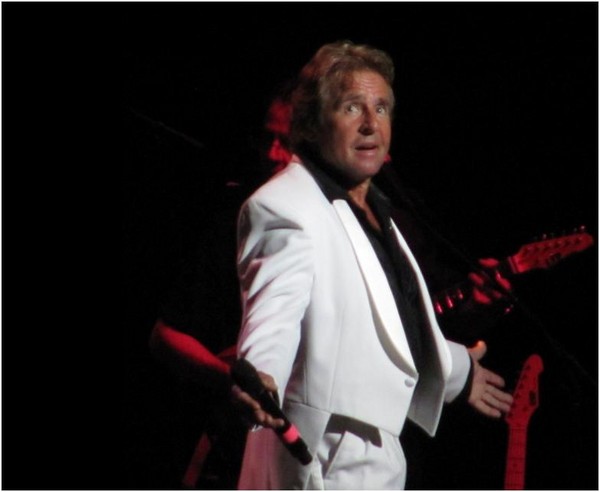
I spent the majority of this past February 29th thinking about the untimely passing of Davy Jones at the age of 66, and today, on what should have been his 67th birthday (as well as the 70th birthday of his still-vigorous bandmate Michael Nesmith), I started thinking about it again. Like many of you, this took me by terrible sad surprise, because of the abruptly fast nature of the event: he had appeared just two weeks before at a Hollywood autograph collector's show in reportedly excellent spirits, and as late as that previous Tuesday night, right on my Facebook feed was a blurb promoting an upcoming solo performance in Southern California. On a psychological level, I don't think I'm the only person to have thought in the back of their mind that, just maybe, we'd have the Monkees for many more years to come. Like many a stand-up comic's jokes about Keith Richards or Motley Crue, it was almost as if nothing could kill the Monkees: consider that from their inception to that date, we had lost Morrison, Joplin, Hendrix, Redding, Presley, Curtis, Nilsson, Cobain, Garcia, Strummer, Brown, Barrett, Cash, Chilton, Jackson, Houston, two Beatles, two Beach Boys, and three Skynyrds...yet all four of our beloved 8-button-shirt beaus were safe and healthy. The bubble finally broke that day, when, to put it in mordant video terms below, Davy drew the short straw:


I once opined that I found the Monkees to be more interesting than the Beatles.


Before you get your Union Jack knickers in a twist, I did not say "better," I said "more interesting." Sure, the Fab Four in their remarkably short tenure of 8 years together left behind an amazing legacy of music and personality, but at the core they had a sensible, straightforward story: four fellows started a band, got popular beyond their wildest dreams, used their worldwide appeal as an opportunity for some experimentation, and then agreed to part ways when a group dynamic was no longer suitable for them. By comparison, the Monkees trajectory is a little more colorful: young producers decide to capitalize/spoof on Beatlemania by creating a fake band for a TV series, hire two legit musicians and two actors to essay the roles, but instead of just going through the motions dictated by their creative directors, the foursome decide to really hunker down and learn both how to coalesce and create music as a real band and how to hone their stage presence and delivery as comic actors, consequently creating a body of work that has stayed just as relevant and entertaining as the Beatles' for 40+ years. No one could have expected, or would even have had reason to expect, any of this when Screen Gems greenlighted this TV series in 1966; all the upper brass wanted was some decent ratings and some merch sales. Instead, a multi-pronged dynasty emerged, not just involving the band members, but the body of tremendous songwriters who provided them material (Tommy Boyce & Bobby Hart, Neil Diamond, John Stewart, Harry Nilsson), the pool of writers and directors who contributed to the show (notably Paul Mazursky and James Frawley), and quite significantly, the producers behind the show Bob Rafelson and Bert Schneider, whom together and apart made wide changes in popular American film. As film historian Christian Divine bluntly put it, "Without The Monkees, we might not have had EASY RIDER, FIVE EASY PIECES, THE LAST PICTURE SHOW or much of the 1970's New Cinema. Seriously."

And in 1966, when very few of the ways of seeing or hearing in our modern day could even be contemplated, nobody in that hypothetical smoke-filled boardroom would have anticipated the wide swath of loss, love, and gratitude that would emerge when all these years later, one of those boys left us. From a surprising spectrum of celebrities past and present, to a fan turned manager and exhaustive historian for the band, and a slew of bloggers that I personally either admire in awe or have downed multiple shots with, anyone who saw a television or listened to a radio had something to say. Even People magazine, normally focused on youthful celebrities and reality show scandals, and thus would have been expected to note his passing in a sidebar or in a round-up, devoted a full cover and center section to Jones, an honor normally only bestowed in cases of massive stardom or questionable circumstance. I can declare with full confidence you cannot find anyone beyond, say the trolls at a certain isolationist Baptist church, who didn't have a kind word to say. And weeks later, when most celebrity deaths quickly leave our minds and we go back to the business of the day, my friend and fellow critic Alonso Duralde summed up my feelings succinctly: "I'm finding myself more bummed about Davy Jones' death than I would have foreseen."

I wouldn't feel the need to shout it like number 7A, but there is a giant legacy this 5'3" showman left behind. It was readily apparent when the initial pilot for "THE MONKEES," which had tested poorly, scored enormously favorably when Davy's screen test was included. It was humorously apparent when, in the occasional rare episode where a girl was chasing Peter instead of him, it was put forward that "It can't be you every week, Davy." And as Michael Nesmith observed in a memorial interview for Rolling Stone, it was as if the show was built around him. I do feel that Papa Nez is selling his gifts a little short, but he is correct that in an already unlikely band environment where in one concert, you could be treated to Peter twanging folk on a banjo, Mike doing his prototypical country-rock, and Micky indulging his rhythm & blues wailing, Davy was the consummate pro that could tie all these disparate styles together, and looked right at home doing it. He was as interested in belting out Stephen Foster as he was in learning about "the key of soul" from THE WIZ composer Charlie Smalls, and if someone wanted to put grungy arena rock guitars behind him for cheap irony, he sold it cleanly and happily. I always wished he would try performing "Sheila Take a Bow" by his fellow Mancunian Morrissey, or my biggest dream cover, him and Micky trading verses and shout-outs on Outkast's "Hey Ya", since the song has the Neil Diamond-esque meter and Pentecostal flair of a classic Monkees song, the music video by director Bryan Barber has the cheeky humor of a typical Monkees episode, and, well, come on, you know how groovy it would have been to hear Davy tell the ladies, "Lend me some sugar, I am your neighbor." Alas, those two cuts will only be heard on the jukebox of my mind now, probably right after the Whitney Houston/Serge Gainsbourg remake of "I Love You...Me Neither."

But see, that's just singing. Add in his ability to deliver a punch line, keep a straight face, do Broadway shows nightly, the occasional horse race...if he wanted to do something that would entertain the crowd or his own artistic appetite, he got it done. I may put "Renaissance Man" on my business cards, but he lived that title.


So while I can't mark this birthday as an ongoing concern, I will most certainly pass the bottle for Mister Jones. When everybody loves you, oh son, you're just about as funky as you can be.