Thursday, July 5, 2018

The Lady Emerges: Aimee Eccles speaks!


A pair of perpetually sad eyes staring from a face obscured by cloth. A naive high school girl so genuine in her belief in flower power a cynical detective can’t help being fond of her as he lifts her lingo in mocking condescension. A working woman taking stumbling, comical, but ultimately liberating steps into polyamory. These are the standout memories for me in the career of the beckoning performer Aimee Eccles. Her poise and conduct have always presented the best blend of old European propriety with laid-back California charm. There is not as much air of mystery about her as some of the other women I’ve spoken to in this ongoing series, since she has had the good fortune to amass a larger body of work, and has maintained a more familiar presence in both cult and mainstream cinema. But like them, she has not previously been given a forum to speak at length about that rich history. Thus, I was enormously happy when she agreed to invest the time with me to share her memories about her life before, during, and after being an active actress.


What would you like to say about your background, and what your formative years were like?

This is a complicated question for me and I'll have to make it brief. I've been told my childhood is what books and movies are made of. My early developmental years were in Hong Kong. I was from a mixed marriage. My dad was British and my mom Chinese. My father passed away when I was 4 and my mother became a single mom. She was a loving mother, but both my older half-brother and I had to share her with her gambling addiction. It was feast or famine depending on her luck that day. Nuns from our private schools and our maid were our authority figures and since they weren't our parent, we both did what we pleased. All that changed when my mother passed away and I was adopted into America at the age 10. My father was a college professor and my mother a secondary school teacher. Both lovely people but so different, and yet had the utmost respect for one another. My mother was very religious with an Elizabethan sense of morality and my father was agnostic and progressive. I went to Catholic schools, and attended an Anglican Church or a Unitarian church on alternate Sundays. My life went from very little structure to accountability for every moment. At the age of 17 when my adopted father passed away, I moved from NY to CA to get away from the chilling winters. In retrospect, I think I learned very young that the only guarantee in life is change.

Did you have any previous interest in the arts in general, or movies in particular, before you appeared in films?

No, I wasn't raised watching TV in Hong Kong, and both my mother & brother preferred traditional Chinese films & plays. Both of these art forms in China were torture to me. The traditional Chinese films were mythological, period pieces where humans at midnight would turn into animals or large reptiles and revenge bad people in town. I would watch with my hands over my face, slid down in the theater chair. Chinese plays or operas are something you can only watch once. The high pitched sing song voices of the actors is an acquired taste, which I never developed. When I came to the States, I discovered my passions. In my school library I discovered art books and learned about the Impressionistic movement, Dadaism, Modernism, etc. and fell in love with art. I spent the majority of my time sketching, at the ballet barre, or visiting museums. I really never got addicted to TV and still don't watch it except to watch reruns of “SEINFELD” to fall asleep. However, I did discover I liked films. In my freshman year in high school, they showed A RAISIN IN THE SUN. Mother Superior talked about camera angles and touched on the filmmaking process. I was fascinated! Then I saw WEST SIDE STORY and became a fan. I than added my love for cinema to my list of passions.

Did you have a favorite film or TV show back then?

I enjoy all genres of films except horror. Dark comedy is perhaps my favorite. A few of the directors I enjoyed at the time were Luis Bunuel, Francois Truffaut, Federico Fellini, Stanley Kubrick, and Akira Kurosawa. On a lighter note, the one TV show I enjoyed as a young adult was “BEWITCHED”. The idea that reality could be changed by a twitch of the nose was delightful! It was shot on the Columbia lot, where I was studying to be an actor after my arrival to California.


How did you become involved in your first movie, NO MORE EXCUSES?

It was a pure accident...as was the beginning of my acting career. I was modeling in NYC and had just left a print job interview. Robert Downey Sr. approached me in the street and asked me if I'd be in a short commercial. He was an ad man at the time but explained this would be for his personal project. I had no interest in being an actor, nor did I know what it would entail. Downey Sr. promised it would be painless and quick, so we agreed on a date and time. And true to his words, the shoot was quick and painless.

What else was going on in your life around the time that you were cast?

Not much... I was modeling and it was an exciting time to be growing up in NYC. There was so much creativity; art and music happening everywhere, especially in the Village.

What were your impressions of Robert Downey Sr. and his associates?

Robert Downey Sr. was a creative, spontaneous, and gentle person. After shooting my part in NO MORE EXCUSES, I walked away and never gave it another thought. Years later we would reconnect in LA, he as a director and I as an actress. He invited me to his home in Brentwood to do table reads of his scripts in progress. I remember a teenage Robert Downey Jr. watching us from his bedroom door, when he should have been doing his homework. Who would have known at that time, this was the making of a successful actor today.

Did that appearance help steer you to other early acting jobs?

It didn't impact on me at all. I wasn't pursuing an acting career. In fact, if Jack Gilardi from ICM had not seen me on the closed circuit TV at the old Playboy Club on Sunset, and approached our table to ask me to go on an interview at Columbia the following day, I would not have ventured into acting. I had literally just arrived from NY that week and I was set up on a blind date when all this happened. Apparently they were looking for my type for a role in a David Swift film about students who attend an international boarding school in Switzerland. I met Jack Gilardi at Columbia the next morning and I was introduced to the producer, Jerry Tokofsky, and a few other executives at Columbia. Then it was decided by all these adults that I should be put into the new talent program at Columbia directed by Walter Beakel, who became my mentor and later my agent for the duration of my career. I remember being asked by Jerry Tokofsky if I'd like to be an actress. My response was, "I don't know...I've never thought about it."
Outside the studio, after my meetings, Jack Gilardi said, "Everyone thinks you're right for the part, but they said you have no personality."
"What am I supposed to do?" I asked.
"TALK!" replied Jack.
I was mystified. "But about what?"
"ANYTHING!" replied an exasperated Jack.
And that's how my acting career began...
The film I was training for, DEEP FREEZE GIRLS, was never made. About 6 months later, Columbia sent me to CBS to meet with Arthur Penn and I got the role of Sunshine in LITTLE BIG MAN, which was my first feature.


How did you become involved with PRETTY MAIDS ALL IN A ROW?

My agent talked me into it. It was Vadim's film debut in America. He said that being in a Vadim film meant I would be considered one of the beautiful women in Hollywood, since Vadim is known to work with beautiful French leading ladies such as Brigitte Bardot and Catherine Deneuve.

Was the sexual tone of the story and your character’s relationship to it intimidating?

Very much so! Don't forget I attended Catholic schools all my life & having a very religious mother, I strongly objected to the nudity. Both my agent and Vadim reassured me, it would be a closed set. I finally agreed. Little did I know that this film would later prepare me for GROUP MARRIAGE.

What was it like on the set? Did you get along with the leads and the other players?

Working on a comedy is always fun. Cast and crew joke around and there's always a jovial feeling on the set. Our set in particular became a popular place for agents to visit with so many beautiful ingénues on the film. Vadim had an easy going style about him, and the cast of students we portrayed were all close in age.

Were there any fun moments during shooting or off the set?

We didn't hang out off the set. The hours are so long when we're shooting, we rarely do. There was extensive publicity associated with the film, which required all the "pretty maids" to attend. We had fun with each other and Rock Hudson on the set and at the still shoots. I think the PR photos show that we all genuinely enjoyed each other's company.


You were clearly very fond of June Fairchild. Did you maintain any further contact with her or anyone else involved in the film?

June was a sweet person, gentle soul with a great sense of humor. We spoke several times after the filming but lost touch when I traveled to Europe. Years later, I ran into a friend of hers who recognized me, at the Canyon Store in Laurel Canyon, and he shared with me that June had a baby and was living in the valley. He and I didn't exchange numbers and June apparently had a new one, as did I. That was the last I had heard of her until you contacted me.

What was the reaction of you and your friends when PRETTY MAIDS was released?

Of course in Hollywood, everyone thought it was cool. But I hid it from my family. With so much publicity, they found out anyway. My dear mother, who is an English and speech teacher, reviewed my performance as "I had the best diction of all the actresses in the film."

What kind of attention, if any, did you experience from the film, and did you find it pleasant or unpleasant?

I didn't receive any negative feedback from the film. It just became part of my body of work, so be speak...another learning experience, another credit.


Who or what was responsible for your casting in ULZANA'S RAID?"

As my memory serves me, Robert Aldrich contacted my agent. I had a brief meeting with Robert Aldrich and Burt Lancaster and was cast immediately.

I understand you were supposed to have a substantial role in the film. What were the original plans for your character?

I never had a large role in this film. I was only in the beginning of the screenplay with Burt Lancaster as his squaw. They wanted someone who could look attractive with the tip of her nose cut off. I was told the punishment for a woman's infidelity in the Apache custom was to cut off the tip of her nose and shame her publicly. I presume the establishing shot with Burt Lancaster was to show his humanity. After he leaves his camp, the movie is just one battle after another with the US infantry and the "savages." It took almost one month in makeup to get the nose they wanted for a couple of days of shoot.


Did you change your acting approach as a result of the changes to your character...try to do more with your eyes and physical presence to make more from your reduced screen time?

There were not much choices for a character in that era who has been broken, rejected from her tribe and now living with "the white devils." I just played inferior and submissive as directed.

I was the only woman in the film and on location. We were in the middle of the desert close to Nogales, NM, a border town. The production had a bus that would take the actors and stuntmen to Nogales in the evenings. The stuntmen enjoyed going into town every night, to get drunk, and get into fights with the locals. The next day they would laugh about their exploits and the red light district. I was curious about this red light district. So I asked Bruce Davison if he'd take me there. So one night Bruce mustered up his nerves and agreed. As we were strolling the street of this red light district, three Mexican guys stepped from a poorly lit doorway in front of us. The leader starts shoving Bruce and asked him what he thinks he's doing there. Bruce didn't know what to say or do and just kept backing up. Tired of the bullying, I slap the guy in the face and said "Shame on you, what would your mother say about this?" He was stunned when he heard me speak perfect English. I guess he thought I was Mexican hanging out with a white guy. Bruce and I walked off and when we were out of the reach of the guys, he looked at me and said angrily, "You could have got us killed!" My answer was, "But I didn't. I saved you." Crazy times, good memories.


How did you become involved with GROUP MARRIAGE?

Stephanie Rothman and her producer husband, Charles Schwartz, contacted my agent. When I found out it was a woman director, I was very interested! My agent was not in favor of me doing a "low budget, independent film that was sexually exploitative". Female directors didn't exist at that time. So I jumped at the opportunity to work with her. I had been attending film school at Los Angeles City College at that time. I had never thought about being an actress until I became one. But I discovered while acting, the filmmaking process fascinated me. I loved the illusion of the visual image. I later transferred to UCLA film school for a couple of years. I was successful in getting a few jobs as a crew member of several independent shorts, but I think I was born ahead of my time. When I broached the subject of wanting to work on a film crew as an assistant, I was rebuked with the same sentiment every time, "Why would you want to do that dirty work? Being an actress is much better."

What were your feelings about getting cast in such a significant role in the film?

I didn't think about it. I guess I don't think in those terms...And I still don't. In film school, I learned that a film is a collaborative effort. I observed this on the set. To me every actor, including atmosphere and stand ins, are a critical aspect of the film. Perhaps that is what is flawed in my thinking. I should have been more ambitious as an actress and valued the money and prestige, like so many in the industry do. Instead I believed in the aesthetics of the process and looked at it as art.


Did you take particular pleasure in being an Asian actress headlining a film, and playing a non-stereotypical, everyday Asian character, at a time when those instances were still a rarity?

That is a great question. From my observation, it's still a rarity. With social media, our world has become a smaller place with diversity being common. How is it and why is there still constant dialogue in Hollywood about whitewashing and inclusion? The majority of Hollywood films and TV do not represent the diversity in real life. It seems not much has changed since I left the industry. I was lucky to have had the career I did. It is disappointing to see with the advancement of technology that Hollywood is lagging in it's storytelling with representation of the world today. Unless the story is about a specific race of people or a period piece, actors should be considered and cast based on their talent and not their ethnicity.


What are your memories of the cast?

It was a small cast and everyone was a professional. We worked as an ensemble to make each other look good. Stephanie chose well in both her cast and crew. The process of making GROUP MARRIAGE flowed cohesively.

What was your impression of Stephanie Rothman as a writer/director?

She was great to work with! Stephanie and her producer husband, Charles Schwartz, were a wonderful, professional team. She wrote a story that was pure entertainment, reflecting the exploration of the new sexual revolution, free love, and women's lib of the time. When she cast me in the lead, she never saw me as an Asian actress. She compared me to a Leslie Caron. The atmosphere on the set was relaxed and non-pretentious. I'm glad I chose to do the film.


What sorts of roles were you reading for during your ‘70s and ‘80s activity?

I began my career playing a Native American and once it was discovered I was Asian, it seemed I went out for only Asian parts. That's why working on GROUP MARRIAGE was so refreshing. After GROUP MARRIAGE I flew to Toho’s studio to play a part of a Chinese princess in “MARCO” with Desi Arnaz Jr. and Zero Mostel. Type casting was prevalent in the 70's and 80's as it still is in Hollywood. 
I [recently] attended a screening of THE MEYEROWITZ STORIES (NEW AND SELECTED). It just so happened there was a Q&A after with cast members including Dustin Hoffman. I've always appreciated Dustin's candor. When he was asked the secret of his longevity, he answered it all started with luck. He couldn't land a play and if it wasn't for Mike Nichols' exhaustion of trying to cast the two young leads in THE GRADUATE, he would have never gotten the part because it was against type. He mentioned that in his career, he never did as many films as his college roommates, Gene Hackman and Robert Duvall. Now he was frank in stating that he had turned down the part in THE MEYEROWITZ STORY for two years. The scripts he's been receiving recently are all for his character to die of cancer or a heart attack. He referenced that in THE MEYEROWITZ STORIES, he was in a long coma in the film. Type casting isn't just reserved to ethnicity in Hollywood. Age and gender are also discriminations that actors deal with.


What was it like for a young Asian actress as yourself in that time?

It was frustrating to go out once or twice a month for auditions, if that, when my Caucasian contemporaries went out 2-3 times a week. Anyone who was considered to be a person of color at that time experienced the same affects of type casting, whether you were African American, Hispanic, Indian, Muslin, or Asian. There wasn't the exposure of very many immigrants other then in a few large cities, nor was there the internet and the exposure of social media to bring us all together. 
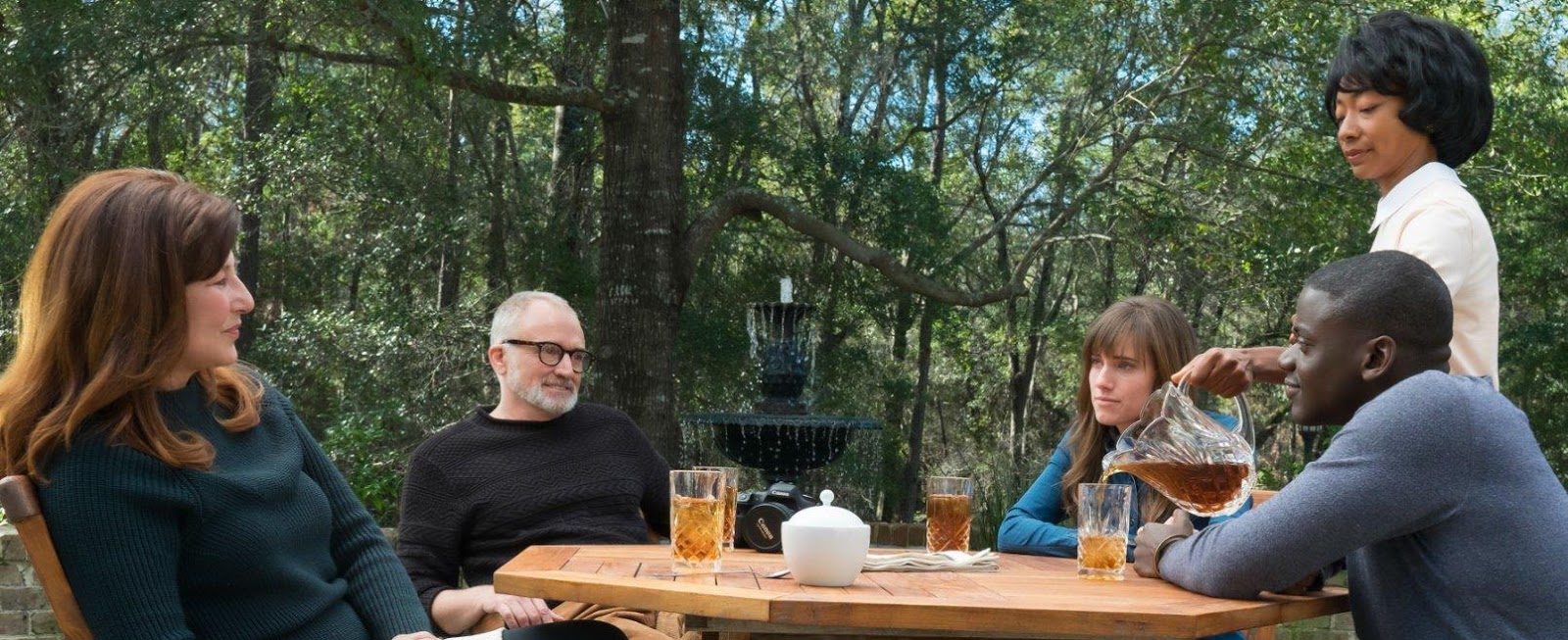
With the high visibility of African Americans/Blacks in music and sports today, there is more acceptance and we see more cast in Hollywood films and on TV. The Black community of filmmakers have been proactive about the lack of work available in the industry and have created content for themselves. The recent films they've made such as MOONLIGHT, STRAIGHT OUTTA COMPTON, GET OUT to name a few, have been box office successes, with one winning an Academy Award. Even then, discrimination still exists. This was the subject faced by the Academy of Motion Pictures and Arts in the past few years. Other ethnic races have been overlooked in Hollywood and they need to follow the example of Black filmmakers. Being vocal and creating content for themselves is so important today. The industry is a very different place. From my recent research into the industry today, I can't say I'm very impressed. I feel sorry for young actors starting out. They literally need to create content for themselves to be seen. The casting directors are overwhelmed by the amount of submissions, because everyone can submit themselves. Being a union member is almost a detriment. Non-union is preferred in many commercials and films. And there are too many union members, because it's so easy to get a SAG-AFTRA card now. What I see is the same people working and working, and very few new faces in major Hollywood productions. It's about safe casting that brings in guaranteed revenue as opposed to creative casting. After all, the film and TV industries have always been a business. It's more so now with the new media.

Have you ever received criticism over your presence/performance in a film from POC or other minority viewers? What sorts of things were they objecting to?

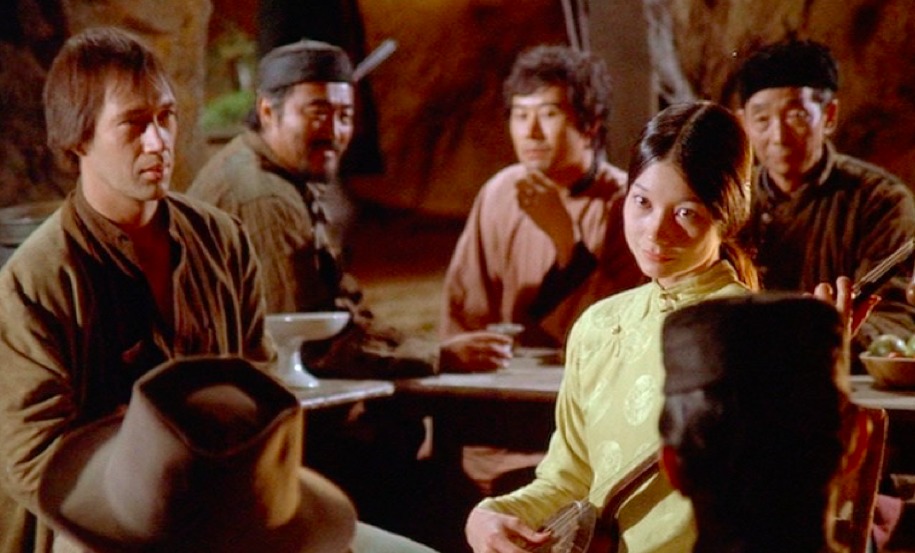
No, I've never received criticism from fans...I still receive warm letters from fans today, which surprises me since I've been absent from the industry for so long. When I was working, I would receive criticism from producers that I wasn't Asian enough. The two shows that came to mind was Jack Lord of “HAWAII FIVE-O”. He refused to have me on the show because my eyes were too big. And the producer of “KUNG FU” thought I wasn't Asian enough, and yet I would star opposite David Carradine, who made a career playing an Asian kung fu artist. How ironic!

How did you deal with those situations then?

Personally there have been no objections from fans, only admiration and love. The objections from the industry were handled by my agents. It's difficult being mixed. You're not white enough to play Caucasian roles, but sometimes not ethnic enough in the eyes of the director, producer, or casting director to play the ethnicity you are mixed with. Surprisingly, the group that embraced me the most have been the Native Americans. I am treated as family. I was just approached by a young artist working on a mural of the Dakota Pipeline. He asked my permission to include me in the mural. I felt humbled and honored. I checked out some of his work and was surprised he never went to art school. Everything he learned was from his father, who is an artist as well. Through our communication, we have become friends. It's always a pleasure to meet good people, especially artists who are creative.

Have some of these criticisms dissipated over the years, or have they changed shape?

Fans still love me and based on what I observe in the industry today, I'd still be typecast.


What was your experience making Sylvester Stallone’s PARADISE ALLEY?

I would prefer not to go into details about that shoot. Sly was going through some growing pains and he shared them all with his cast and crew. I think now that he is older, he may have found some humility.

Did you ever get to see the film in his longer intended version versus the one that was released?

Yes, I did and I am comfortable with the one released. Don't forget, PARADISE ALLEY was adapted from a book Sly wrote and it was his first directorial venture. It received terrible press after release.


Aside from the films given prominence here, what are the other performances and/or collaborators from your body of work that you are particularly fond of?

LITTLE BIG MAN was my first film and probably my favorite. Everything I know about films to this day, I learned from Arthur Penn. He was a brilliant filmmaker, a perfectionist, a purist, and a visionary. He wanted the film to be authentic and was trying to cast only Native Americans. He had traveled to reservations for two years casting various roles, but couldn't find anyone to play Sunshine. I was his first appointment on his first day of casting in Hollywood. I was terrified and I wasn't afraid to show it. This was apparently what he was looking for. He continued his interviews at CBS on Radcliffe throughout the day but wouldn't release me. He called an actor to work with me at the café across the street from the studio. The more I objected to being in the film, the more he was convinced I was Sunshine. Since I was under age, he called my mother to get her permission to sign me onto the project. Arthur kept me on location through the entirety of filming to overcome my shyness and my reticence to be in the film. I spent most of my days hanging out on the set watching Arthur work. It is because of him I fell in love with the filmmaking process. In his soft spoken, unassuming style, he made a large production seem like a small family. Arthur Penn was probably the most influential person in my life.


Was stepping away from acting the result of cumulative events, or was there a specific one that steered you to do other things?

I had gone from one continent and culture, to another, and then Hollywood. My proverbial quest for the 'meaning of life' had led me to extensive literature on spirituality and long trips away from Hollywood to find myself. With all the material comforts Hollywood provided, I felt an emptiness in my life. I thought marriage and a family was the next progression in finding myself. It was not my intention to stay away for so long. But like all things, your perception of what will be or what you anticipate will happen, is not what will manifest as reality. My failed marriage turned out to be a gift. Two beautiful daughters resulted from my marriage and because of them, I discovered strength, re-evaluated my values, learned unconditional love, sacrifice, a higher sense of self, and that failure is never an option.

Did you learn anything from your experiences that helped you later in life, in any kind of field or moment that is not necessarily artistic?

Acting taught me to overcome my shyness. Although I'm still a bit of an introvert and a private person, I'm able and am known to start conversations with strangers in passing about anything, everything, or nothing. Here's something that may sound strange to you or not, but anything I pursued that was left brain, I approached it as an actress playing the part. By doing so, anything new was possible and I was undaunted. Also, acting and filmmaking taught me endurance, tenacity, and gave me improvisational skills. All very useful life skills that proved helpful, especially as a parent. Being a single parent is a never ending indie production that requires long hours and dedication.

What is the most unusual encounter, conversation, or life event that has taken place when someone recognized you from one of your films?

I don't have any experience that stands out, other then the most recent incident. I have kept my acting career private while raising my children. It was easy at the time, because my children and I used my ex-spouse's last name. I'm back to my own name now and a librarian in town just discovered my acting credits while researching films shot in the area. When she saw me, she lost her composure. I kept shushing her as she excitedly bombarded me with questions. It was hilarious our exchange!

If you’re willing to share, what have you been doing over the last 30 years since you had a credit?

Has it been that long since my last IMDb credit? I know I shot my last commercial in 1993, because my babysitter flaked and I had to take a six month old to an audition. Anyway, my years away from Hollywood have been about trying to be the best single parent I could for my daughters. Maybe because my childhood was so fragmented, it was important to me to provide a safe, creative, stable home for them. I didn't feel they should be victims because of the actions of their parents. Acting is a self-absorbed profession and I didn't want to subject my children to the demands of the industry. I wanted to be physically and emotionally available to them during their developmental years. I chose to work as a realtor because it afforded my time to be at every field trip and event with my children. I became an Art Trek parent representative and taught art in my children's classrooms. I helped my daughters plant vegetable gardens at their schools. This provided fresh salads to their school lunches. And I supported my children in their rescue of animals and reptiles. In retrospect, I wouldn't deprive my children of any of these experiences. These experiences gave them a sense of empowerment and made them into conscientious young adults about their community and the environment.

Now that you have indicated your interest in returning to performing, what kind of roles are you seeking?

I'm not sure I want to go back into the industry. I've been spending time investigating and learning about the changes in Hollywood and the new media. With the advent of digital technology and live streaming, so much has changed in the industry. Age has always been a taboo in the Hollywood and there are few parts for older actors. The little work available seems to be going to seasoned career actors, that are guarantee box office. Again, TV is another media that also caters to the young market.

Here's a couple of enlightening exchanges that I think you will enjoy. I was in line at grocery checkout and saw a headline that Sandra Bullock had adopted another child. I mentioned it out loud to a girl in her early 20's standing behind me. She just looked at me with a blank stare. Then I realized, "You don't know who she is, do you?" She just shook her head no. Another incident shortly after was at Rite Aid on Sunset and Fairfax. The clerks were both in their early 20's exchanged this dialogue while one of them was checking me out. Male clerk asks my checker, "Do you think I should follow Drew Barrymore? I don't know..." My checker says, "Why??? No, she's so inconsequential." Male clerk mutters, "But she eats people on the ‘SANTA CLARITA DIET’. That's kinda cool." I burst out laughing. They realized their absurdity and laughed with me. Walking out to the parking lot, I started to think? These actors have more recent credits then me, what would this make me. Lol...perhaps beyond inconsequential...obsolete. So unless the right role came along, I may consider it. Meanwhile I will continue and learn more about the new media and help my youngest daughter, a filmmaker, work on her projects.

What will you remember most fondly from your cumulative years in the movies?

This is the most reflection I've done, answering these questions. I'm not one to reminisce. Having been in the industry for so much of my life, these cumulative experiences are just part of the fabric of who I am. Of course, we are more then just the culmination of our past experiences. We have the ability to learn and grow from them. It is in this reality that I look towards the future, enjoy the present, and never look back.


Wednesday, June 27, 2018

The Lady Emerges: Carmencristina Moreno - Mary Jane from HICKEY & BOGGS - speaks!


For the first five minutes, it’s her movie. 


The steely Chicano woman in the drab clothes and sunglasses stepping off the train at Union Station, greeted by a rare Los Angeles rain, sitting in a taxi while reverentially wiping the water off her battered suitcase and uttering one of the few lines of dialogue she will have, “Madre dios, protect us now.” A transition to the early ‘70s hazy L.A. skyline we know from dozens of depictions, complete with smog alarm. We will later learn that almost a year has passed since her arrival. A florist retrieves the preserved suitcase from an earthen hiding place, literally digging up the root of all the evil we will see in this movie. And there she is behind the florist, looking for all the world like just another workaday woman, placing uncirculated $1000 bills into envelopes. It is only when the setting shifts to a dive bar and two shabby men watching boxing on TV, that we learn the movie is named HICKEY & BOGGS, and these are our actual protagonists.


Then again, the manner in which Walter Hill’s screenplay and Robert Culp’s direction reveals information, anytime we see a particular group of characters, it’s almost as if we have entered a different movie from their point of view. There’s the movie about the mobsters trying to recover money from a robbery they sanctioned. There’s the movie about the scummy criminals eager to get the cash. There’s the near-silent movie about the “Torpedos,” the hit men on a single-minded pursuit to find and kill everyone depriving the mob of their cash. There’s the movie about the L.A. police trying to break this case, annoyed by these private detectives – one of them a disgraced former cop – who keep intruding in their investigation. And the movie of this woman, her husband, and their children, alternately one step ahead of all these pursuers yet still over their heads in how to resolve their situation. Even the closing credits represent this: aside from the main cast of Culp, his partner, and the characters of immediate significance to them, all the other parties are grouped in their own headings - “The Chicanos,” “The Organization,” “The Contract Soldiers,” “The Law, “The Fences.”

But throughout all these intersecting stories, it is always this woman of multiple aliases who is steering the narrative. It is her that will commit the first murder we see. It is her all these competing forces are seeking, almost all underestimating her intelligence; she may be derided as “Mary Jane,” “the girl,” “the woman,” “that bitch,” by these men, but she’s the one that’s outfoxed them all. It is her that will play the mob against the fences and set up Hickey and Boggs to either be killed or take the fall. We will never learn the full story of how and why she does everything, how she learned to do it, but we get enough hints to know it’s as grim a tale as the hard look in her face. She didn’t want to be a femme fatale and a master manipulator, but there’s family to protect and a deal to make and jobs to do, and she’s going to finish this matter because she has to. Eventually Boggs, whose toll from pursuing this case has included the murder of his partner’s wife, tells her husband his grudging respect:


You still have Mary Jane. She must be a heck of a woman. Killed Farrow for you ‘cause he wanted a bigger bite. Ran the whole show until you got out. She’s one hell of a woman. Of course you’ll both be indicted, but it’s too shaky, they won’t make it stick. So...maybe you still get home.

The woman has a proper name: it’s Mary Florida Quemando. And the woman who played her, billed only as “Carmen” in the credits, generating as much mystery about the real performer as the character, is Carmencristina Moreno.

Photo courtesy Carmencristina Moreno

Carmencristina Moreno comes from an entertainment dynasty. She was born to Luis M. and Carmen A. Moreno, who performed ranchera music on radio and records from the ‘30s onward as El Dueto de Los Moreno; Luis is credited with composing hundreds of songs that have been covered into the present. Carmencristina would write and record music in English and Spanish for major record labels, and went on to found her own when she balked at working in an environment hostile to her rich heritage. She was named a NEA National Heritage Fellow in 2003, the pinnacle of honors a folk artist can receive. In the present day she still performs her original music, is a published author, and teaches Mexican-American history through song-and-lecture presentations in California schools.

There have been a good number of articles about HICKEY & BOGGS, and a good number of articles about Ms. Moreno, but Moreno has never previously spoken at length or detail about her experience until now, when she graciously agreed to answer my emailed questions about her history and relationship to the film.

To provide context, the production of HICKEY & BOGGS was an extremely stressful affair.

In 1971, when Walter Hill’s script was optioned by Warner Bros., Robert Culp had been humiliated by the production shutdown and foreclosure of Bernard Girard’s thriller A NAME FOR EVIL the year before. EVIL had been a pet project he previously told the press was, “the kind of picture you wait for all your life,” and during which, his third marriage to actress France Nuyen broke up, and led to his fourth marriage with supporting player Susan Sullivan. He and co-star Samantha Eggar were suing the producers and investors to obtain compensation for their previously deferred salaries. (The footage was ultimately bought by Penthouse magazine, re-edited, and dumped into theatres in 1973.) While he never stopped working in the interim, the high-profile collapse affected him deeply; as he remembered it in 2007, “After BOB AND CAROL, I was hot as a pistol…by the time it was done, I wasn’t hot as a pistol anymore.” When WB courted Culp to reunite with his former “I SPY” co-star for this project, it was an opportunity to regain his momentum as a bankable movie star.

However, his friend’s participation in the film was obtained on the actor's insistence that Culp be allowed to direct it. Culp had previously helmed an “I SPY” episode and a documentary for TV, but never a feature. When WB would not approve Culp as director, the duo offered to buy out WB’s investment and take the script elsewhere, and a preliminary deal was made with their series’ location cinematographer-turned producer Fouad Said to find independent money. A bad bluff by Said with WB resulted in a higher-than-planned buyout price, and funding ran out three times, leaving Culp with a tight budget and only 35 days to shoot. Impediments that Culp withheld from all parties were that immediately after the planned 35 days, his marquee co-star was due to commence filming “THE ELECTRIC COMPANY” for PBS in New York, meaning there was no flexibility for lost days on his scenes, and two weeks before shooting was to start, Culp had undergone a double hernia operation from which he had not fully recovered, but did not disclose for fear the insurance company would shut down the production. In short, it is very likely Culp feared a repeat of what befell A NAME FOR EVIL.


While Culp presented a sanguine demeanor about recalling this state of affairs in a 2007 Q&A at the Aero Theatre in Santa Monica, from the account offered here by Ms. Moreno, he was clearly under enormous pressure, and unfortunately, the negativity had a direct effect on the production, and its lynchpin actress...


How did you become involved in HICKEY & BOGGS?

I really don't recall how [Robert Culp] knew about me, except that my career as a singer/guitarist was "in demand" in those days in L.A. Mexican-Americanism seemed to be "in" in those days and I seemed to be the "go to" musical grass-roots Chicana around town. I couldn't help it. I carried my parents’ Mexican traditional folk music, as well as my modern American music in English. I was what I considered a true...musical Mexican-American, and I demonstrated it in many performances. But then, in those days, I also had friends and acquaintances in the film industry there in L.A.
So who knows how Culp found me. But he called ME!

Did you have any previous interest in movies in particular before you appeared in the film? Did you have a favorite film or TV show back then?

What little girl doesn't dream of becoming a "movie star"?
Yes. I loved "movies" and films and I had a lot of interest in acting in them since I had been a little girl. Plus, I always had stories that I made up rolling around in my head. It must have been because ever since I can remember, I had seen many Mexican musical movies with my parents as in L.A., they scouted for the latest songs coming from Mexico to perform in the USA.
Later, as I was growing up in Fresno, I saw many American movies with my favorite actresses: Susan Hayward, Deborah Kerr, Doris Day and others. I wanted to "act" in movies just like they did! Ah, the unrealistic dreams of a naive poor young Mexican teenager living in the farmlands of Fresno,  California! My parents always encouraged me to "go to Mexico" to continue my career, but Mexico seemed "foreign" to me. I was born, raised and educated in the United States. I didn't want to go to anywhere else because...here...the USA, was home!
Anyway, I would see these actresses on TV and in movies and thought I could "act" like them.
On television, I had a lot of favorite TV shows: "I LOVE LUCY," "THE TWILIGHT ZONE," "THE LORETTA YOUNG SHOW," [and] including "I SPY," to name just a few shows that I liked to see. Each show presented different dramas every week with different actors and actresses. And the stories were compelling and well-written.
As I grew up, our high school library offered some books about the different "methods" or styles of drama and of drama classes and drama coaches in New York and Hollywood. Even certain movie magazines had articles about "acting". So I wasn't totally unfamiliar with the process. In fact, when I got into Hollywood, I studied for a while with different acting coaches in their classes, but after a few unpleasant experiences, I became disenchanted with studying with "Hollywood drama coaches." Besides, the whole process seemed elementary to me. I was so naive!
But nothing had prepared me for the reality, and I do mean REALITY, of working as a film actress, which encompasses a myriad of requirements for working in front of a camera. Height, dress size, skin color and etc.

What were your feelings about getting cast in such a significant role in the film?

I was impressed, at first. But the "luster" began to wear off after the script began to be changed, Plus every time I was called into Culp's production office, I would overhear the problems they were having. So much so, that I became "confused" and lost my focus. Not only did I not know WHAT was happening, I even began to get worried the movie would never be made.
And to boot, Culp one day complained to ME that they could not find another actor tall enough to play my husband! Fearing I would lose the part or that the project would fall through, I tried to help. I said to Culp, "I have an older brother who is taller than I am!" But in wanting to help, not only the movie, myself and help my brother "break into the business," I forgot that this "male actor's" part, was to play MY HUSBAND! This was terrible!!!! Incest? E-e-e-e-ek! What would my parents, friends and relatives say? But, I didn't mention my concerns to anyone that this bothered me. Perhaps it was because I thought myself "drama knowledgeable" enough and strong enough in my acting ability to not let that fact that he was my brother worry me. After all, it would only be "acting".
So, they called my brother in. And then I worried they wouldn't like him. And I worried if he was rejected, he would be humiliated and get his feelings hurt! But I had nothing to worry about. Culp and Cosby LOVED him, Louis Moreno. His demeanor (very macho) and his handsome stoic Mexican good looks, made a great impression on them both. Indeed, my brother, after HICKEY & BOGGS, went on to play other small parts on other TV shows. Had he lived long enough, he might have been a more successful actor.


Unfortunately, he died in 1989 of lung cancer. The "macho" guy, whose day job was as a painter for CSUN, drank too much tequila, smoked too many cigarettes, and even when a doctor told him early on that he had lung cancer, I guess he didn't believe it and he did not seek treatment until it was way too late. I think I'm still "angry" at my only brother for not trying to live longer.

Had you ever seen any of the main cast in any of their previous TV/movie work before you acted with them?

No, except for Bill Cosby and Robert Culp because of their work in the TV series "I SPY".

Did you ever talk to writer Walter Hill about your character, did he give you any guidance on how to embody her?

No, I did not speak to him about it. He never seemed to be available to me in order to have "that type" of conversation. And Culp never facilitated any meetings with Hill and I either. Besides, the script was being changed many times. I know this because I would overhear bits of conversation to this regard during the times I was in Culp's office. And I would be there only after being called in. I would catch glimpses of Mr. Hill and feel sorry for him. He always looked so beleaguered and worried. I thought it was probably because he was trying to keep up with the changes to his script.

What was your impression of Robert Culp and his directing style? How did he counsel you for your scenes?

Let me share something with you here, Marc. I grew up mainly in Mexican "show business" and began singing on stage and in many Mexican cafes and nightclubs; places some people would consider "dangerous." So early on, I learned to "read people," as a defensive mechanism in order to survive and stay out of trouble.
My impression of Robert Culp? Unfortunately, as a director, I found he definitely lacked "people skills." Or maybe Culp should have replaced me with another much more experienced actress. Or maybe another actress would have been much more expensive? Or maybe....who knows? But he was a "hard-headed, stubborn man"! And I found him unapproachable. He didn't need or ask for any input, LEAST of all, mine! For instance, he could have made Mary Jane a sister to the male character. But they had hired a little boy to play the part of "our" child. [The boy was Robert’s son, Jason Culp]
On top of all the hassles Culp was having, I felt it was too late to suggest anything. He didn't need THIS. But it would have freed me up a lot. Yet, in retrospect, he couldn't have made them sister and brother! It would have changed the "thrust" of the story. So, I did not feel free to suggest any changes or anything like that.


Then, as filming began, I started to feel his hostility towards me. I think now he must have hated my inexperience, or perhaps...I don't know. (Sexism? Racism?) Anyway, I stayed out of his way.
I ask myself now that perhaps his attitude was was hard because he was feeling "overwhelmed" by what he'd taken on? He was the "star" of the film. And he had to protect that! Plus, he had to protect his "vision" of the story he was trying to tell on film. And there I was...!
Did he "counsel" me on my part? Only ONCE, during filming and in a brief and private moment when out of the blue, he asked me to join him for lunch. We got in his car and drove almost in silence. Then he said something about "method acting." After which, he remarked with a smirk, "There! I've given you your first acting lesson!" Out of respect, I didn't reply. But my first thought was, "What a jerk!"
It was there that I felt he and I were beginning to hate each other! And his cold and hostile attitude towards me began to erode any confidence I might have felt for the part. I ended up not "acting", but rather, "reacting" to the instructions he would give me before each scene! That's the only way it could have been done because by that time, there was no script (that I knew of), to follow or digest. And unfortunately, my "wooden performance" on film shows it. I hate it and am STILL VERY embarrassed by it. I could have done better. But like Culp, I too, felt overwhelmed by circumstances.


Was it always intended by Hill and/or Culp that she would be near-mute throughout the film?

I don't know what their real intentions were. As I state before, there was a script at first, but then even during filming, Culp was giving everyone updates of changes. He had set up a storyboard there on the set. Being inexperienced in film work, I suppose that is done on other films too. But to me, it seemed strange and strained to do that at the last minute.

How did the single-name "Carmen" billing come about in the credits?

There are many places and instances in American show business where having a Hispanic surname was, and sometimes still is, not commercially viable. So I didn't use it then. But I sure use it now!

What sorts of things did you do in creating your performance? Did you study other actors, other movies? Did you lean on personal experience?

What was there to do or study? What was to prepare?
From what I recall, when I first read the script, I felt I knew who the character was and what a negative character she was supposed to be. I felt I knew how to play "her". But as the script changed and Culp's "forceful" instructions prevailed, I think I became personally intimidated. Intimidated!!! I lost my personal voice and thinking ability. Nothing I did in my performance seemed to please him. In the end, as I write above: I didn't "act," I ended up [reacting]...to his instructions!!! Or maybe Culp hated me because I was just a tender inexperienced "wanna-be" actress." Or perhaps, after thinking about it, it leads me to believe the Director was just using my "off-camera" professional show-business persona (my Chicanismo) to tell HIS vision of the story, his negative personal racial feelings.
As it turned out, according to ending credits, perhaps my feelings about his hostility was correct. Check out the closing credits: Blacks - listed separately, Chicanos - listed separately, Whites - separately. We're all segregated. There's no room for respect or acknowledgment of individual artistic abilities there! But oh well...that's show biz...!

What was your impression of the stunt men playing "The Torpedoes" - Fatboy (Matt Bennett), Monte (Bill Hickman), and Nick (Tom Signorelli)?

I did not fraternize with them. It has been and still is, my experience that many times, a man mistakes my "friendliness" for a "come on." So I stay away from a lot of people I don't have to interact with.

When some of the lesser-known supporting cast became marquee names later, were you surprised or did you anticipate they had that potential back then?

I don't recall. The only name or person I recognized on set was Bill Cosby. And even then, I was not on close personal terms with him.

There have been stories about much more footage being shot but not used. Is this true? Were you featured in any of those scenes, and if so, what sorts of things would have happened in them?

I don't know about additional footage that was shot and not used.
But I do know that at one point, the Director (Culp) wanted to shoot a silhouette of a hooker putting on her bra, and he told ME [to] take off my blouse and bra so they could film my silhouette putting on my bra. But I wasn't about to expose my large breasts to the cast and crew! I am not that type of actress. Besides, it was not in the script that I had agreed to do. So I refused to do it. Of course he wasn't happy about that either! Nudity or partial nudity was never mentioned in my contract. That is a "line" I definitely would not have crossed! Part or no film part. Besides, asking to do that, seemed to me like he was trying to "punish" me.
So after I refused, they shot him throwing money on top of a ratty mink coat, and it's my hand that takes the money and the coat.


What was it like on the set? Did you get along particularly well with anyone on the cast or crew?

I kept largely to myself with my "nose in a book" most of the time. I was feeling like an inept fool by then and wasn't feeling "friendly" towards anyone by that point...and no one was friendly with me either!

Were there any fun moments during shooting or off the set?

Sadly, I don't recall "having fun" with anyone there. I was totally miserable. Perhaps I "over thought" everything!

Were there any upsetting moments during shooting or off the set?

Early on in the filming, I found I had to watch out for my own safety. There was a gun where my character shoots someone through a screen door, a gun that did operate properly and the "bullet" kept getting stuck between the gun barrel and the chamber. A gun explosion could have blown my hand off!
During filming on the beach the scene called for me to be flying an airplane, which they shot with the plane on the ground or with the plane's door as a backdrop while I was flown in a helicopter. But in this one shot, while in the airplane was on the ground, the propeller was rotating and while I was in the plane's cabin, Culp whispered loudly to me to "gun it" so that the plane would take off! I don't know the first thing about flying a plane, so I didn't! Shortly afterwards, it turned out that the wing nuts were not tightened down on the wings, and the wings were being held to the fuselage loosely only by the bolts! That was upsetting to me! What the heck was this guy thinking? That scared the heck outta me. I had to watch out "for this guy," I thought! And of course, I didn't say anything to anyone about it then either.


Did you learn anything from the experience that helped you later in life, in any kind of situation that is not necessarily artistic?

This filming experience was catastrophic for me as an aspiring actress. But it taught me a good lesson, which I now choose to keep to myself. But I was glad when filming was over.

What was the reaction of you and your friends when HICKEY & BOGGS was released?

To paraphrase Janis Ian's song: "[In] debentures of quality and dubious integrity, their small-town eyes will gape at you in dull surprise when payment due, exceeds accounts received."


What kind of attention, if any, did you experience from the film, and did you find it pleasant or unpleasant?

The pleasant or unpleasantness part depended on what type of attention was being paid to me, and by whom. You must know what I mean.

What is the most unusual encounter, conversation, or life event that has taken place when someone found out you were in HICKEY & BOGGS?

Shortly after doing HICKEY & BOGGS, I fell into a deep depression that I couldn't overcome. It took me YEARS to emerge from it!
But thinking back, on one memorable evening, as I and my 3 sons toured the Griffith Park Observatory, there was another Mexican-American lady with her own 3 children, who recognized me and approached me, wanting to shake my hand and proudly telling her sons that "[She] was the lady who was in 'that' movie!"
In view of the fact that my movie part was that of a "lying murderous thief whore" (though one never heard the "lying" dialogue), and though I wasn't exactly proud of having played that part, what I was REALLY ashamed of was feeling that I had done such a bad job of it. And to me, it shows!!! OMG! I was so stiff and wooden! No wonder they all hated me. I hated me too!!! Since then, I had auditioned for other parts, and gotten a few. But my heart is just not in acting anymore. What do I know?

Did you maintain any further contact with anyone else involved in the film?

No, and didn't want to either!

Have you watched the film recently?

Not recently, no. I think I watched a DVD of it again about 5 or 7 years ago.

Do you think the film plays differently now years after its release than when it first came out?

I have found that one has to watch it several times in order to find its basic story-line or "appreciate" the story Culp was trying to convey, though I still don't know why...anyone...would be interested in the story.

What will you remember most positively and/or most negatively from being in this movie?

The positive is that it made me aware of my lack of drama training and thereby my limitations as an "actress" or "actor". Being an "actor" really requires devotion and dedication. If I ever try to "act" in a film again, I will definitely study and research a lot more, so that I will be able to feel free to explore the character and be quick enough to "own" the part. The negative side, is that during this filming process, I allowed myself to be BULLIED and INTIMIDATED out of believing in myself or feeling so oppressed. I had felt intimidated to the point that I lost my nerve! That's disastrous for a performer, whether on film or wherever.


So there you are, Marc. I still feel I failed them all in this film and they ended up hating me. And for a long time, I hated me too! Last year, I was trying to find snippets or photos of myself in this film to construct some promo stuff I was working on, and I couldn't find anything of my image, save one photo of a woman (me) with dark glasses and a hood over her hair. No one else would have recognized that woman as being me. But maybe it's a good thing!

Thank you again for your interest in my "performance" in this film, Marc. I wish you the best of good luck.

Yours sincerely,

Carmencristina Moreno

Photo courtesy of Howard Watkins and KQED

My deepest thanks to Ms. Moreno for revisiting a less-than-pleasant memory with such strength and candor. Her testimony has only intensified my respect for her performance, and I hope it does the same for you. May it inspire all of you to seek out her larger legacy of creative activity as well.

Thursday, June 21, 2018

The Lady Emerges: Cynthia Davis - Brenda from COOLEY HIGH - speaks!

If you were to approach one of the devoted fans of Michael Schultz and Eric Monte's enduring 1975 coming-of-age comedy/drama COOLEY HIGH, and ask them what are the Top Five things they remember and love most about the film, you'll likely hear about Preach and Cochise, the relatable moments of juvenile hijinks, the parade of Motown hits, the poignant finale...and Brenda.


Brenda was the smart girl with plans, and discipline to make them happen. Brenda didn't have time for your foolishness. Brenda was naturally pretty but never played that card or called attention to it because that wasn't a matter of substance. Brenda probably never saw Fellini's I VITELLONI, but she instinctively knew that of her peer group at school, there were the goofs that were never leaving the neighborhood, and she was not going to be in that group. Brenda had her eyes on the prize.


That's why it was special when Preach dropped the cornball jokes, got real with her about his love of art and poetry, and earned her attention. That's why it was romantic when they became a real couple. That's why it hurt harder when he got stupid with her. That's why the tea tasted so good when she got back at him. And for as much as we would have loved to see what could have been, why it was better that at the end of it all, Brenda went her own way.


Cynthia Davis made one film before she was old enough to vote, and never made another. She went back into private life and the quiet milestones of career, marriage, and family, with what appear to be few regrets. But in the 40+ years since the release of COOLEY HIGH, her performance as Brenda has continued to melt the hearts of millions, baffle them as to why she didn't do more films, and to leave them wishing for more.

To date, Davis has never been interviewed at length about her experience on the film. She has never participated in the multiple anniversary reunion shows or retrospective articles that have taken place as it has ascended into the cultural canon. As such, her absence, along with lazy googling from other would-be researchers, have fed an erroneous rumor that she had passed on long ago. Despite the efforts of family and friends posting on message boards, social media, and blogs to assure fans she is alive and healthy, this error has been perpetuated, including in a major TV documentary about the film.

Thanks to the help of one of those proud family members, I was able to make contact with Ms. Davis, who graciously agreed to answer my questions about her history and relationship to COOLEY HIGH. To demonstrate how generous she was in this interaction, allow me a brief sidebar...

I work with limited technological abilities. I do not own a smartphone, I do not have a webcam or Skype capability, even my attempts at using an old-fashioned landline phone-tap and a tape recorder have failed. So when I am doing interviews on my own without the backing of a podcast or other deeper-pocketed client, my preferred method is to send questions via email, receive the answers, and if merited, do a second round from there. (And if you're about to put a comment below that begins with "Why don't you..." or "Have you tried...", don't. Just don't.)

After our initial introductions and decision to proceed, Ms. Davis' computer expired, leaving her unable to engage in long-form email exchanges.

Undeterred, she took the time to hand-write, in lovely penmanship, her replies to my questions, and send them to me via the U.S. Mail.


I took the liberty of making some spelling corrections, but preserved her emoticons and lol's.

After our initial exchange, I had wanted to do some follow-up questions, to expand upon some of her replies and also delve into observations we discussed in private exchanges. Unfortunately, a combination of both technical and health issues did not allow this to happen, and she encouraged me to go forward with what we already had.

Thus, this is hardly a complete portrait of her and her short window of stardom, but it is a warmly felt and honest one, and I feel lucky to share it.

Photo courtesy of Cynthia Davis and Lisa James

How did you become involved in COOLEY HIGH?

I was friends with man who told me he knew Michael Schultz. We went to a place on the North side of Chicago. I walked into a room that was filled with actresses waiting to audition. I was escorted past the young women and asked to sit and read a line from the movie. The line was, “A bet. A bet. I’m nothing but a lousy dollar bet!” I asked if I could say “cheap” instead of “lousy.” I was told yes. I red the line. They filmed it.

One week later I got a phone call and I as told that I got the part. :)

Did you have any previous interest in the arts in general, or movies in particular, before you appeared in the film? 

I was a student at Dunbar Vocational High School. My major was commercial art. I loved to draw and paint. I still do.

Did you have a favorite film or TV show back then?

Back then the [movies] I would watch would be the old movies. Bing Crosby, Frank Sinatra, “The Rat Pack.” TV: "DICK VAN DYKE," "BEWITCHED," "I DREAM OF JEANNIE," "COMBAT," "HOGAN'S HEROES," etc.

What were your feelings about getting cast in such a significant role in the film?

I was happy that I was chosen. However, I really didn’t realize what that meant. I didn’t understand that magnitude and that it would one day be a classic and people would tout and love it so. I didn’t have access to the internet for a long time. I started hearing from my friends and family, “Oh, they’re playing your movie on channel such-and-such,” “Oh, Sinbad wants to find you,” “Oh, look at what the regular fans are saying about you (good and bad).”


Had you ever seen any of the main stars (Glynn Turman, Lawrence Hilton-Jacobs, Garrett Morris) in any of their previous TV/movie work before you acted with them?

No, I didn’t know about their other work and I had no clue.

Did you ever talk to writer Eric Monte about your character, did he give you any guidance on how to embody her?

I don’t remember if and when I met with Monte.

No one guided me on embodying Brenda. I do remember being told what line to say, where to stand, stuff like that.

What sorts of things did you do in creating your performance? 

There was no method to my madness. 


Did you study other actors, other movies? Did you lean on personal experience?

No, I didn’t study any actors. As I’ve said, I wasn’t an actress. I was just a girl who lived and went to school in Chicago. I know I heard I was typecast:
- light skin
- shorter than Glynn
- a 17 year old student (I’m not sure how old Glynn was at the time) [He was 28]
- They could get me for SAG minimum
- They didn’t have to pay me per diem because I was from Chicago
- Back then I remember saying that I was ornery and that’s what the character called for I suppose.

My dad said I was just a pretty face, nothing more, nothing less.
I hope I wasn’t just another pretty face. I am my own person. I pray I wasn’t just a face. :(

What was your impression of Michael Schultz and his directing style?

I thought Michael was a very nice man. I thought his wife Gloria was absolutely stunning. She was a breathtaking beauty. She was definitely not just another pretty face. She was a striking beauty.


What was it like on the set? Did you get along with the leads and the other players? 

My memory of the set was, one, that I was fascinated with how organized [it was] in the midst of chaos. It just seemed so planned. They didn’t waste, not one moment. And then the next thing I remember was someone saying that I didn’t need to return to set. My part was done. I kinda felt sad as I walked away. I went to a bus stop and took a bus home.

I’d say I got along well with everyone. I never had any problems.

Were there any fun moments during shooting or off the set?

Fun moments:

1 – I remember while waiting in the trailer for my hair, make-up, and wardrobe to be done. There were 2 young women waiting for make-up. I asked if they would let me do their make-up for them and I did. :)

2 – I enjoyed the school hallway scene when I slammed the locker door in Glynn’s face. That was his idea. I just remember saying I didn’t want to hurt him but he insisted I do it. That was such a funny scene.

3 – In the cafe scene where I was first was introduced into the movie. I loved in watching the movie the scene where I want to get to the washroom. I spoke to [Lawrence]. I thought he was such a nice person. The part when I went to tell Martha they were gambling in back, what I really said to her in a whisper was, “They don’t know I can’t see a thing without my glasses.”
True story. I really can only see a blur of anything outside of 3” in front of my face. I’m nearsighted. You think I’m joking, lol. No, it’s true.

Cast photo: Cynthia, top left, wearing her glasses.

4 – It puts me in mind of the scene on the train tracks and I don’t think they used the scene in the movie. I think it might have ended up on the cutting room floor. Glynn and I were arm and arm walking down the rails and tracks. I know we were not miked. I said to him that he would have to help me because I said I can’t see a thing without my glasses. So yes, the whole film I couldn’t see. Is that funny or what, lol!

Photo courtesy of Chicago Screenshots tumblr

5 – The funeral scene, glancing right and left. One blur to the next looking for Preach. They even wanted me to drive the car I got into at the funeral ‘til I told them I don’t have a license and I can’t see, lol. They actually wanted me to drive.

Did you learn anything from the experience that helped you later in life, in any kind of field or moment that is not necessarily artistic?

Not to be so naive. However, there were a lot of mistakes I made in trusting people; I’d rather not elaborate. You give power away when you let people rent space in your brain. Especially people who don’t have your best interests in mind.

Did this make you interested in pursuing further creative activity, and if so, what sorts of things did you do?

I wouldn’t have turned any work down as far as acting goes. I was offered a part in MANDINGO but it didn’t work out.

What was the reaction of you and your friends when COOLEY HIGH became a hit?

I was proud that I was a part of the movie. Mom and dad, my brother Eric, my sisters Lisa and Norma would tell me that people would refer to them as the mother of the girl who starred in COOLEY HIGH; the brother of...etc. They no longer referred to them by their names for a long time, lol. People would call, excited when it would be aired on TV.

1980 photo credit Mike Tuggle., image courtesy of Cinema Treasures

What kind of attention, if any, did you experience from the film, and did you find it pleasant or unpleasant?

The night of the premiere at the State movie theatre (I think that was the name) [The film premiered at Chicago's State-Lake Theatre on State St., now the ABC/WLS Building], I remember being asked for my autograph. I would write, “To you and yours, Brenda, Cooley High.” Lots of lights and people.
Remarks on the internet, some good, some bad, everyone’s entitled to their opinion.

What is the most unusual encounter, conversation, or life event that has taken place when someone found out you were in COOLEY HIGH?

Some people get excited. Some don’t believe that it’s me.

Did you maintain any further contact with anyone else involved in the film?

No one said anything about keeping in touch, and so I wasn’t able to maintain or further friendships.

Photo courtesy of Chicago Screenshots tumblr

Why do you think COOLEY HIGH has remained popular for 40 years after its release?

I know there were stereotypes in the movie, but for me I saw beyond the label “blaxploitation”. I saw the innocence of a group of young people making their way in life. The projects were a battle ground. People identified with the experience. A real story. Eric Monte’s true life experience. I grew up on the south side of Chicago, so a lot of what Mr. Monte experienced I was exposed to and more. I admire his truth. Truth, that’s what makes it a classic, it’s real.

Would you ever like to work on another film again?

That’s a hard question. One part of me wants the fans to remember me as eternally 17 and pretty. Now I’m 60 soon, grey hair, wrinkled, and unattractive. I doubt there is a market for an old lady, lol.

What will you remember most fondly from being in this movie?

My youth, and meeting all the wonderful actors.


Just want to add a couple of things that people don’t know.


In the opening scene when the boys jump on the back of the bus. If you look into the glass, you’ll see me sitting on the bus.


On my way up the stairs to do the love scene, a black lady asked me if I knew I could ask for a “closed set.” That means only the essential people could be in the room when it was being filmed. I wish I could thank her for that.

Photo courtesy of Cynthia Davis and Lisa James

My deepest thanks to Ms. Davis for being willing to tell me her story, above and beyond the normal process of what is accepted today as regular engagement. Go watch COOLEY HIGH again.


Monday, December 25, 2017

It Won't Turn Green, Damn You Seventeen

2015 kicked my ass. 2016 kicked everybody's ass. 2017 discovered our collective asses were numb from all the kicking, so a series of sucker punches, rope burns, paper cuts, and other attacks ensued. But still we stand, maybe more flecked with red than green today, with wobbly knees, but fully upright.

My experience has been that it's better not to write at length in the midst of an existential crisis - there's too many opportunities for narcissism, bathos, purple prose, and in general, putting something into print that I will regret later. As written, NOT by Abraham Lincoln or Mark Twain but by Maurice Switzer, it is better to remain silent at the risk of being thought a fool, than to talk and remove all doubt of it.

So yeah, as has been the pattern over these years of attrition, I didn't see enough movies, especially the ones that would actually benefit from my elevation, thus this list carries an asterisk and a side-eye from the cineastes that matter. Nevertheless, The Top 13 of 2017* (your mileage may vary):

13. I, TONYA

12. SLEIGHT

11. DUNKIRK

10. BABY DRIVER

9. PROFESSOR MARSTON AND THE WONDER WOMEN

8. THE SHAPE OF WATER

7. mother!

6. LADY BIRD

5. THE FLORIDA PROJECT

4. GET OUT

3. NOCTURAMA

2. PHANTOM THREAD

1. DAWSON CITY: FROZEN TIME


"Life's a mess, dude, but we're all just doing the best we can, you know."


(graphic arrangement courtesy of Jeff Gargas)